“What a feast we’ve shared”: A reflection on the Righting Relations Anti-Ableism Change Lab performance of "The Dinner Party"
Jenn Fedun
Walking into the theatre on November 9, 2025, the feelings of anticipation and quiet reverence were palpable. This was it, this was The Big Day. This was the premiere stage performance of Tales From a Crip presents: The Dinner Party, a production of monologues that were to be presented by the very individuals by whom they were crafted. It was the culmination of a series of online theatre workshops organized in partnership with the Righting Relations Anti-Ableism Change Lab and guided for the past six months by improviser-actor Joleen Ballendine.
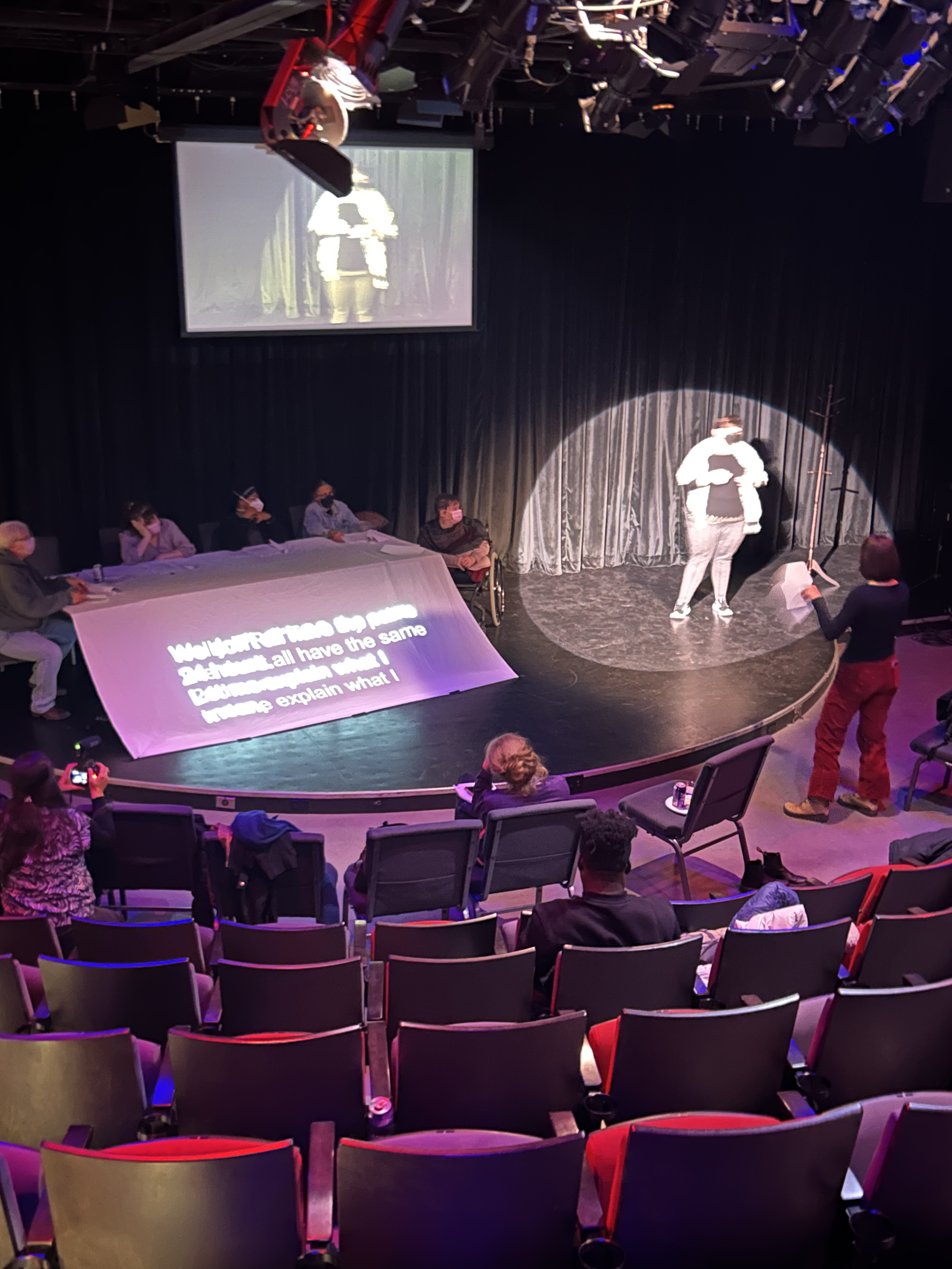
Inside Edmonton’s Rapid Fire Theatre, the atmosphere was warm and welcoming. The stage and its singular prop of a long dinner table was intimately lit, casting shadows onto both known and new faces in the audience. It felt inclusive, safe, and brimming with possibility. I reminded myself that this wasn’t to be just a performance. It was a space for artists living with disability (many who were new to performing), claiming voice and presence in territory so often indifferent (at best) or hostile (at worst) towards folks like them.
As the first lines emerged from the performers seated around that long dinner table, I was struck by the honesty: these stories of disability, of daily struggle and small triumphs, came alive in a way I had rarely seen embodied. Some monologues were fierce, raw with anger; others were tender, laced with humour and longing. Throughout the night, there were moments of laughter — at absurdity, at stereotypes being turned on their head — and moments of stillness, when the weight of systemic ableism and isolation landed in the room. At one point, a performer on stage paused, took a breath, and declared: “Damnit, I am a warrior. I am here to carry on. I am here to survive.” The simplicity of those words, spoken with anger but without bitterness, stayed with me long after.
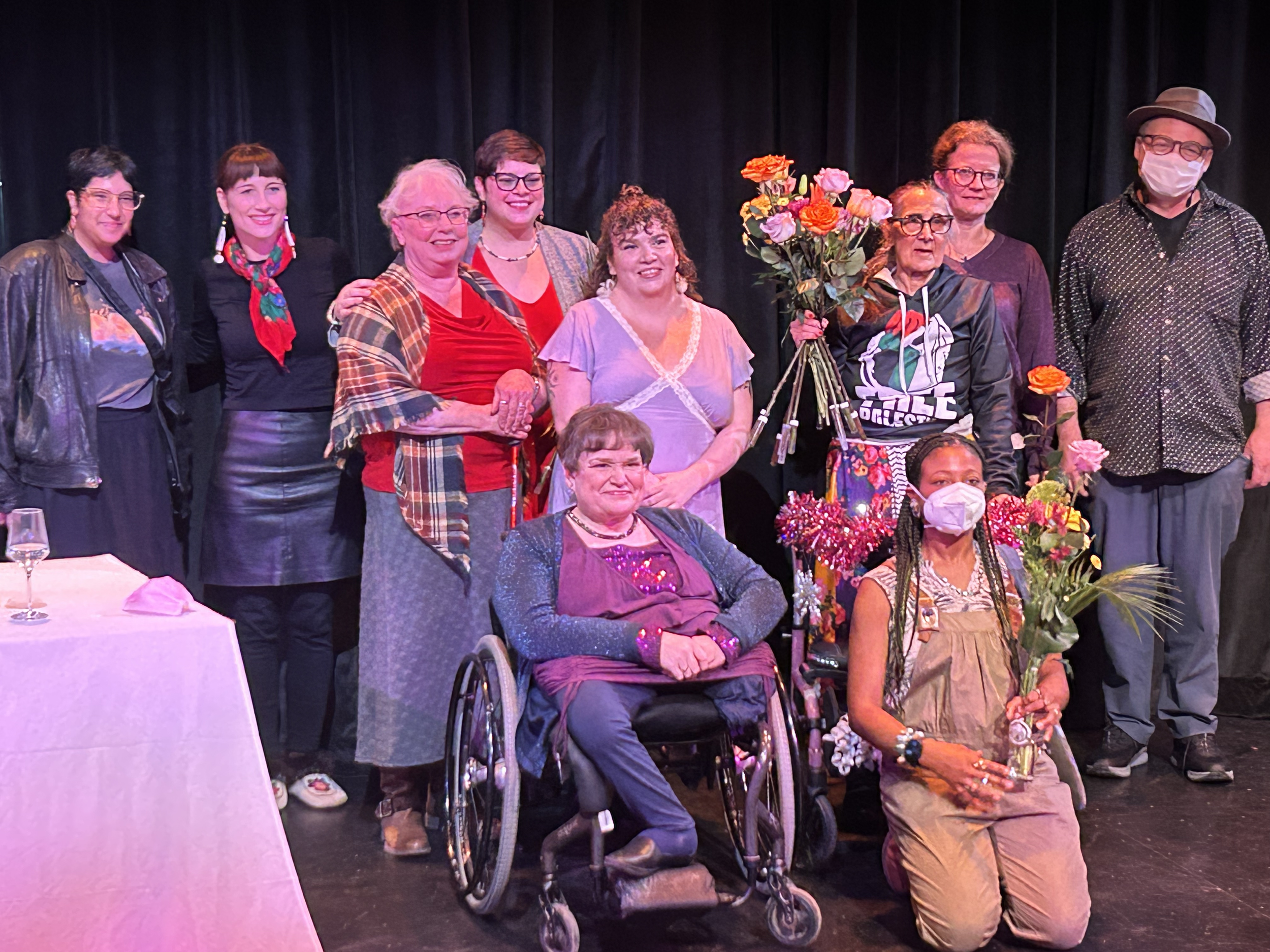
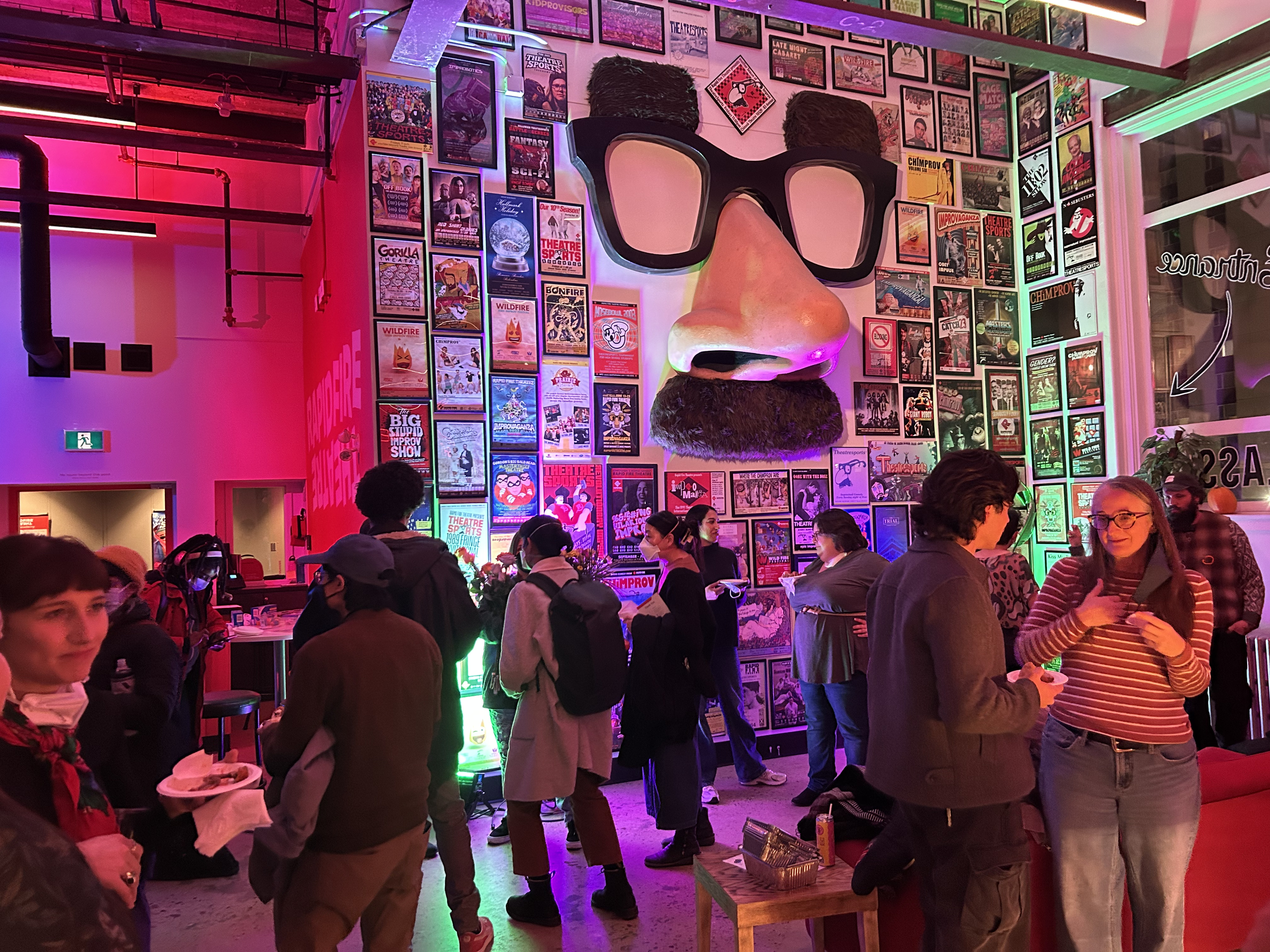
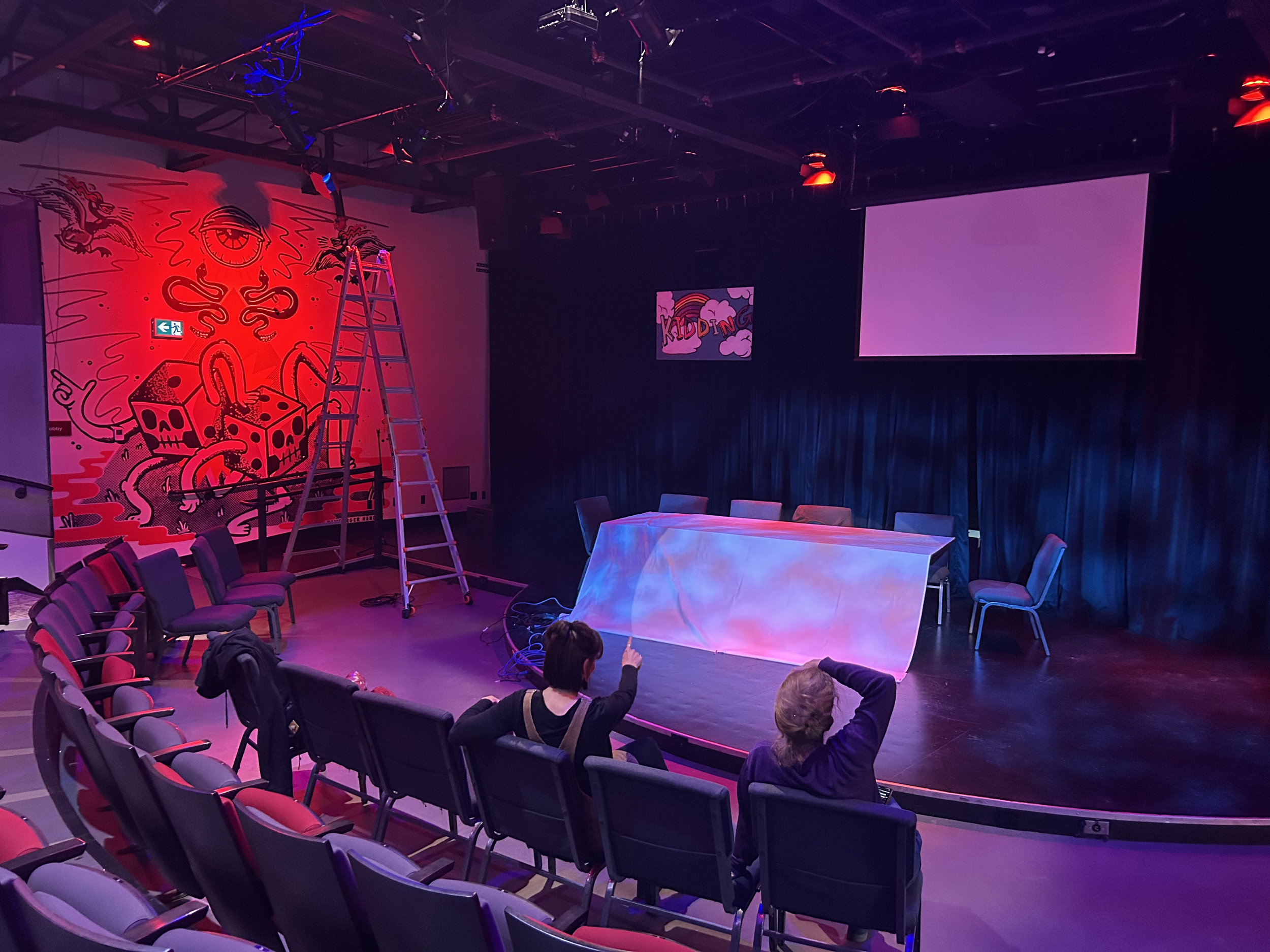
After the show, during the reception in the theatre lounge, I found myself drawn into conversations. I spoke with several of the performers and heard about what the workshops had meant for them: a rare chance to be seen, to be heard, to transform common and less-common struggles into art and community. Others from the audience spoke about how moved they felt, how unlearning assumptions about disability suddenly felt urgent and personal. There was a sense of community and of solidarity; a shared glimpse into lives too often marginalized.
Reflecting on the evening, I realized how vital events like this are. The Dinner Party wasn’t just a show, it was a reclaiming of narrative and a collective act of vulnerability, resistance, and hope. It reminded me that art, when rooted in lived experience and justice, has the power to deepen empathy and challenge norms. I left the theatre with a renewed sense of humility, commitment, and respect, and with the hope that more spaces will exist (or be created) for disabled voices to share their truth.
I had been encouraged to sit at that table, and to take part in the feast. I was so glad I accepted.