National Series on Police Oversight, Legal Change, and System Transformation
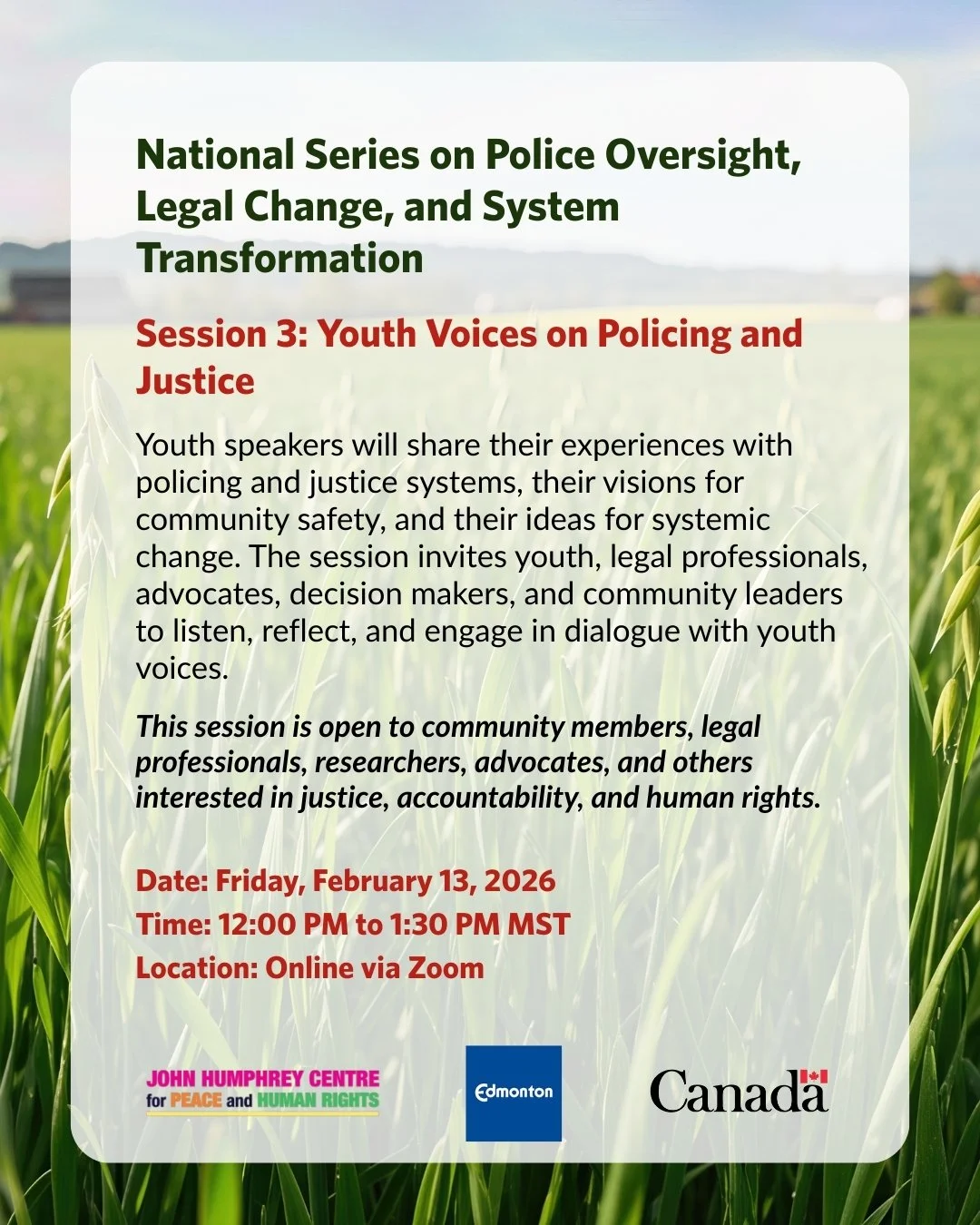
Session 3: Youth Voices on Policing and Justice
This youth-led session centers the perspectives of young people from JHC’s Intersections of Identity Project. Youth speakers will share their experiences with policing and justice systems, their visions for community safety, and their ideas for systemic change. The session invites youth, legal professionals, advocates, decision makers, and community leaders to listen, reflect, and engage in dialogue with youth voices.
Date: Friday, February 13, 2026
Time: 12:00 PM to 1:30 PM MST
Location: Online via Zoom
The conversation will explore:
How young people experience policing and justice systems in their communities
What community safety looks like from a youth perspective
The role youth should play in shaping future reforms and accountability systems
How legal professionals and decision makers can create space for sustained youth influence
Guiding Questions:
How have young people experienced policing and justice systems in their communities?
What does community safety look like from a youth perspective?
What role should youth play in shaping future reforms and accountability systems?
How can legal professionals and decision-makers create space for sustained youth influence?

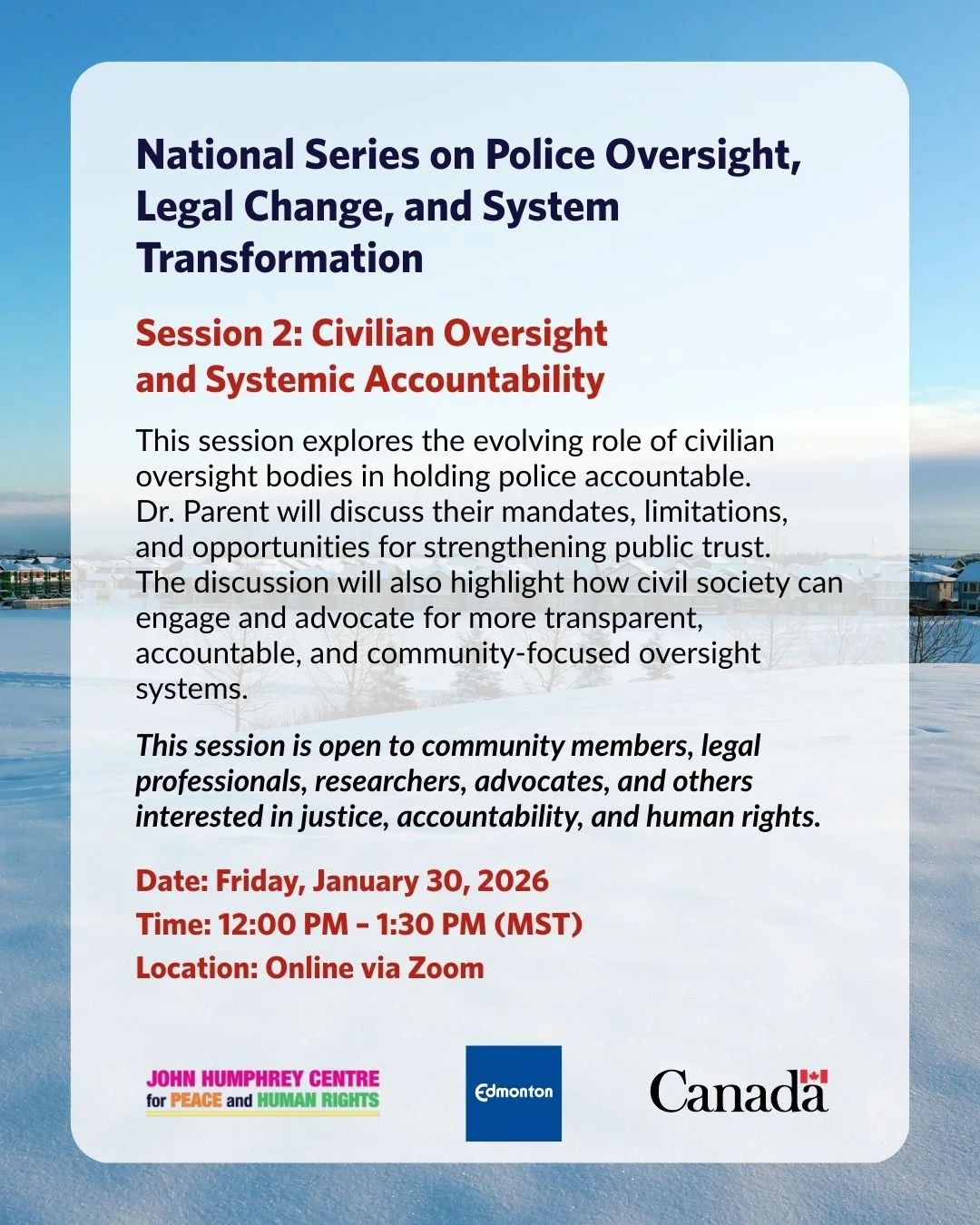
Session 2: Civilian Oversight and Systemic Accountability
This session will feature Rick Parent is a 30 year veteran of the Delta Police Department and a retired Associate Professor at Simon Fraser University where he taught for over 10 years. Rick has been qualified in US and Canadian courts as an expert witness in regards to the police use of deadly force and suicide by cop. As a police officer, he completed two secondments to the Justice Institute of BC and was a negotiator for a regional emergency response team. Rick also served as the vice president of the Delta Police union and, as the NCO in charge of Internal Investigations.
Rick is a subject-matter expert in the area of police shootings, police ethics and accountability as well as community-based policing. He has published academic papers and university textbooks on these subjects. While at Simon Fraser University Rick developed and taught courses related to police ethics and accountability as well as community policing. Together with his wife Cathy, they continue to research and publish on matters pertaining to the enhancement of Canadian policing.
You can find Rick's research and publications on ResearchGate: https://www.researchgate.net/lab/Richard-Parent-Lab and at www.rickparent.ca
Book: Ethics and Canadian Law Enforcement. Richard and Catherine Parent
https://canadianscholars.ca/book/ethics-and-canadian-law-enforcement/
Session Description:
This session explores the evolving role of civilian oversight bodies in holding police accountable. Dr. Parent will discuss their mandates, limitations, and opportunities for strengthening public trust. The discussion will also highlight how civil society can engage and advocate for more transparent, accountable, and community-focused oversight systems.
Date: Friday, January 30, 2026
Time: 12:00 PM – 1:30 PM (MST)
Location: Online via Zoom
Guiding Questions:
What are the essential functions and limitations of current civilian oversight bodies?
How can oversight agencies balance independence with accountability to the public?
What mechanisms or practices best support trust-building with communities?
How can civil society organizations effectively engage and influence oversight processes?
This session is open to community members, legal professionals, researchers, advocates, and others interested in justice, accountability, and human rights.

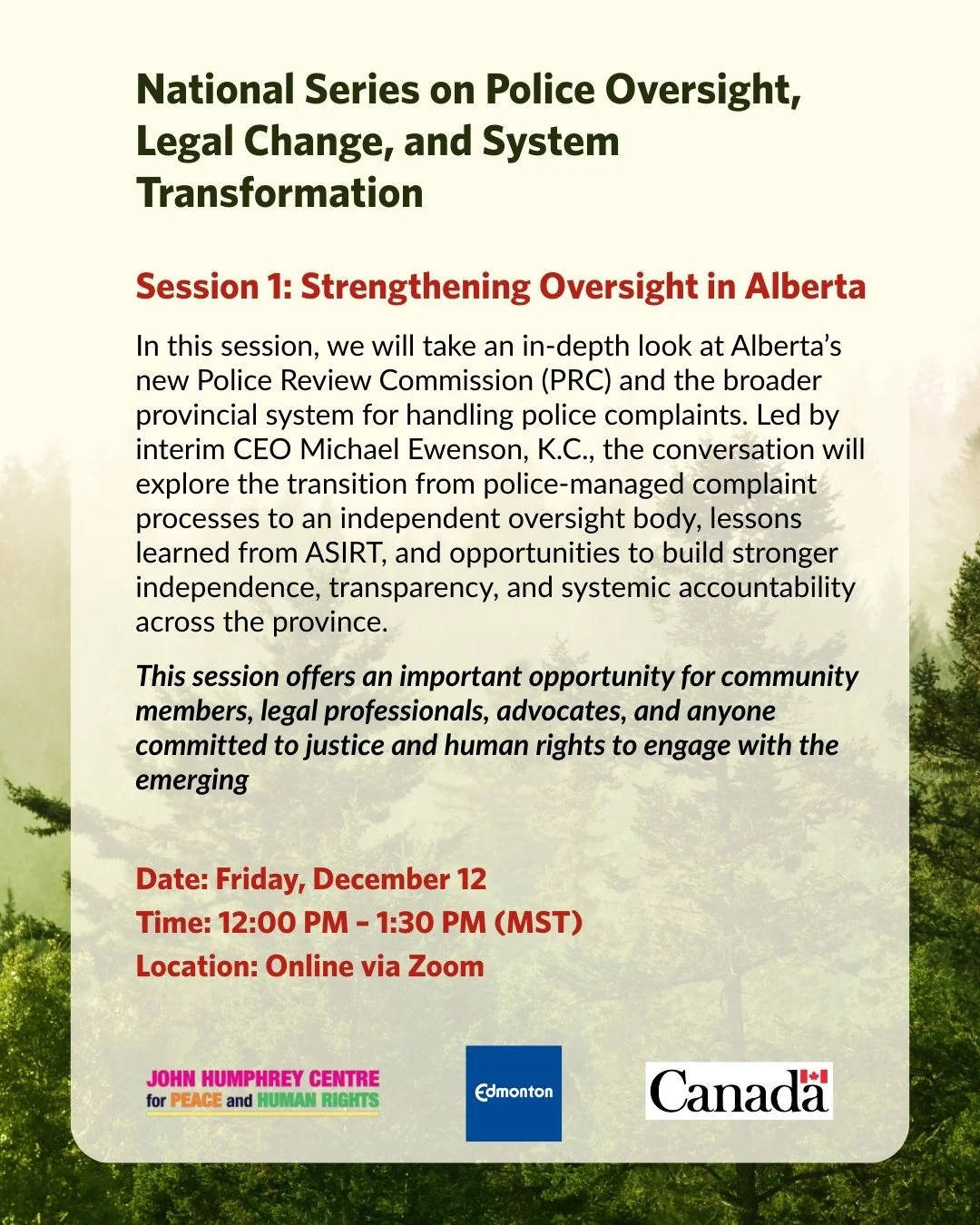
Session 1: Strengthening Oversight in Alberta
This opening session will take an in-depth look at Alberta’s new Police Review Commission (PRC) and the broader provincial system for handling police complaints. Led by interim CEO Michael Ewenson, K.C., the conversation will explore the transition from police-managed complaint processes to an independent oversight body, lessons learned from ASIRT, and opportunities to build stronger independence, transparency, and systemic accountability across the province.
We’ll also be exploring key questions such as:
What gaps is the PRC designed to address in Alberta’s oversight system?
How will the transition to an independent agency unfold in practice?
What challenges arise in building public trust during this shift?
How can systemic learning happen from individual complaints?
This session offers an important opportunity for community members, legal professionals, advocates, and anyone committed to justice and human rights to engage with the emerging
Date: Friday, December 12
Time: 12:00 PM – 1:30 PM (MST)
Location: Online via Zoom
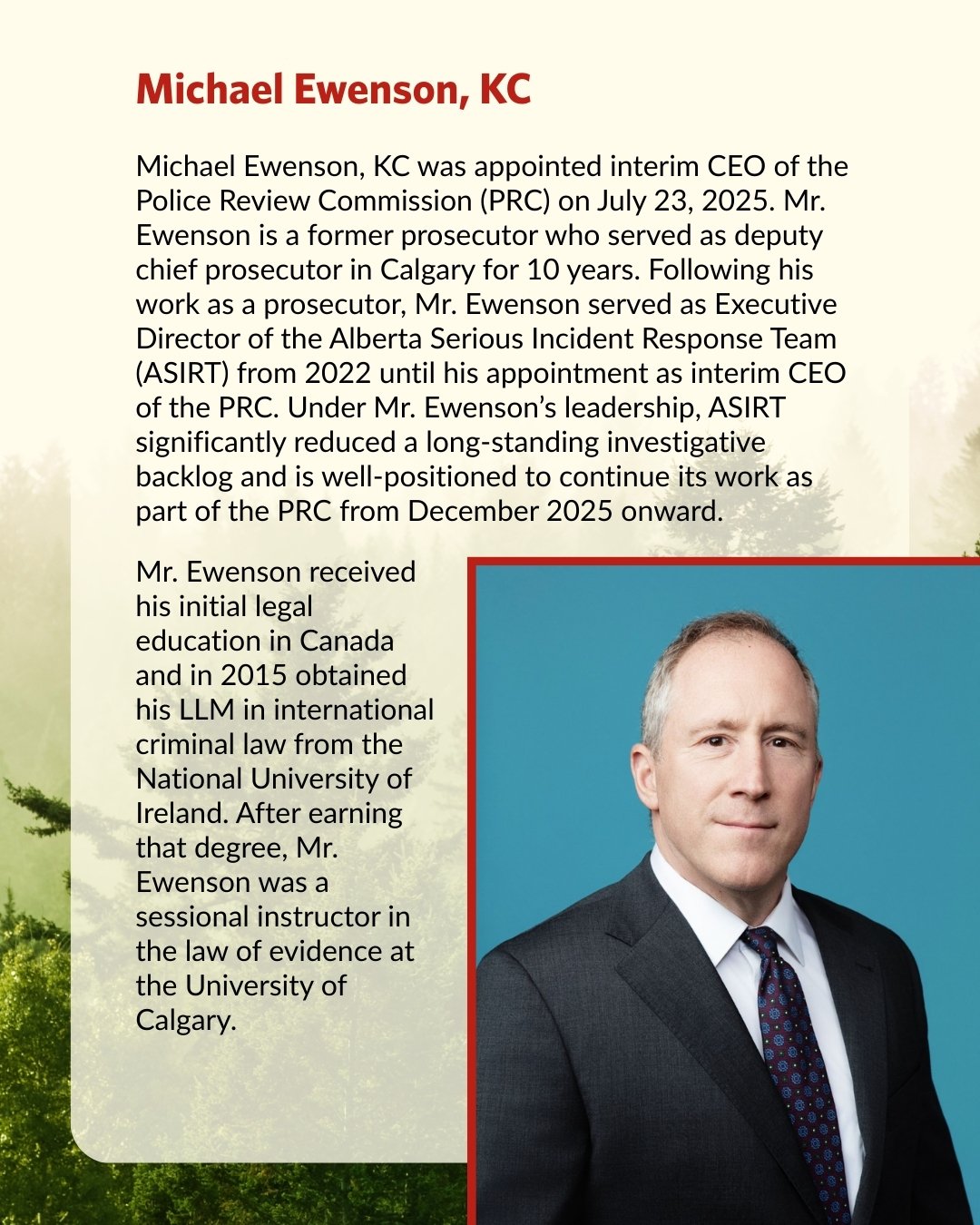
Michael Ewenson, KC
Michael Ewenson, KC was appointed interim CEO of the Police Review Commission (PRC) on July 23, 2025. Mr. Ewenson is a former prosecutor who served as deputy chief prosecutor in Calgary for 10 years. Following his work as a prosecutor, Mr. Ewenson served as executive director of the Alberta Serious Incident Response Team (ASIRT) from 2022 until his appointment as interim CEO of the PRC. Under Mr. Ewenson’s leadership, ASIRT significantly reduced a long-standing investigative backlog and is well-positioned to continue its work as part of the PRC from December 2025 onward.
Mr. Ewenson received his initial legal education in Canada and in 2015 obtained his LLM in international criminal law from the National University of Ireland. After earning that degree, Mr. Ewenson was a sessional instructor in the law of evidence at the University of Calgary.