Online Hate & Advocacy: The Things No One Taught Us About
by Deanne Vuzi, Social Stride Communications Coordinator
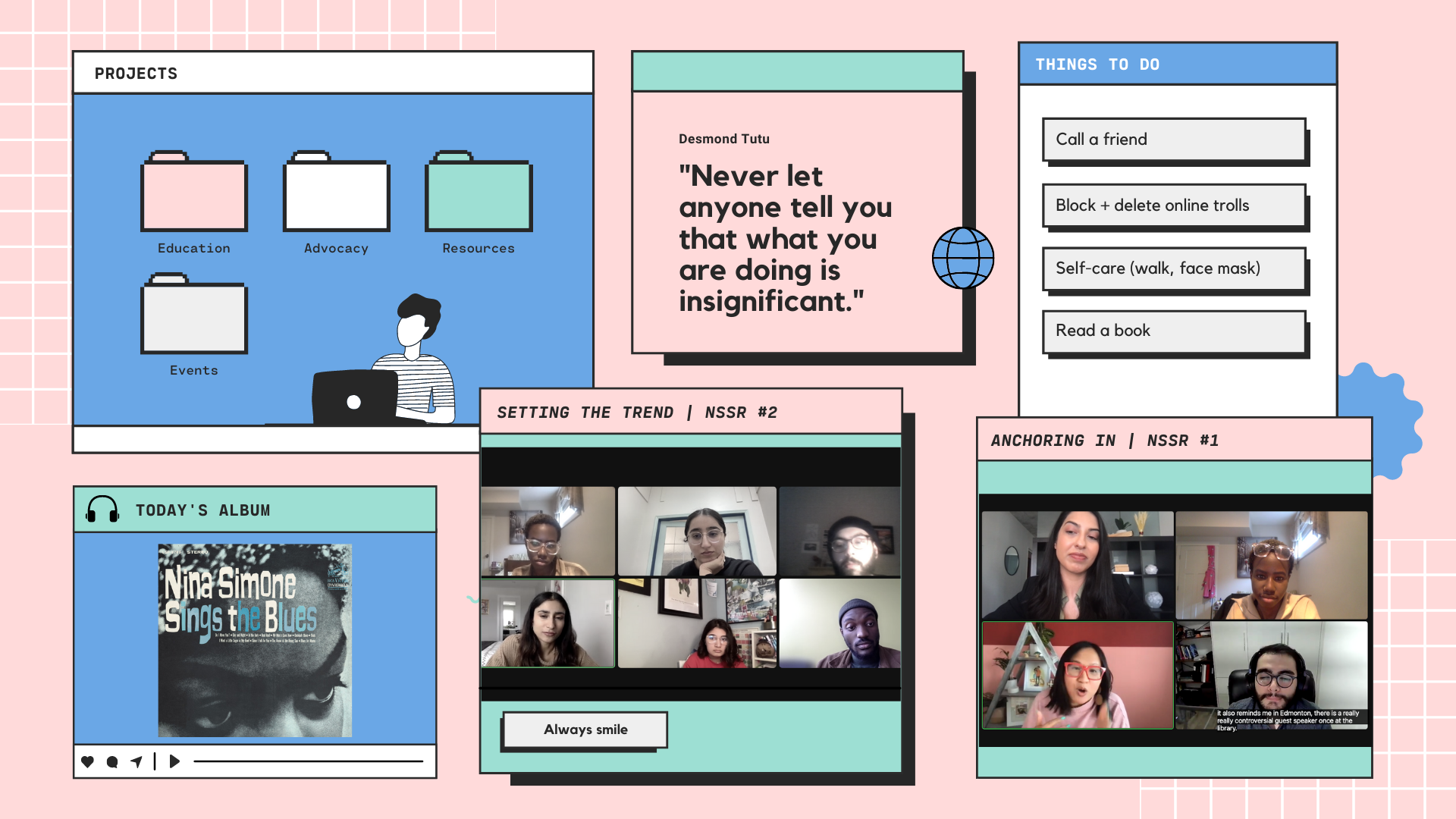
Social Stride arose in 2021 when online advocacy and users began sharing their personal stories and experiences with racism on social media. The project envisioned the creation of a healthy online space and aimed to address hate and discrimination by providing education, countering misinformation and amplifying the voices of victims.
(Make sure you check out the educational content and resources on our Instagram and Twitter!)
The term ‘online advocacy’ refers to individuals or groups using the Internet, typically social media platforms, to raise awareness of social issues, promote policy change, etc. Some notable instances of online advocacy, you may recall include #BlackLivesMatter and #SayHerName in response to the killings of George Floyd and Breonna Taylor, #NoFarmersNoFood in response to agricultural legislation in India, and #MeToo which called attention to the frequency in which female-identifying individuals experience sexual harassment and assault. Social media is a vital tool used to amplify and bring international attention to these social justice issues.
Being both black and a woman, I’ve encountered my share of racist and discriminatory experiences both on and off-line. The most recent incident I remember tweeting about: I was on my coffee break getting tea at a local coffee shop when the customer in front of me used a racial slur. Right away I air my grievances regarding this encounter with my Twitter and Instagram followers. Like so many Canadians who share their experiences on social media, there is often minimal to no true remediation to the discrimination we are subjected to. In some instances, I’ve been guilty of getting into arguments online (which I have since learned is NOT the way to go). Although arguing is cathartic, it never resolves the issue and continues to enable the already toxic environment present in online spaces: think of it as pouring gasoline on a fire that is already ablaze.
From January through April 2022, Social Stride hosted four National Social Stride Roundtables and I had the pleasure hosting three of these sessions. The next part of this blog post will share bite-sized learnings I took away and resources I learned about as a facilitator.
In the first session —Anchoring In— we invited a team of leaders (a social media strategist, a lawyer, and a public health researcher) to lay some context and inform us of what supports exist and are available to users who want to respond to hate online. My takeaways: (1) digital literacy is a critical element to navigating social media safely and must be accessible to all; (2) as a user, you are not obligated to read or engage with harmful messages.
In the second session —Setting the Trend— we heard from youth across Canada shared their experiences with online hate and discussed potential solutions to these issues. These youth were leaders at the following organizations: Jack.Org, Canadian Voices Against Racism, La Connexional, and the Don’t Click Youth Initiative. My takeaways: (1) it’s hard for victims to label online hate as it is difficult to prove, therefore the burden of proof often rests on the individuals that experience online hate, racism and discrimination; (2) just because you are vocal about a social issue, that does not mean you owe others responses and/or answers to all their questions/comments; (3) be mindful that information online is boosted by popularity and money rather than the validity of sources.
And in the third session —Experience in Media— we heard from journalists and their perspectives on reporting in relation to hate online. This session opened my eyes to the issues journalists and reporters must navigate as a part of their job and the difficulties they face in the fast-paced digital world. My takeaways: (1) journalists and reporters, particularly those that have been racialized and marginalized, often have their objectivity and bias questioned; (2) moderation on stories is impossible due to the number of comments and the severe mental health impact; (3) social media has a learning curve and becoming “media literate” takes time.
Be sure to check out the remainder of Social Stride’s Digital Literacy Summary to gain more insight into the National Social Stride Roundtables, as well as these other resources: Stop Race Based Hate, Bystander Intervention, and Stop Hate AB’s Document a Hate Incident Form.
Social Stride has been in the works for two years, and I’d like to extend an immense thanks to those that have supported us: John Humphrey Center for Peace and Human Rights, the Alberta Hate Crimes Committee, REACH Edmonton, and funding from the Government of Canada Heritage Department. And a final thank you to the panelists who participated in each of our conversations and were willing to share their experiences and knowledge with the community.