Bridging the Gap: Our Message to the FPT Forum of Ministers Responsible for Human Rights
Renée Vaugeois, Executive Director
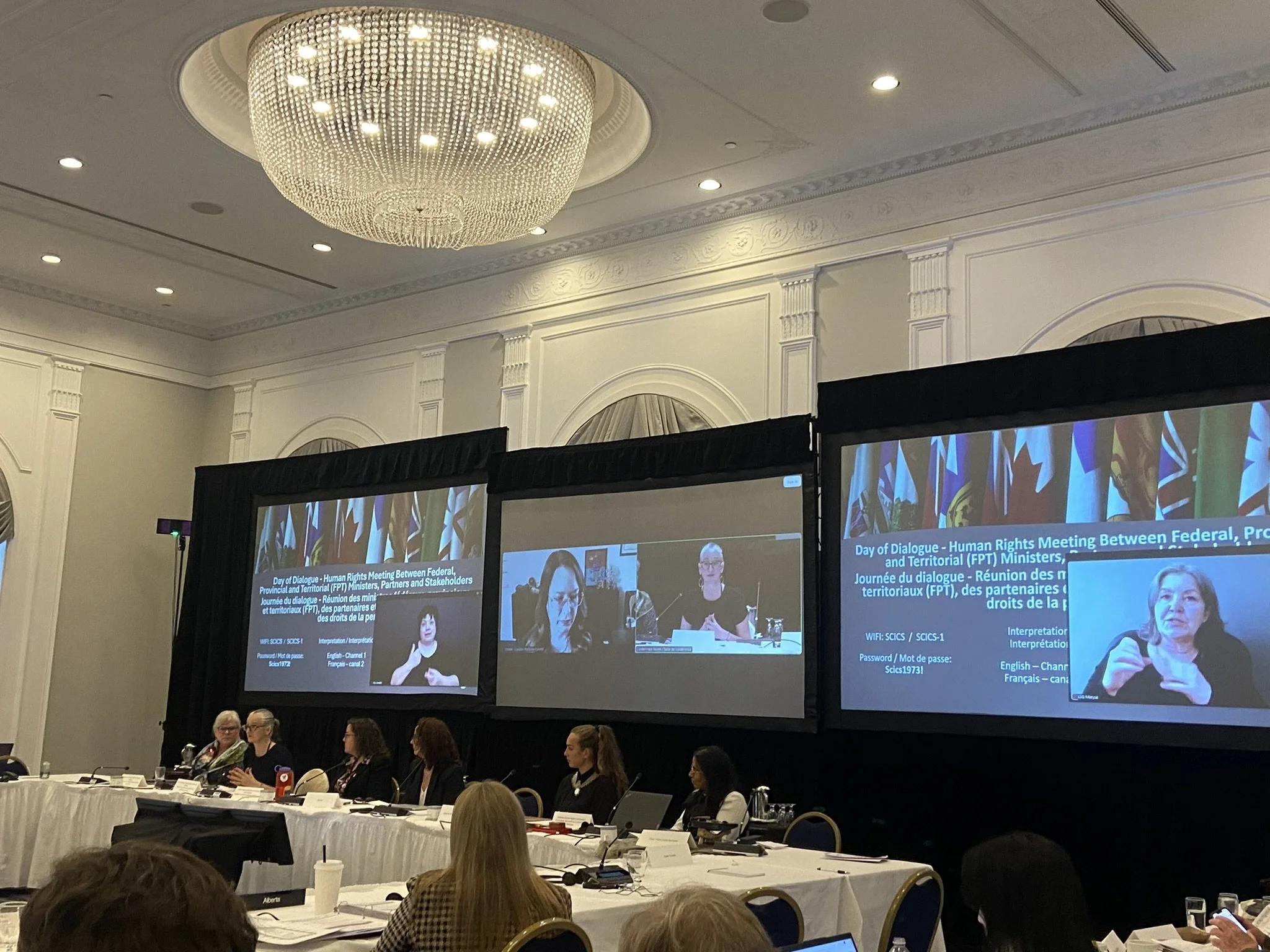
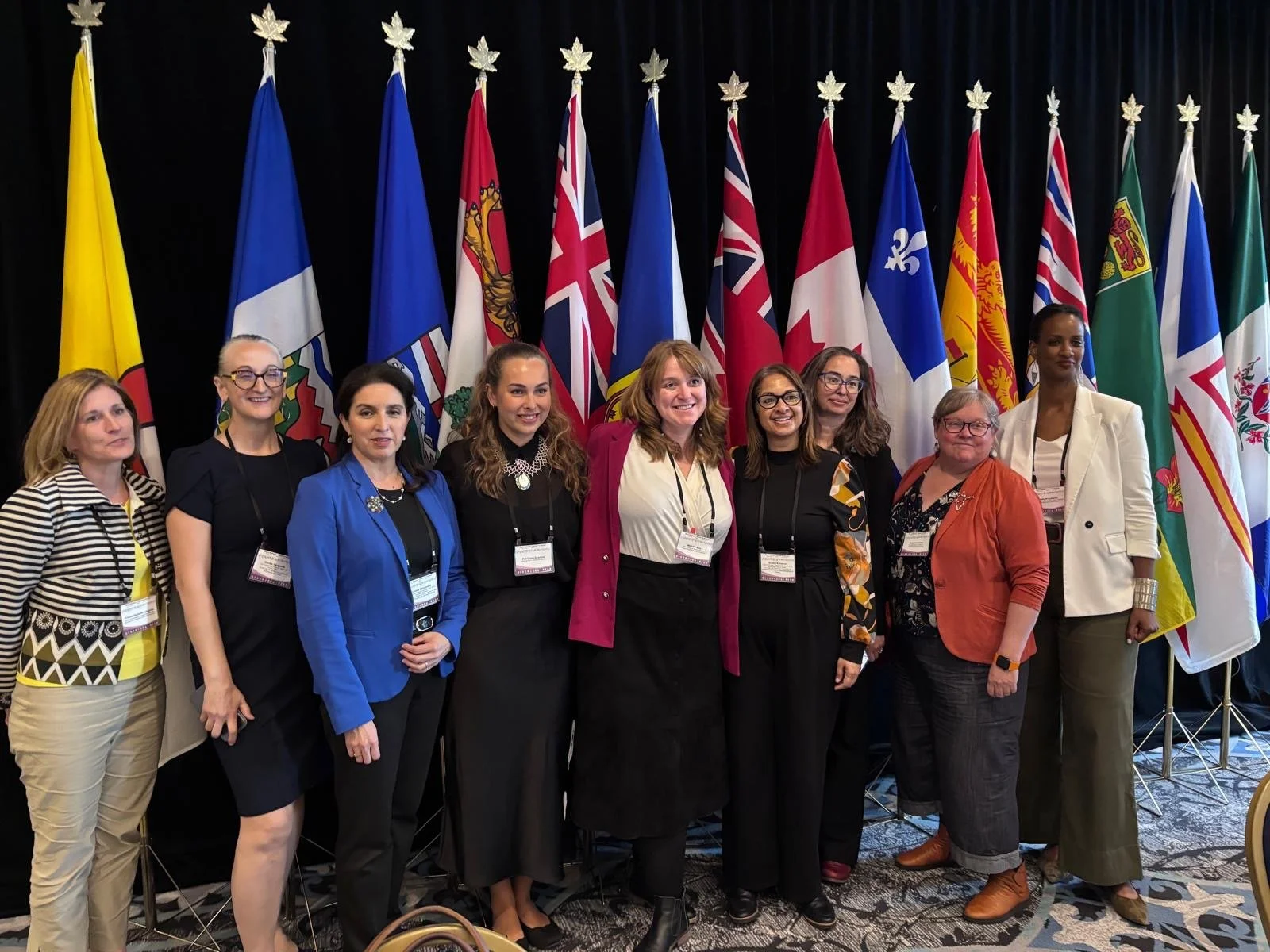
On May 20, 2026, the John Humphrey Centre for Peace and Human Rights had the opportunity to present directly to federal, provincial, and territorial delegations at the FPT Forum of Ministers Responsible for Human Rights in Regina.
As an organization rooted in Treaty 6 territory, our message was clear: Canada cannot progressively realize human rights without confronting the massive structural and jurisdictional gaps that leave vulnerable communities behind. We called for an immediate shift away from late-stage, symbolic, "check-box" consultations and toward building a long-term, collaborative infrastructure that honours lived experience and grassroots organizational capacity.
Following this meeting, we gathered with national civil society partners, community leaders, and legal experts for an intensive two-day strategy session to map out proactive pathways for domestic accountability. A comprehensive report detailing our working group action plans focusing on housing as a right, securing Indigenous sovereignty, and building cross-movement solidarity will be released next month.
Please see the speaking notes delivered to the Ministers below on the Day of Dialogue.
Speaking Notes: FPT Forum of Ministers Responsible for Human Rights from Renée Vaugeois, Executive Director
Good afternoon. Thank you to the federal, the provincial and territorial delegations for taking the time to be here and special thanks to Canadian Heritage for including the John Humphrey Centre for Peace and Human Rights from Treaty 6 territory. Expanding this representation is a necessity; we all bring a unique lens, lived experience, and perspective to what human rights mean in Canada. We are grateful for the space to gather.
We are here to talk about the progressive realization of human rights. But to get there, we must confront the massive structural gaps stalling our progress.
Let’s look at the reality:
Canada is responsible for treaty compliance, yet critical rights—like policing, health, housing, and child welfare—fall squarely on provincial and territorial shoulders.
Current FPT mechanisms focus almost entirely on reporting back to the UN rather than active, on-the-ground implementation.
We rely on slow, litigation-heavy complaint models. Our Human Rights Institutions are drowning in backlogs while budgets stagnate. Look at CASHRA—their website hasn't seen a post since 2023.
Funding for civil society has been dismantled over 15 years. The federal Human Rights Program is gone. In Alberta, the AHBREF fund became the Civil Society Fund, and has now died out completely.
At the John Humphrey Centre, we consistently hear that government consultations are late-stage, symbolic, or inaccessible, prioritizing institutional expertise over lived experience. This exclusion isn’t just a democratic deficit; it is a causal driver of human rights violations.
We must shift from check-box consultations to a long-term, collaborative infrastructure. Across every province and territory, an existing wealth of organizational capacity holds the trust of the grassroots. By partnering with this broad network, we can build a continuous feedback loop—educating citizens, gathering real-time data, and feeding it directly into implementation. This isn’t an exclusive club; it’s about utilizing our collective strength so no one is left out.
I want to speak directly to Alberta: Let us work with you. Let’s trailblaze together and build a functional provincial implementation model in Alberta that the rest of Canada can look to and follow. We are asking for these spaces to be built intentionally and constructively.
If we strip away titles, jurisdictions, and partisan politics, we are just people. We think about the children at home under our care. We think about our elderly parents. We all deeply care about a future of health, well-being, and basic human dignity.
The metric by which we should measure every policy discussed today, and into tomorrow, is simple: That every single child in our community has a pillow to lay their head on at night, a roof over their head, food in their belly, and peace in their heart. And that every elderly person has the exact same.
We only need to step outside into our own cities to know that this is not the reality for far too many Canadians. We need to stop the bleeding. We need to stop the devastating purge on our public health and social systems caused by the fallout of addiction, poverty, and violence.
Building these permanent, apolitical systems of collaboration unites us for the sake of public accountability and human decency.
We also must always be conscious of who is not sitting at this table. Let us open the doors, let us build this infrastructure, and let us do this work together. Thank you.