Invest in Peace — for Everyone, Everywhere, Every Day: 18th Annual Human Rights Awards
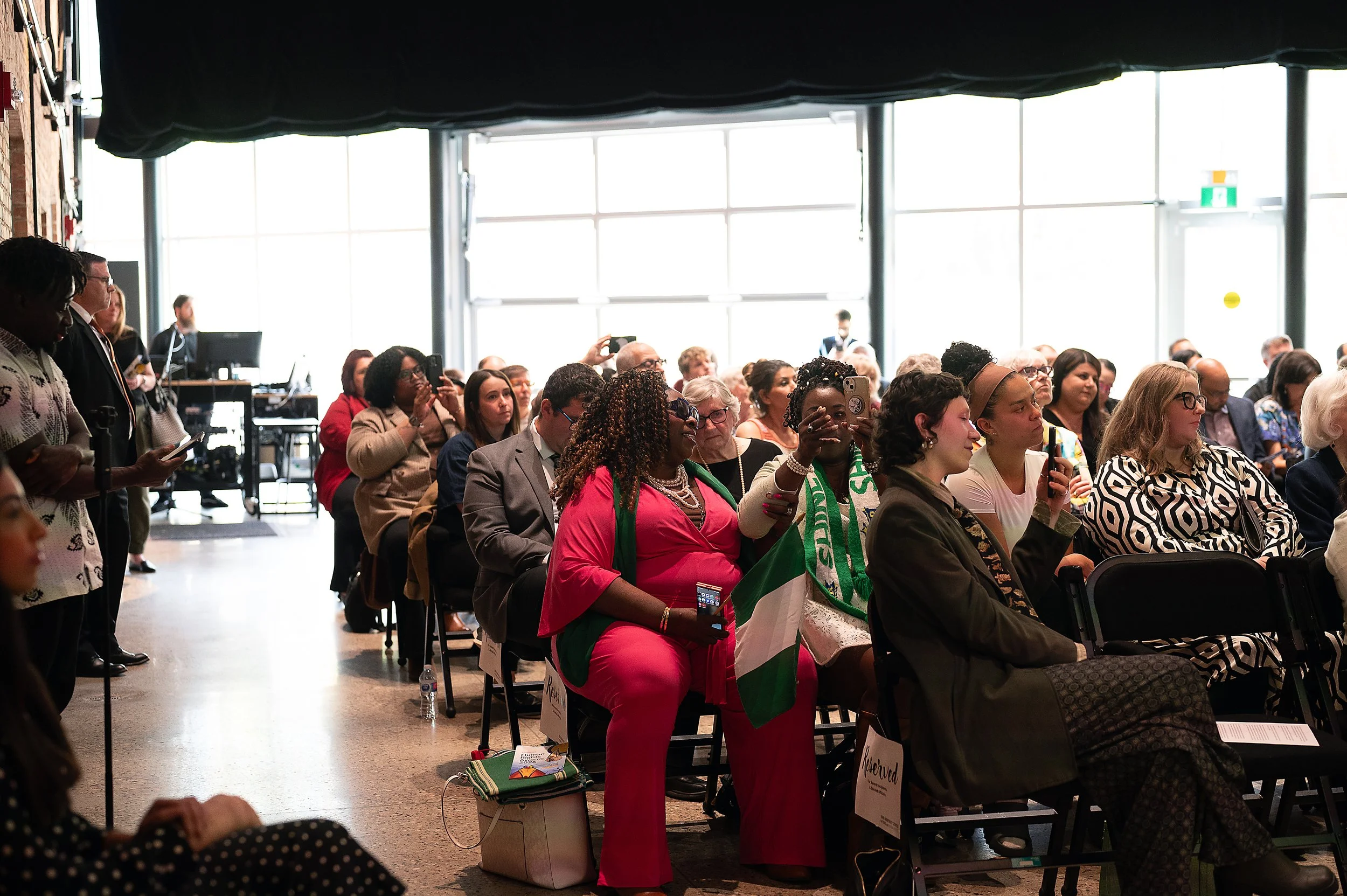
On October 1, 2026, community members gathered in amiskwaciy-wâskahikan (Edmonton) as the John Humphrey Centre for Peace and Human Rights (JHC) hosted the 18th Annual Human Rights Awards. Rooted in Edmonton’s history as North America’s first UNDP-designated Human Rights City, this annual gathering honours the quiet, steadfast grassroots efforts of dedicated individuals defending dignity, advancing equity, and working toward lasting social justice across Alberta.
Commemorating the International Day of Peace, the 2026 theme called on communities to Invest in Peace — for Everyone, Everywhere, Every Day. Amid global conflict, climate instability, and uncertainty, the pursuit of peace has never felt more urgent. These awards recognize the everyday architects of peace driving local action and laying the groundwork for positive social change.
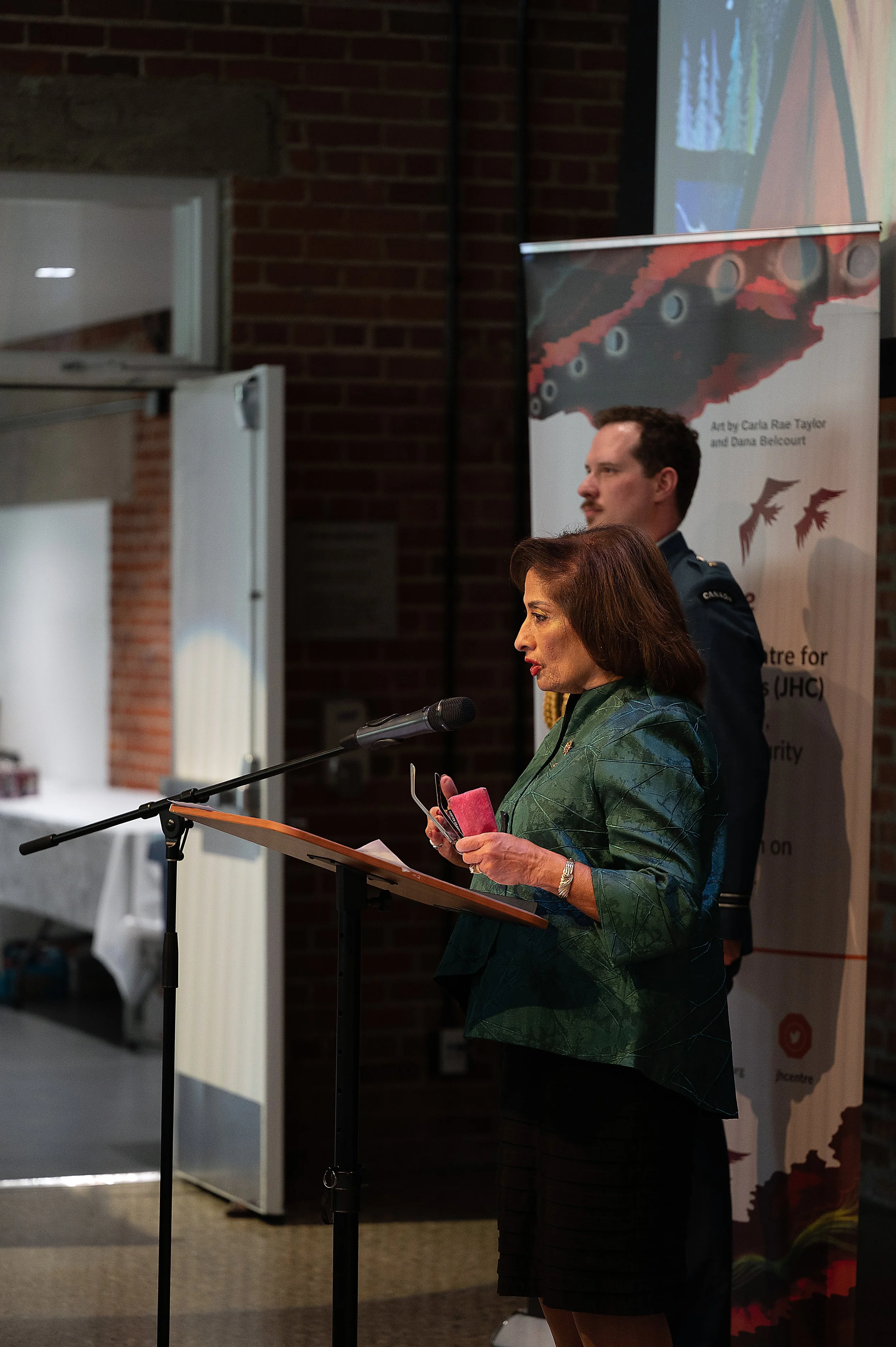
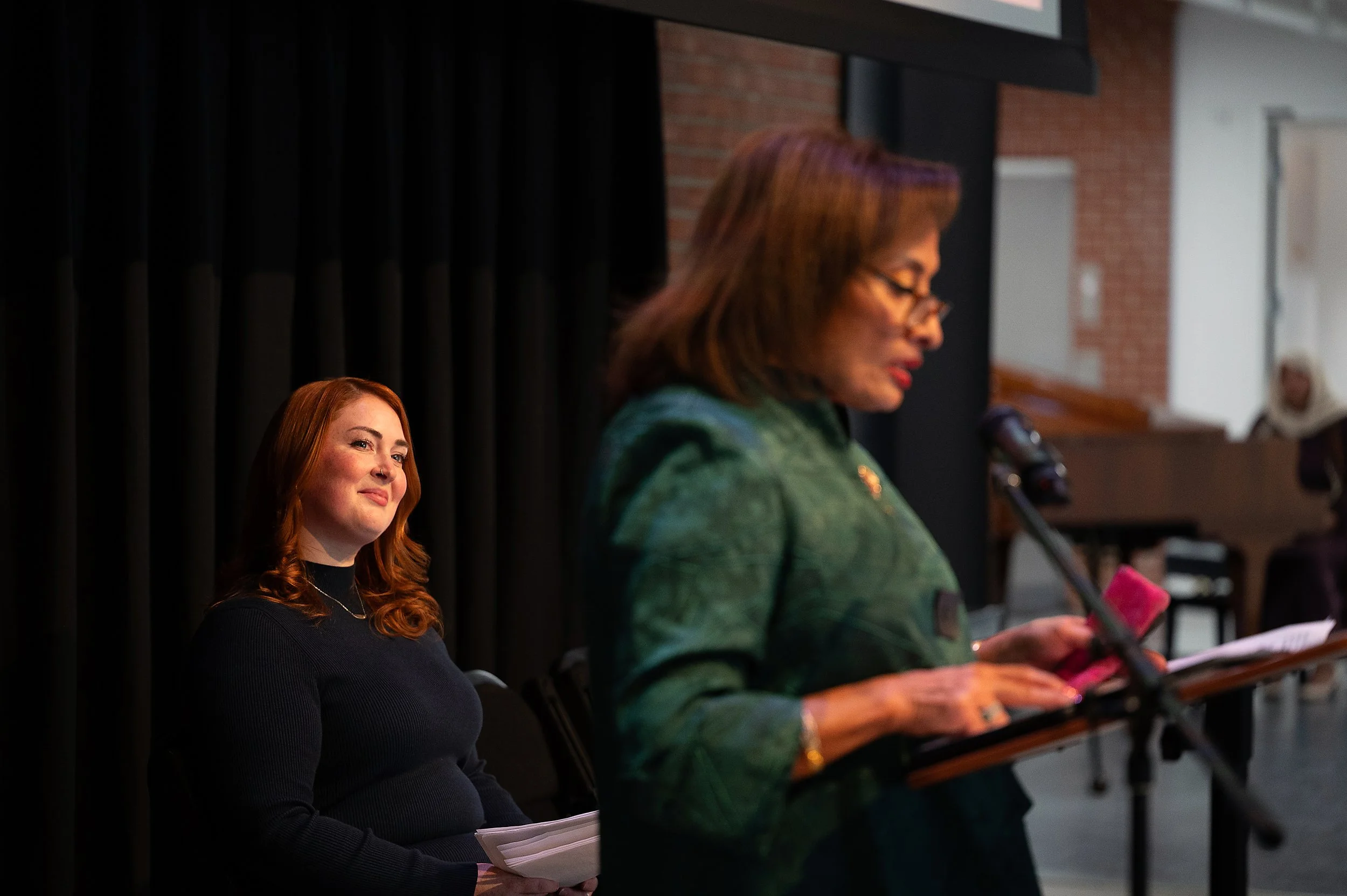
A central message echoing across this year's theme and award recipients was that advancing human rights is a shared responsibility requiring unified resolve rather than solitary action. Every recipient reflected on this vital truth during their remarks, reiterating a principle also highlighted by JHC patron, award sponsor, and Lieutenant Governor of Alberta, Her Honour, The Honourable Salma Lakhani:
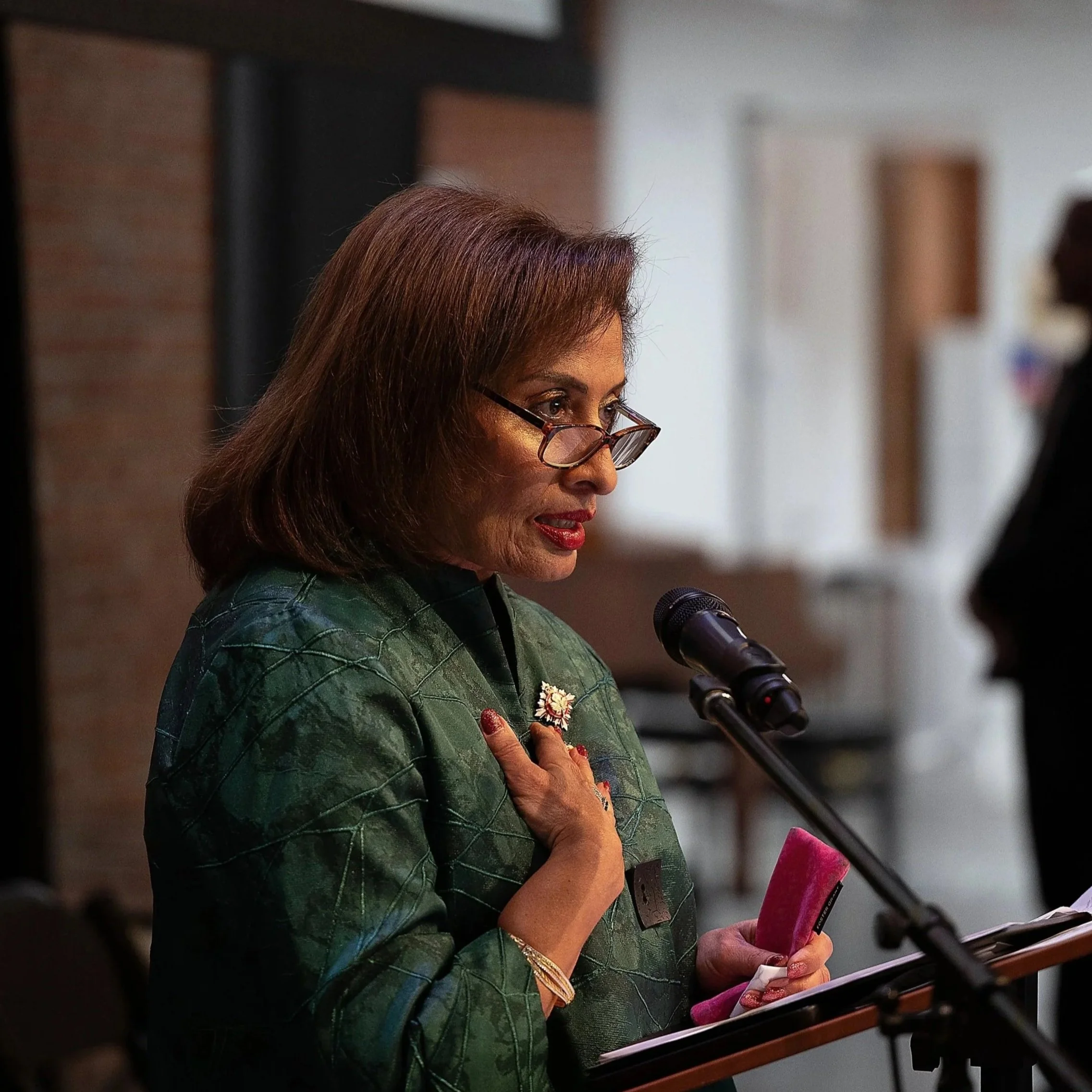
“One of the most important lessons I have learned is that human rights thrive when people are willing to nurture, protect and strengthen you. The progress we have made towards building a more inclusive and equitable society did not happen by accident. It is the result of courage, dedication and compassion of individuals who came before us and worked tirelessly to ensure that every person is treated with dignity and respect. Advancing human rights requires patience, commitment, and an unwavering belief in the value of every human being. It is a responsibility that is shared across generations.”
- JHC patron, award sponsor, and Lieutenant Governor of Alberta, Her Honour, The Honourable Salma Lakhani:
Across sectors and human rights issues, solutions require building trust through relationships, intentional and active listening, shared learning, and the courage to act with integrity, even when the work is difficult. This year’s awards brought attention to the fact that this work happens both visibly and behind the scenes, often quietly, and with a deep commitment to building a more peaceful and just world. Her Honour, the Honourable Salma Lakhani opened the ceremony with a strong land acknowledgement, emphasizing for all to take responsibility in learning about treaties and our responsibilities as treaty people.
“All of us who are fortunate enough to call this beautiful province and our amazing country home, we are all partners in these treaty relationships. And it is very important that we learn about treaties so that each one of us can then find our own place in the journey of reconciliation. Almost one in three or one in four Canadians are born outside [Canada]. They’ve come from somewhere else. So, it is very important that we all learn about treaties and treaty relationships and how we can make things better.”
Honouring JHC’s last living founder, Judge Gurcharan Singh Bhatia
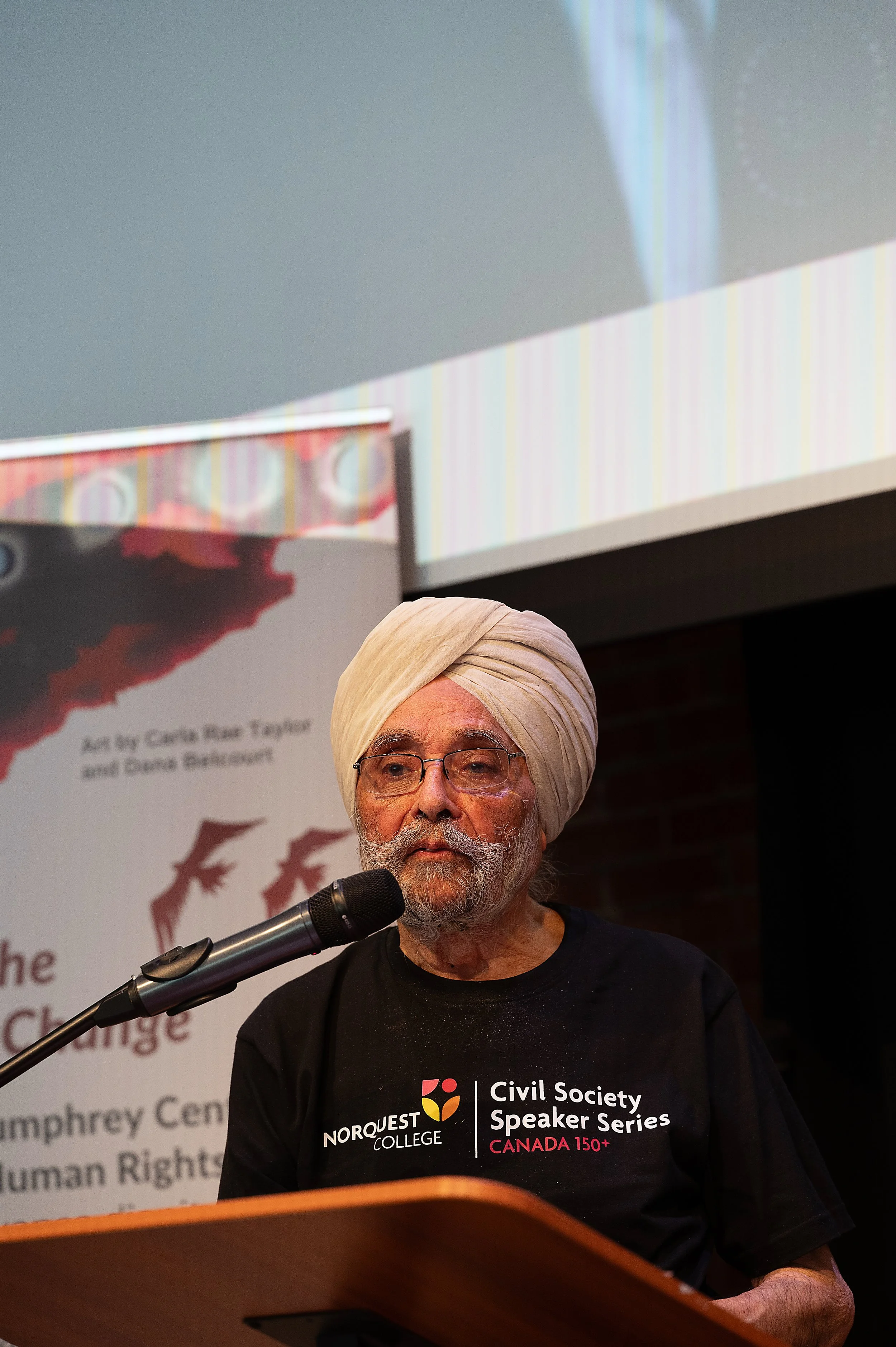
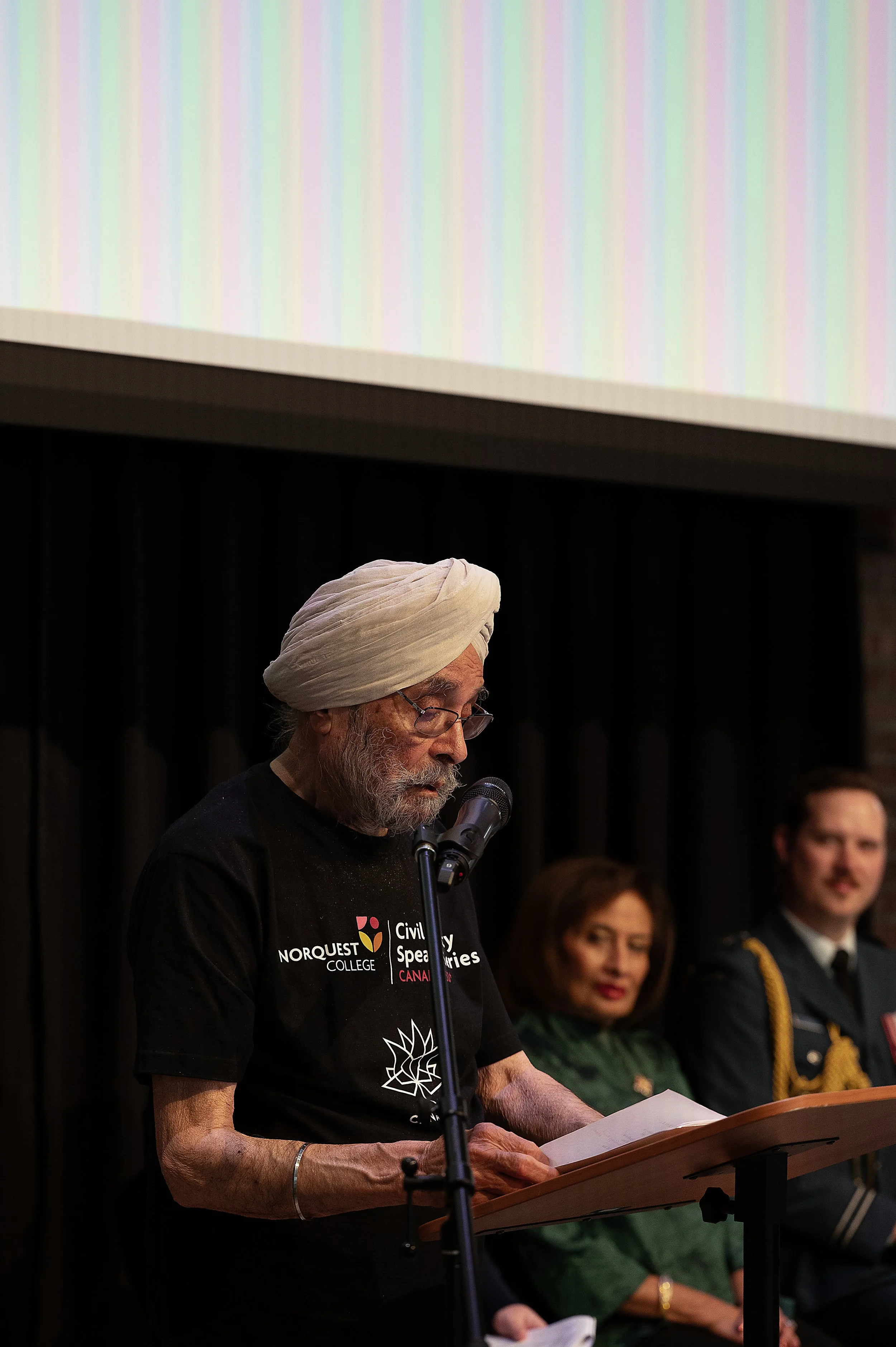
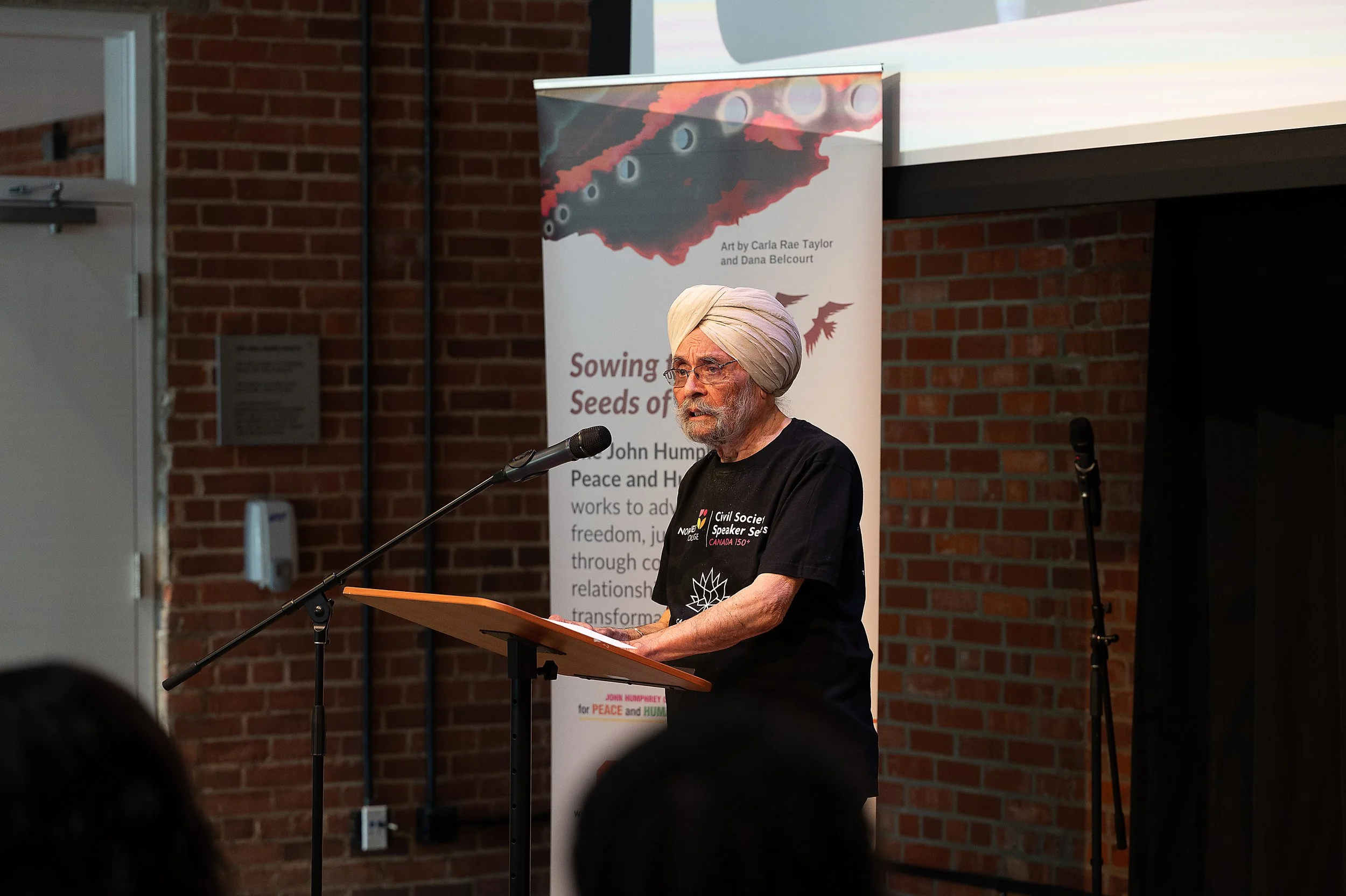
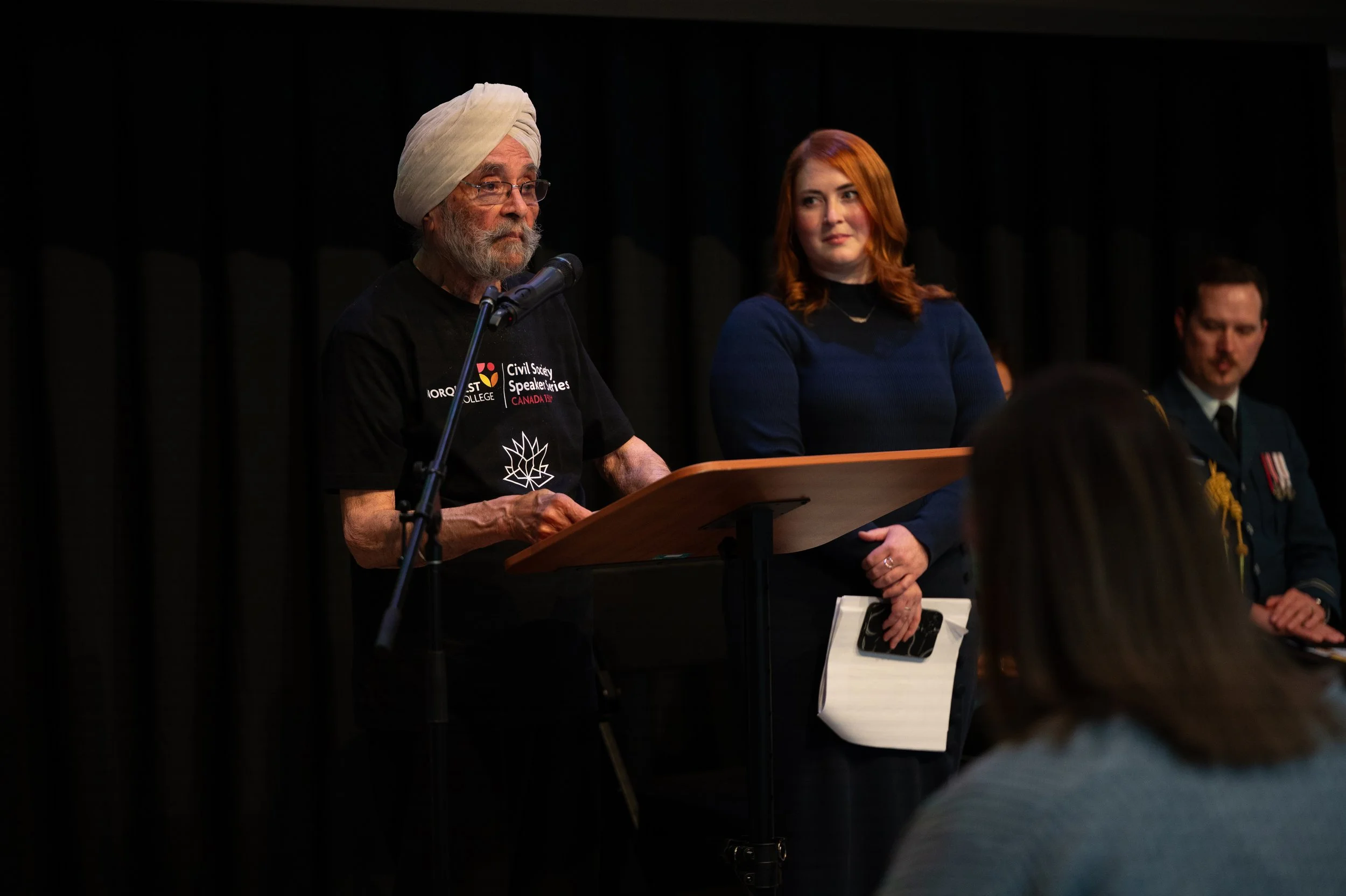
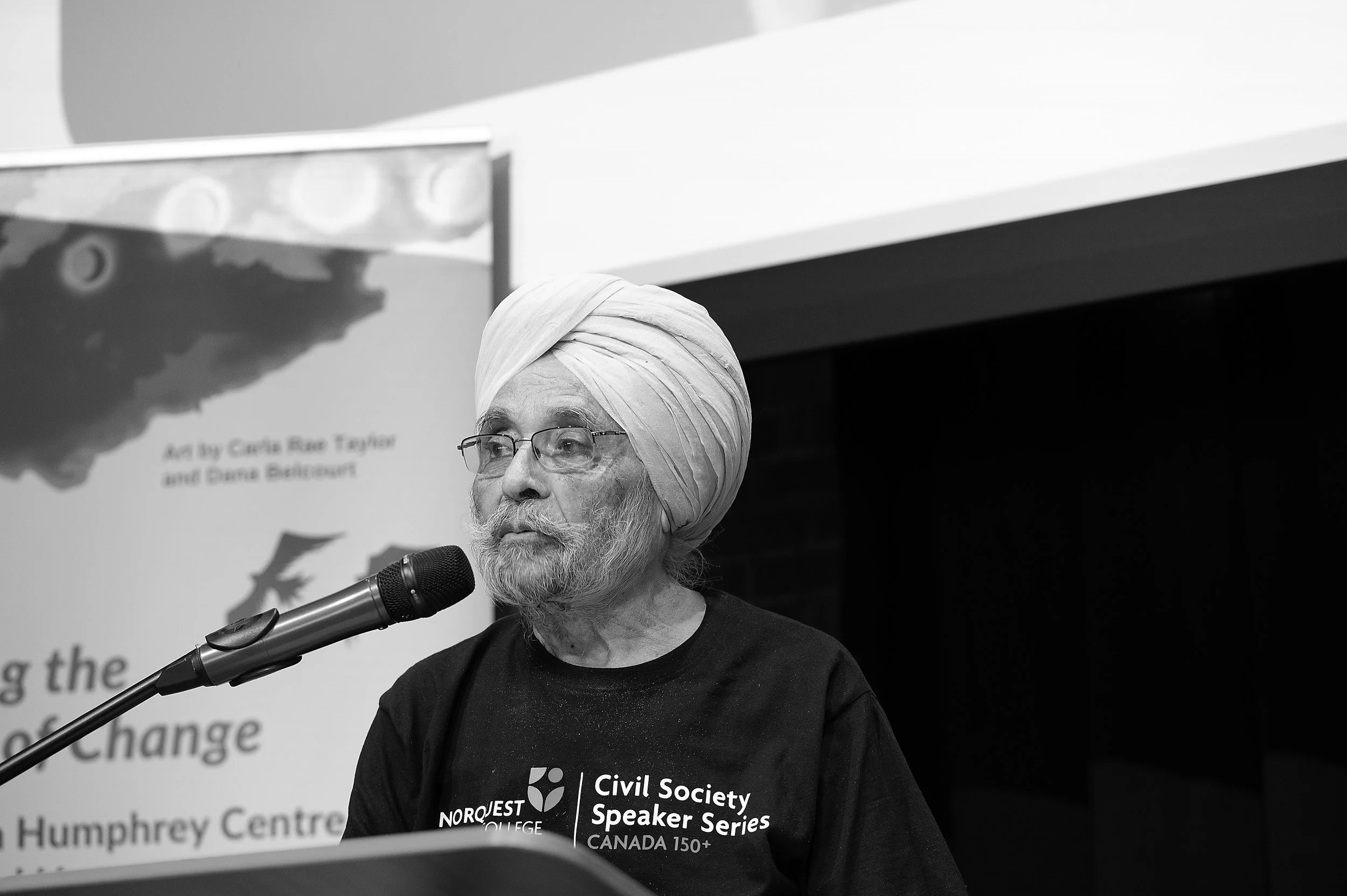
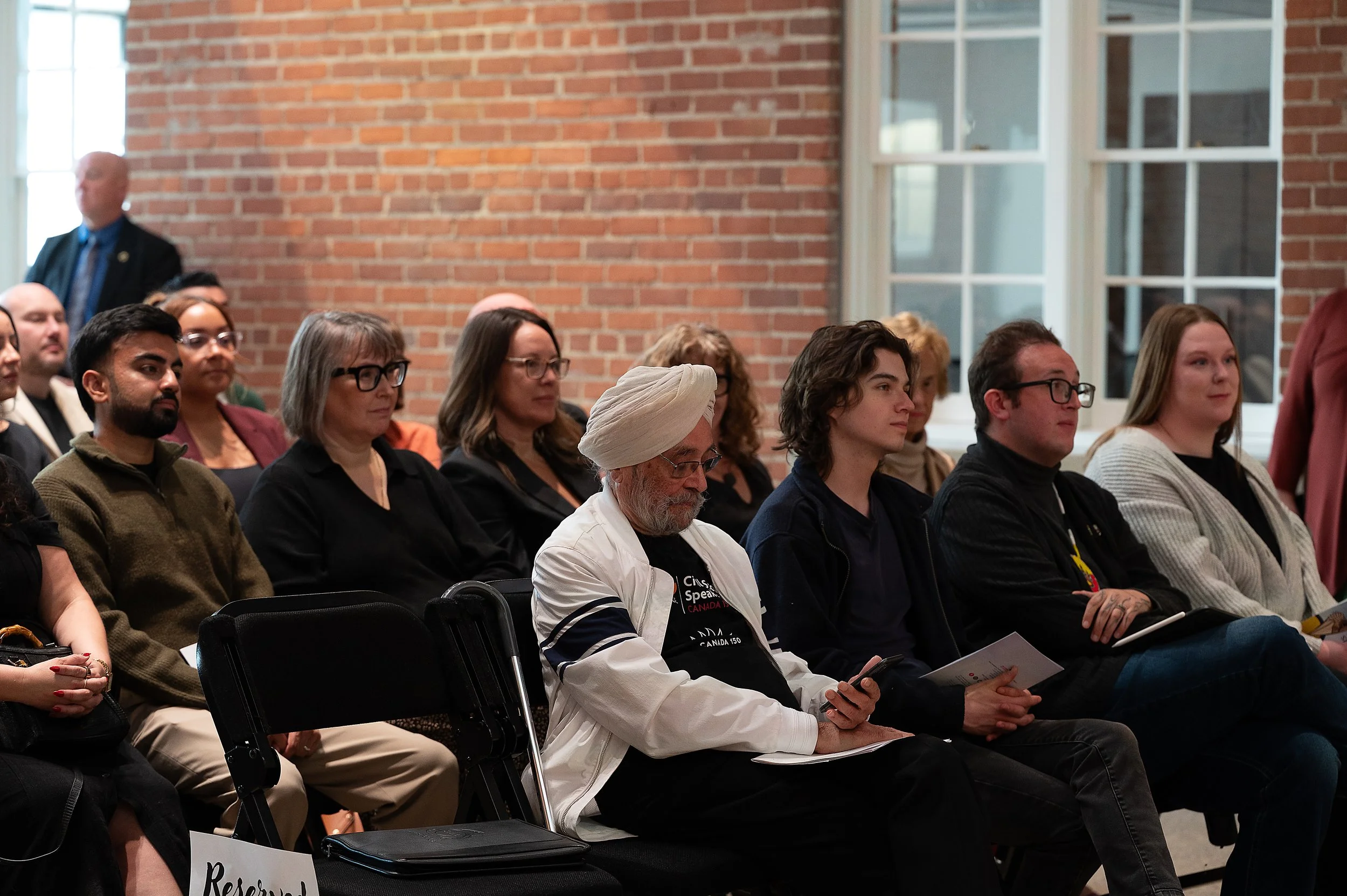
Prior to the awards being presented, a brilliant speech was delivered by JHC’s last remaining living founder, Judge Gurcharan Singh Bhatia, who recently turned 95! During his speech, Judge Bhatia emphasized the need to carry on the work of those who came before us:
“Yesterday, Canadians celebrated Truth and Reconciliation Day, reminding how important truth and reconciliation is in our daily lives within communities, within family, for healing and peace. I request you [to] talk about human rights but start with your home community…”
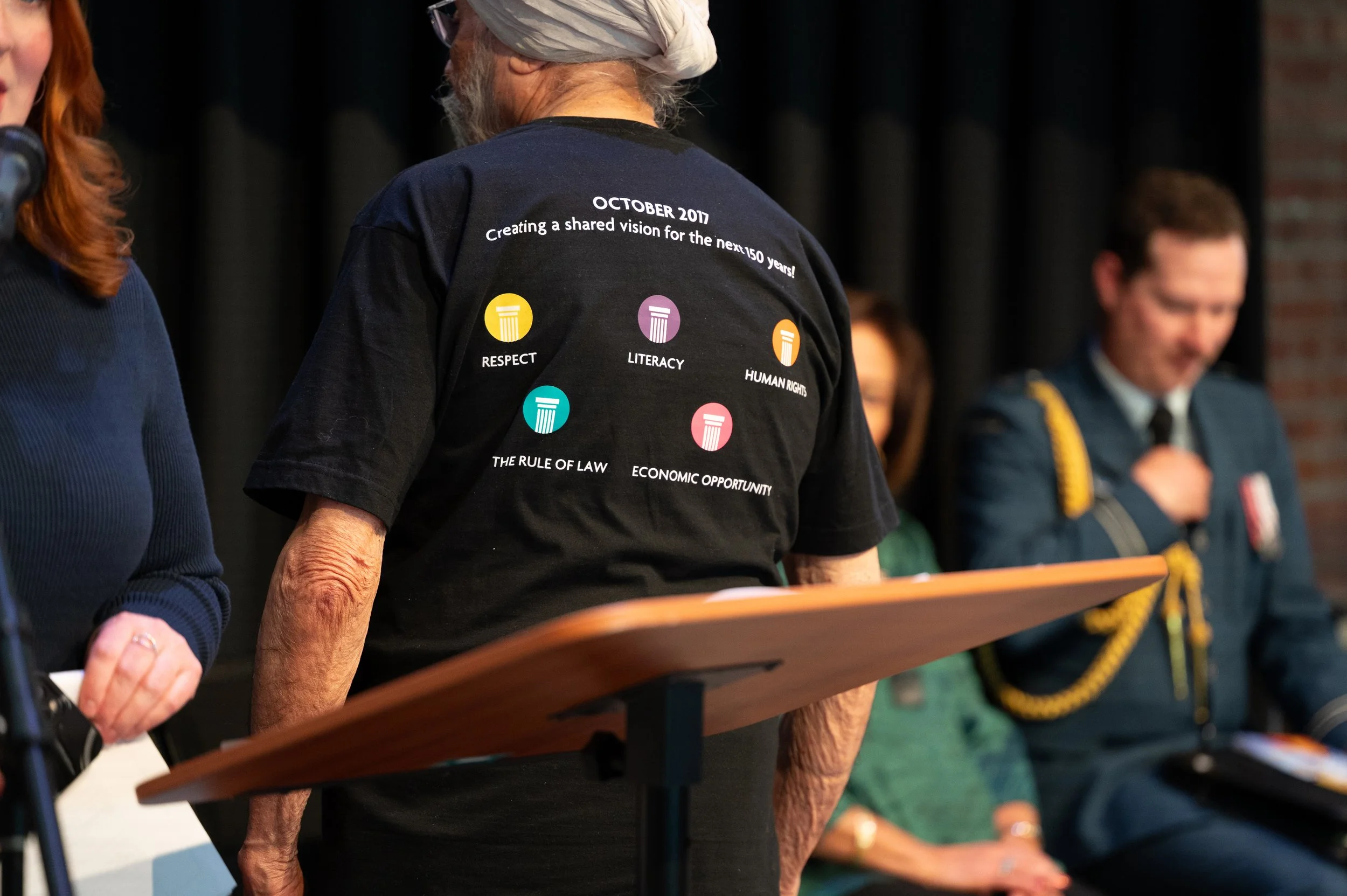
Judge Bhatia shared a vision that was built from intentional community engagement, presenting five pillars that can promote Canada “as a civil society with human rights culture”. Pointing to the shirt he was wearing, he outlined these five pillars:
1. Respect
2. Literacy
3. Human Rights
4. Truth of Law
5. Economic Opportunity
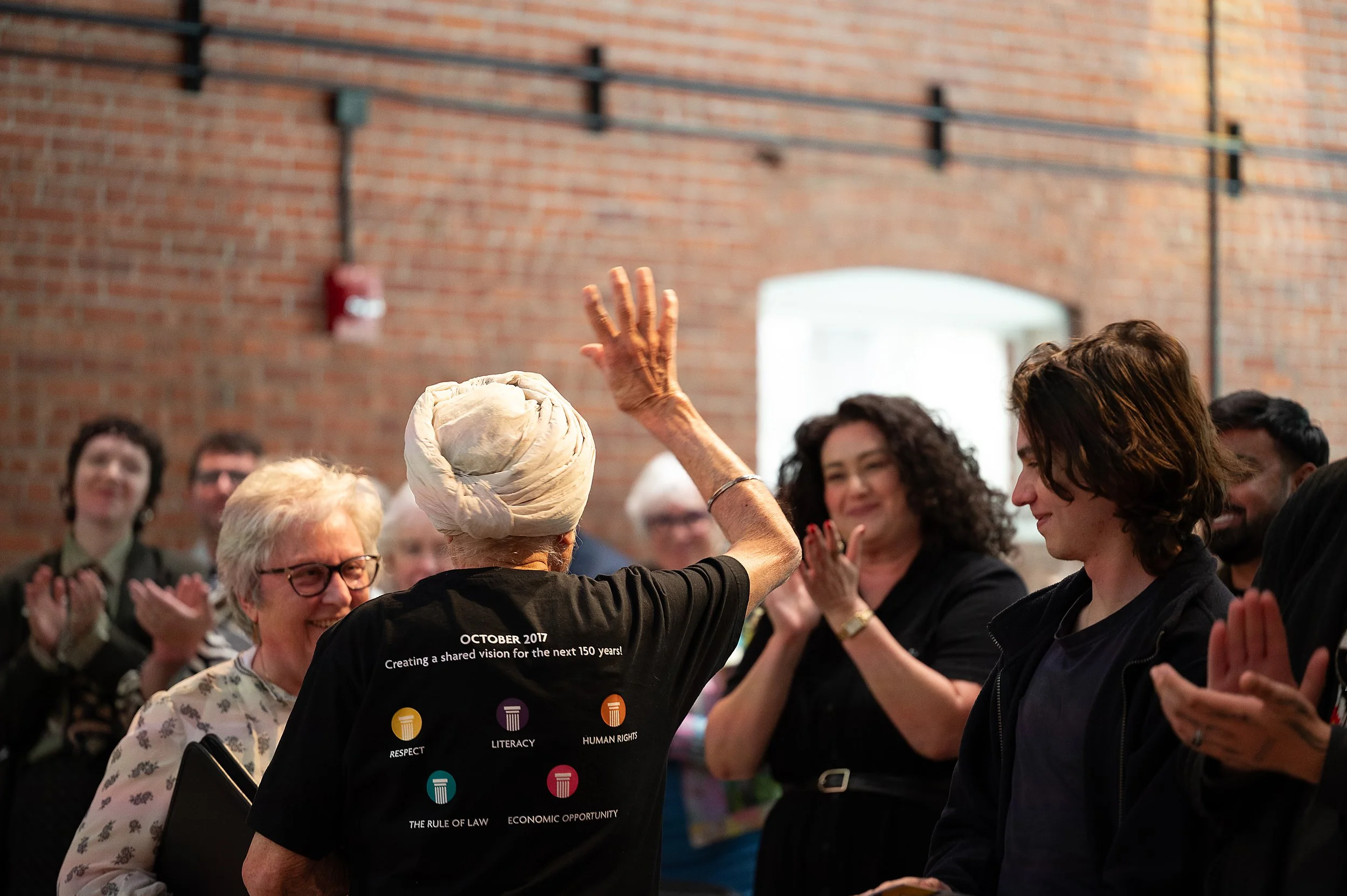
As his speech concluded, Judge Bhatia called for everyone present to continue to build a future of peace and human rights and was met with a standing ovation:
“Together you, me, everybody. Let us build [a] civil society with a culture of peace and human rights, a role model for the country,” ending with a quote by cultural anthropologist Margaret Mead that resonates deeply: “Never doubt that a small group of thoughtful committed citizens can change the world.”
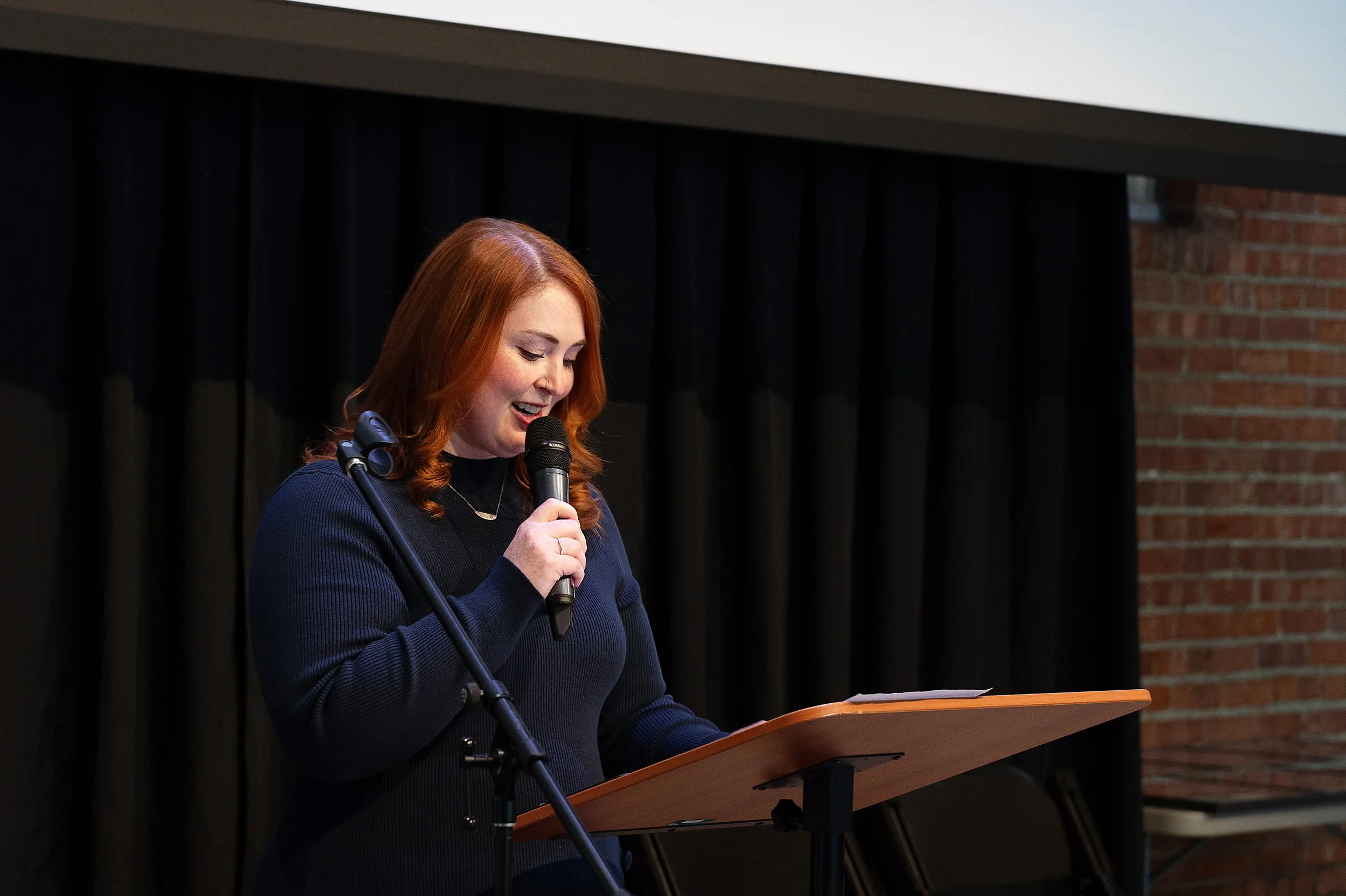
Transitioning into the presentation of the awards, recipients expressed deep gratitude for their heritage, families, and community allies. Their remarks underscored a central truth resonating throughout the event: advancing social justice requires bridging divides, staying rooted in shared values, and recognizing that this vital effort relies on collective action rather than individual endeavor.
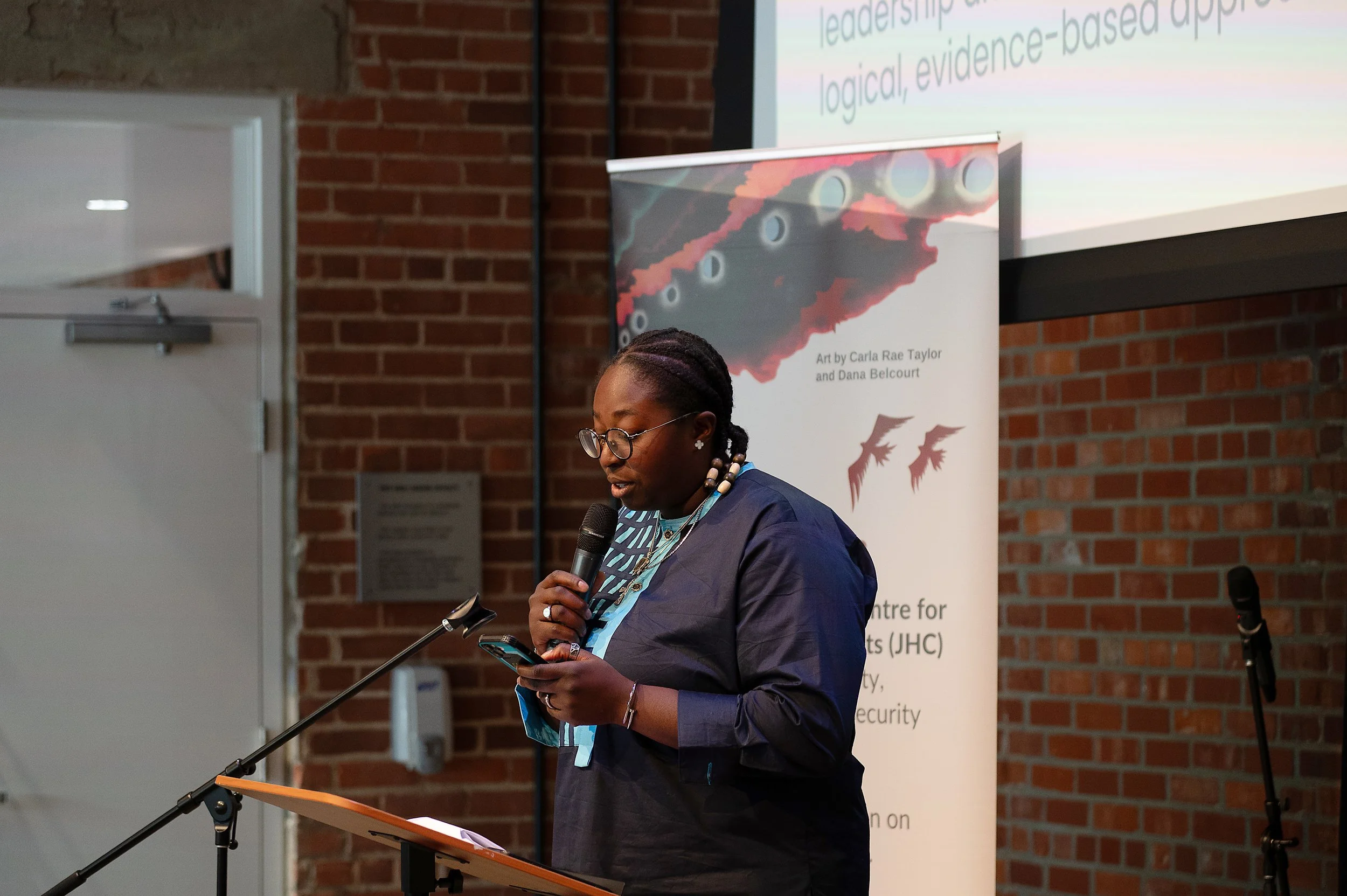
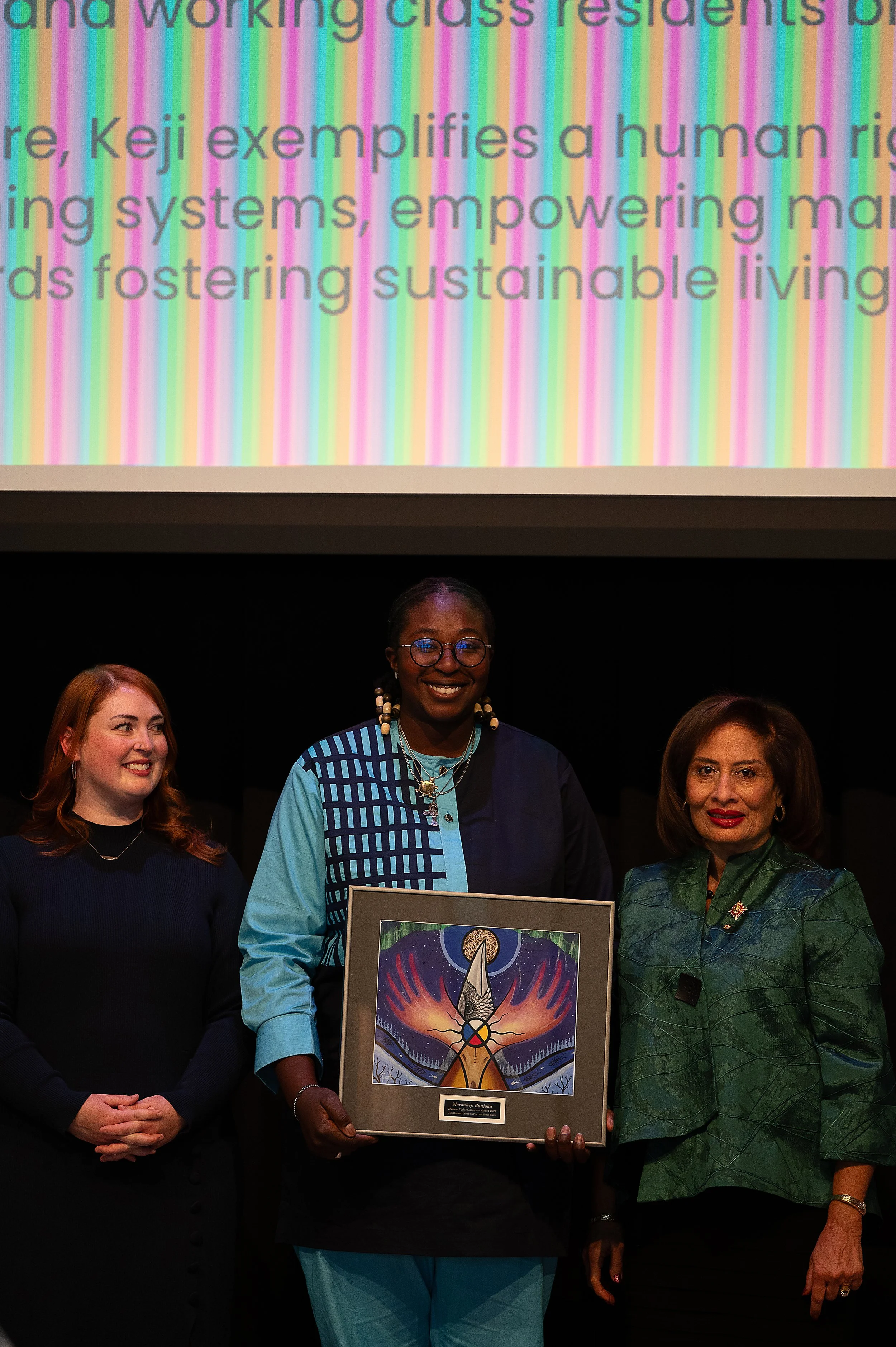
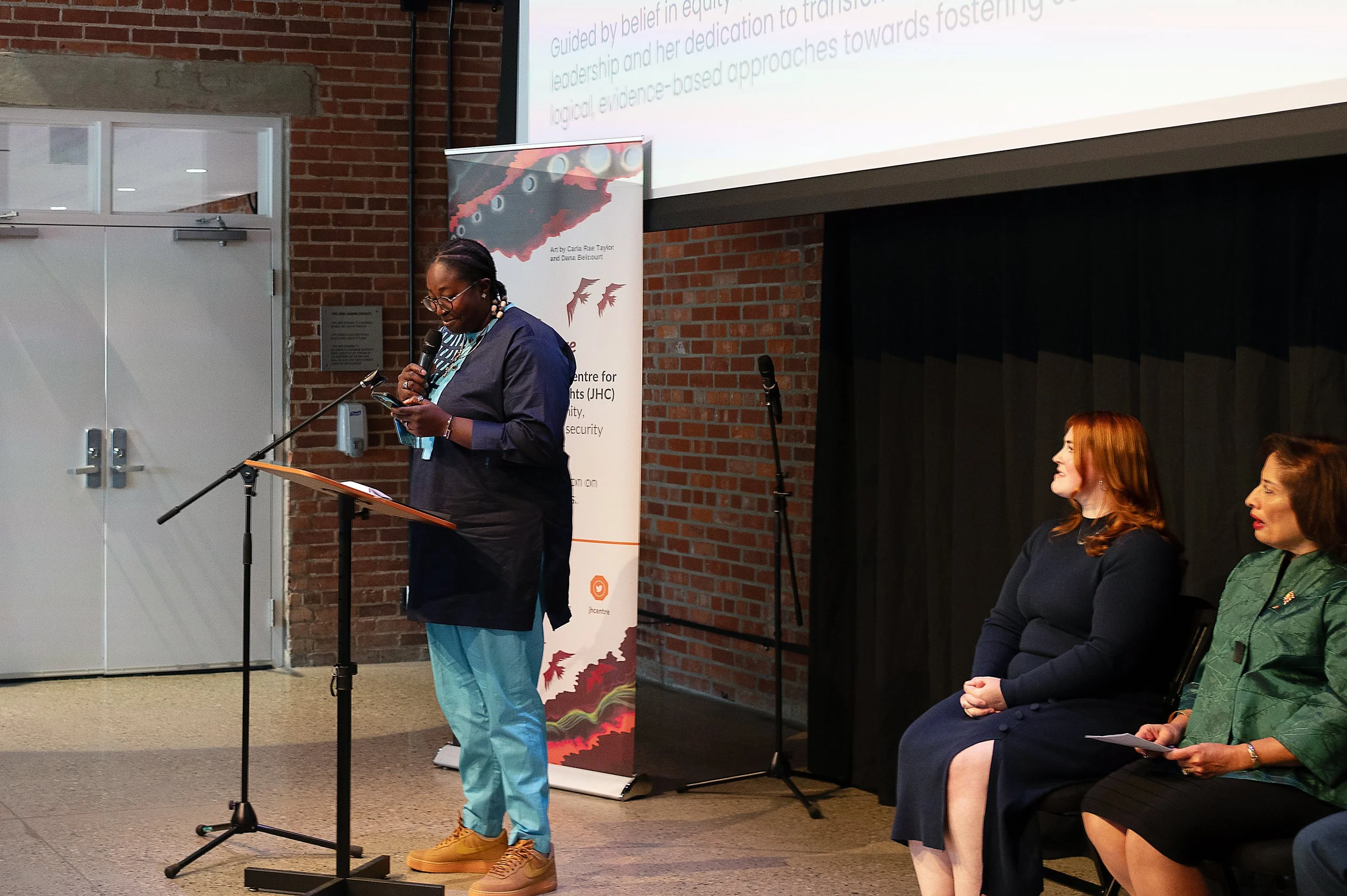
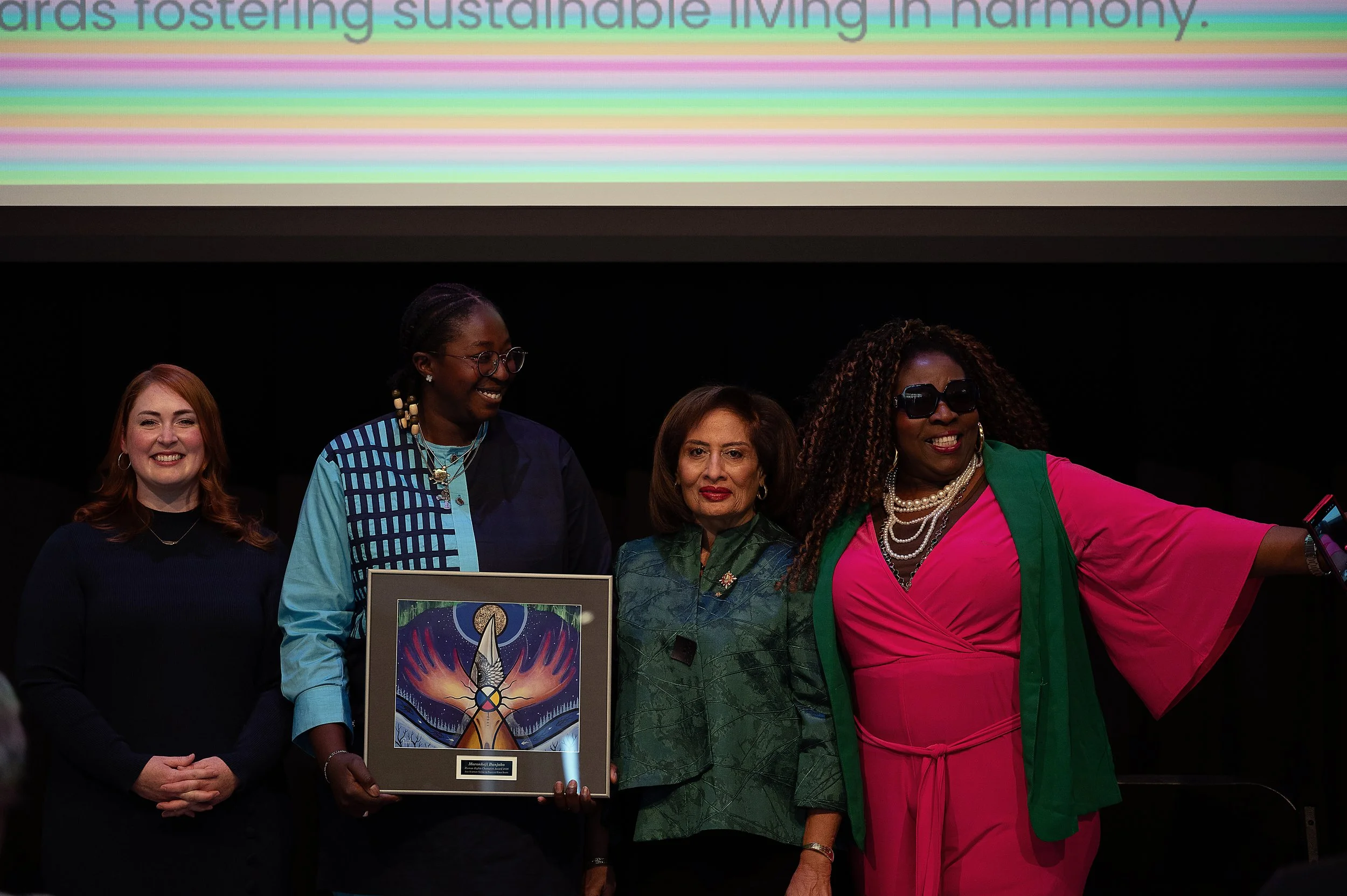
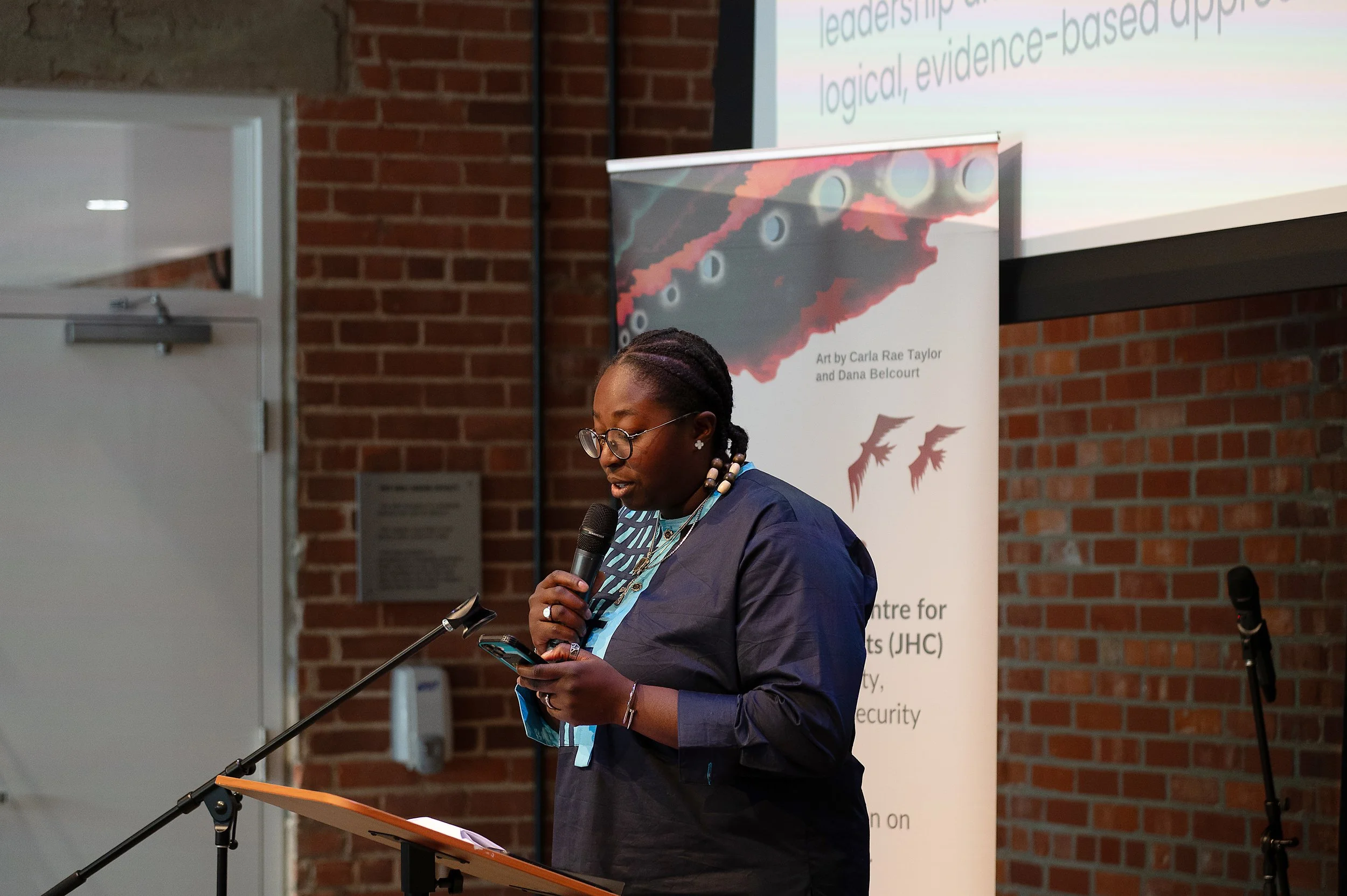
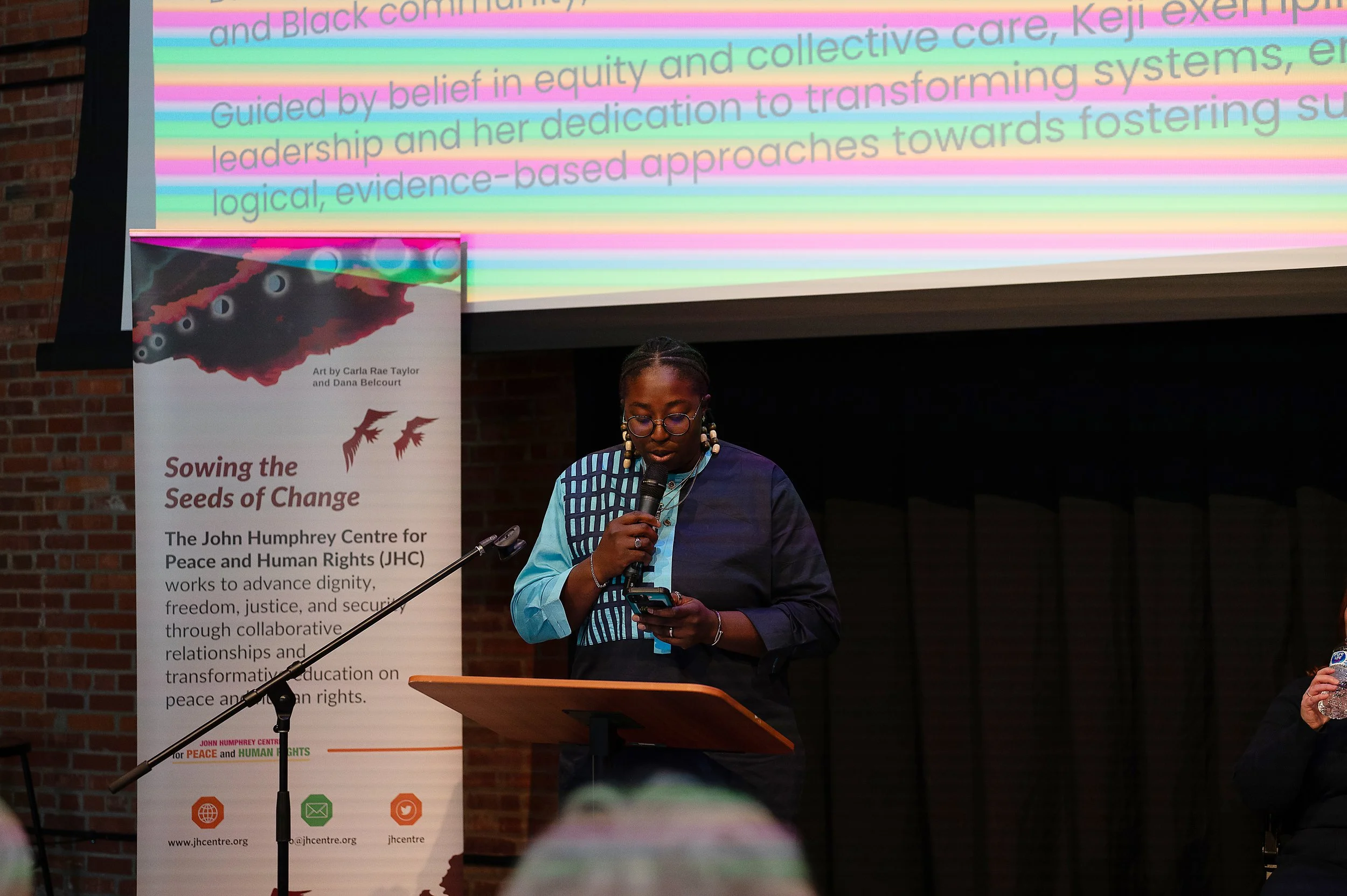
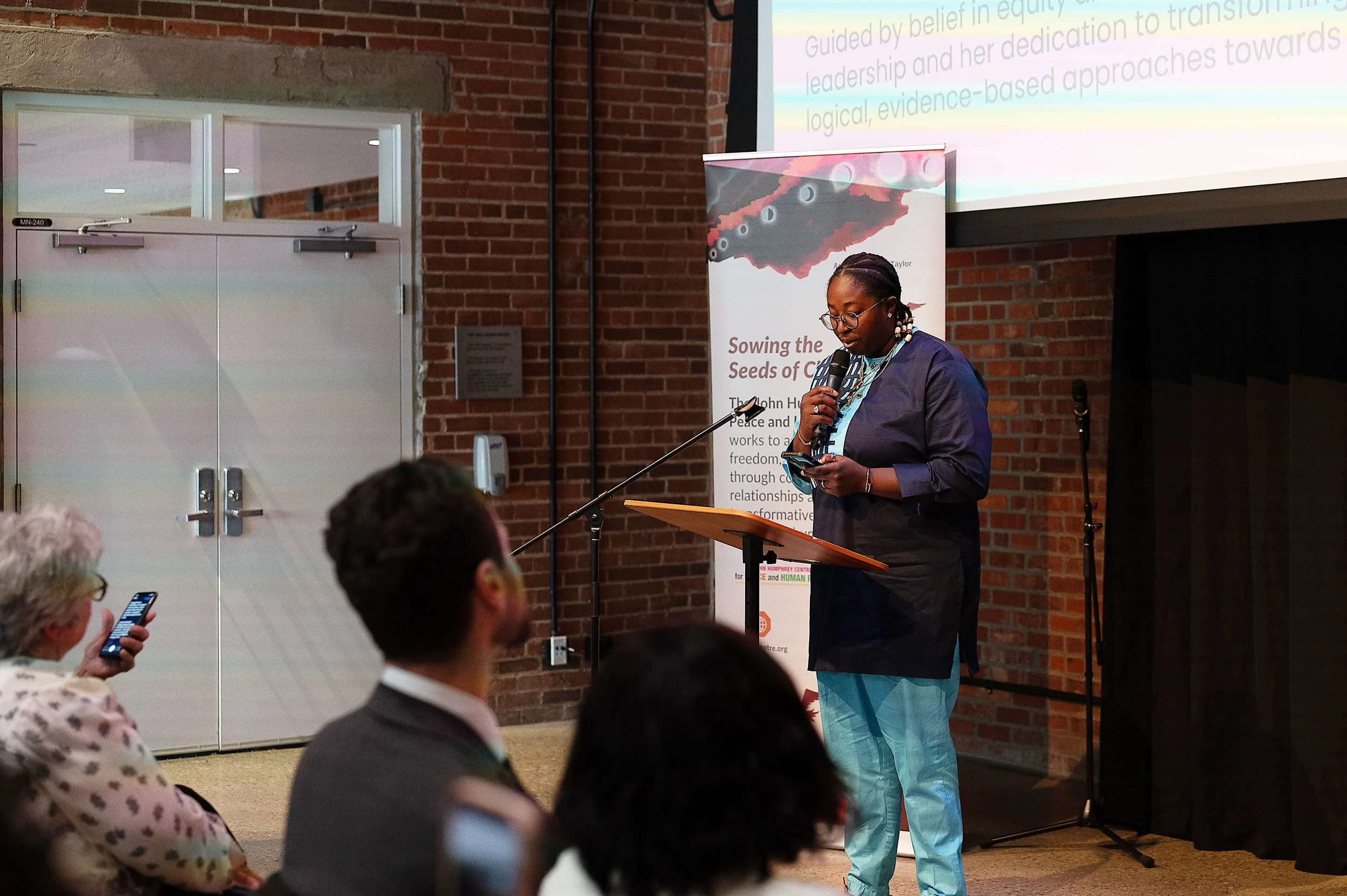
Moronkeji (Keji) Banjoko (she/they): Human Rights Champion 2026 award recipient
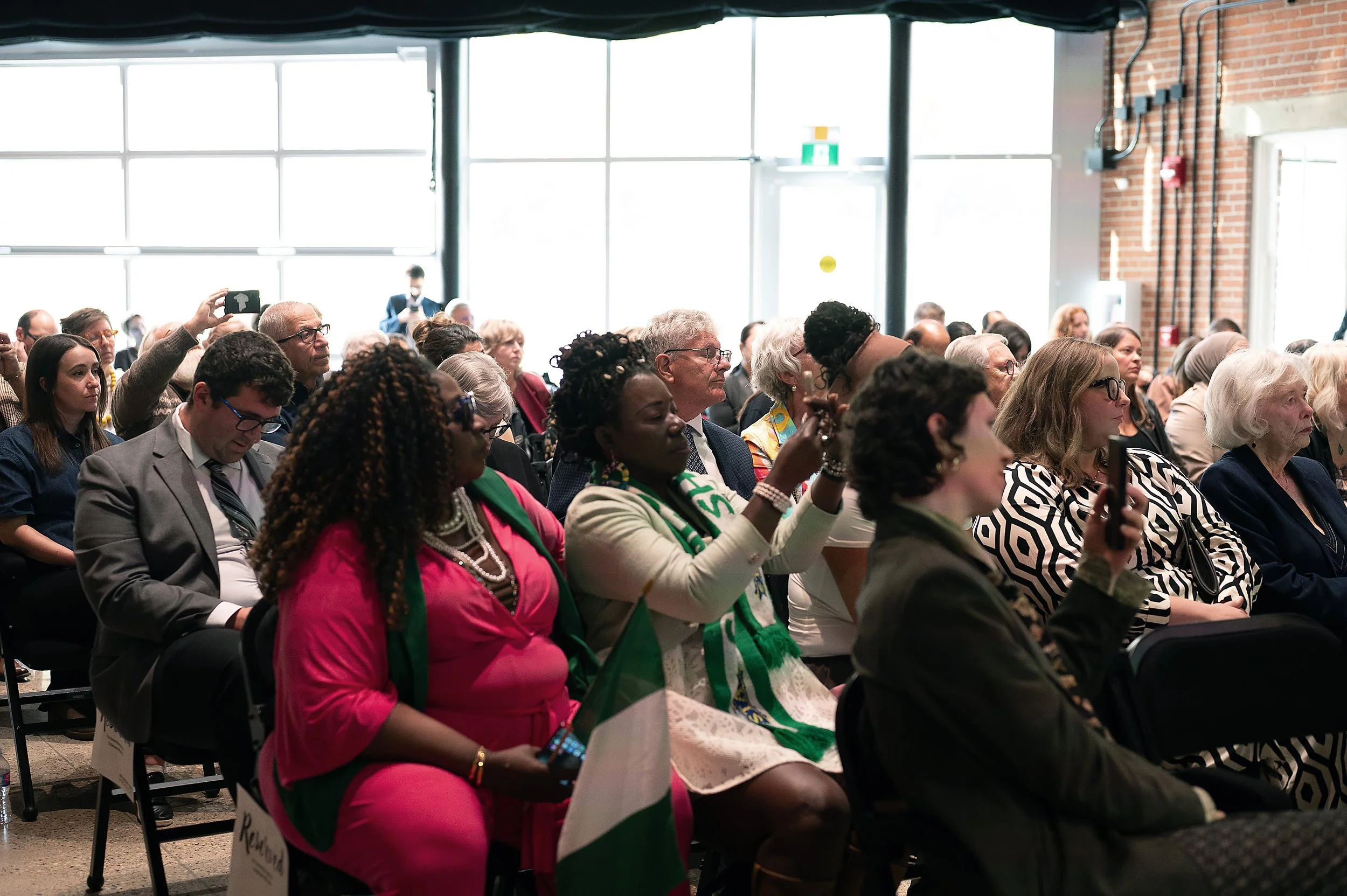
Human Rights Champion award recipient Moronkeji Banjoko honoured their roots, as the awards day fell on the Nigerian Independence Day, bringing the Nigerian flag up when receiving their award:
“This award means a lot and is part of the Nigerian diaspora. Concerns about human rights have coloured my childhood. It is so important to me that my work is globally oriented even while working in a grassroots capacity. My work to promote human rights is also rooted in my culture as a Yoruba woman. I draw on the strength of my forefathers…I’m grateful that their tenacity lives on in me.”
Sharing how they started “United for Change” during the height of the BLM movement, Keji shared their personal lived experience and motivations for the work:
“I felt invisible in my community, like there was no willingness to engage with the wider world around us. And that is really what radicalized me to take hold of this righteous anger that I felt and use my privilege to mobilize my community in solidarity with the black lives lost at the hands of police, drawing connections as well with our Indigenous kin whose own history with police is similarly riddled with colonial violence and a denial of full personhood.”
As Keji spoke how her work focuses now on political education and food security, supporting working class and racialized minorities, they spoke of how lived experience is shaped by institutional barriers:
“Where we live, these barriers are rendered invisible, by narratives that focus on assimilation, even as we celebrate multiculturalism.”
Keji shared her vision for United for Change’s future work:
“I hope through United for Change, [we can] have meaningful conversations that drive mobilization and build a community network of care founded upon the principle of taking ownership for the needs of our neighbours. Our goal is to support sustainable organizing efforts, harnessing our collective power to fight against environmental racism, injustice, environmental degradation, and fighting for a world where equity is the norm and no one has to know a day of struggle.”
Her closing message resonated deeply:
“Pursuing human rights requires patience, commitment, and an unwavering belief in the value of every human being. And this is a responsibility that we share across generations.”
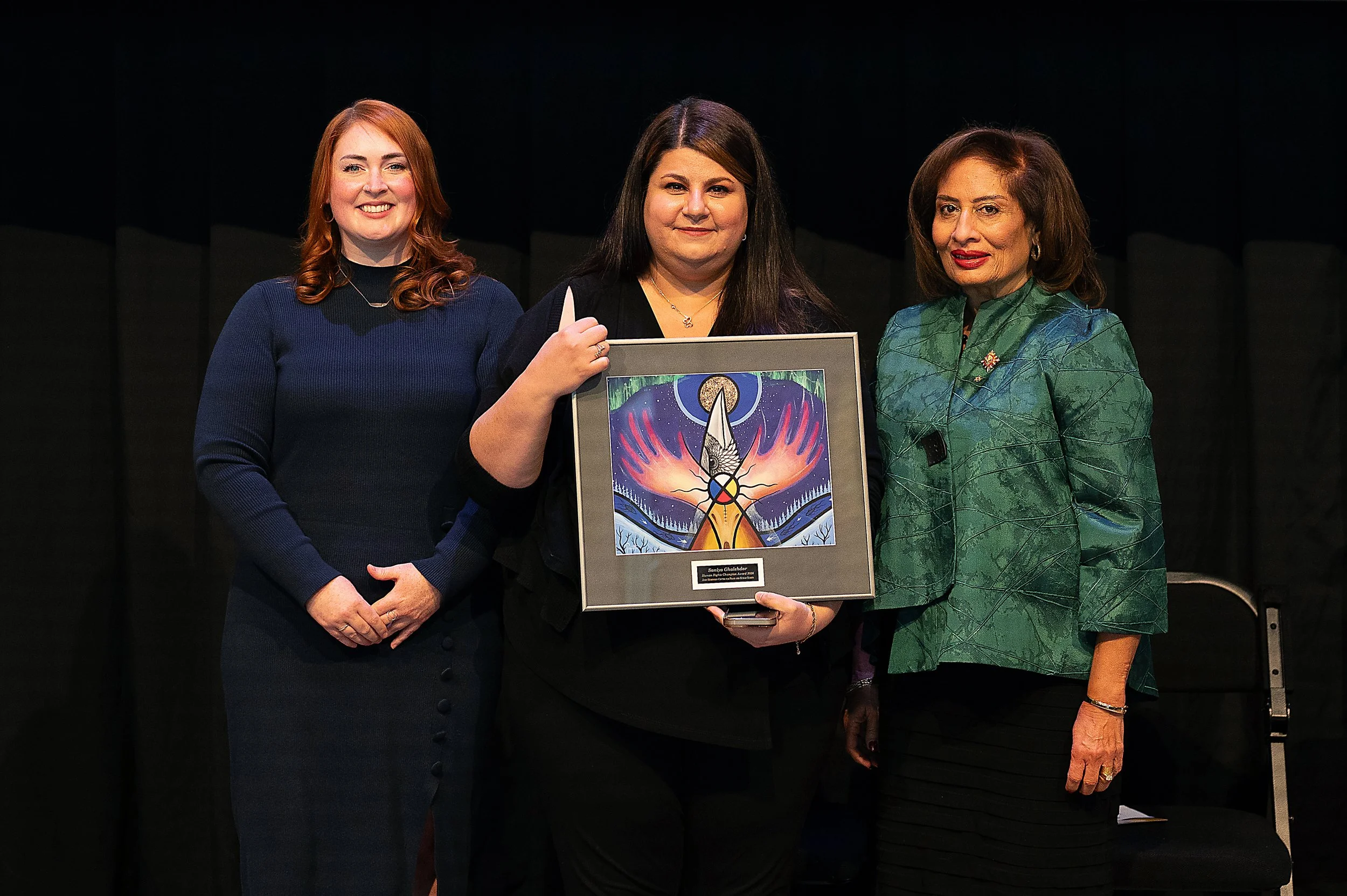
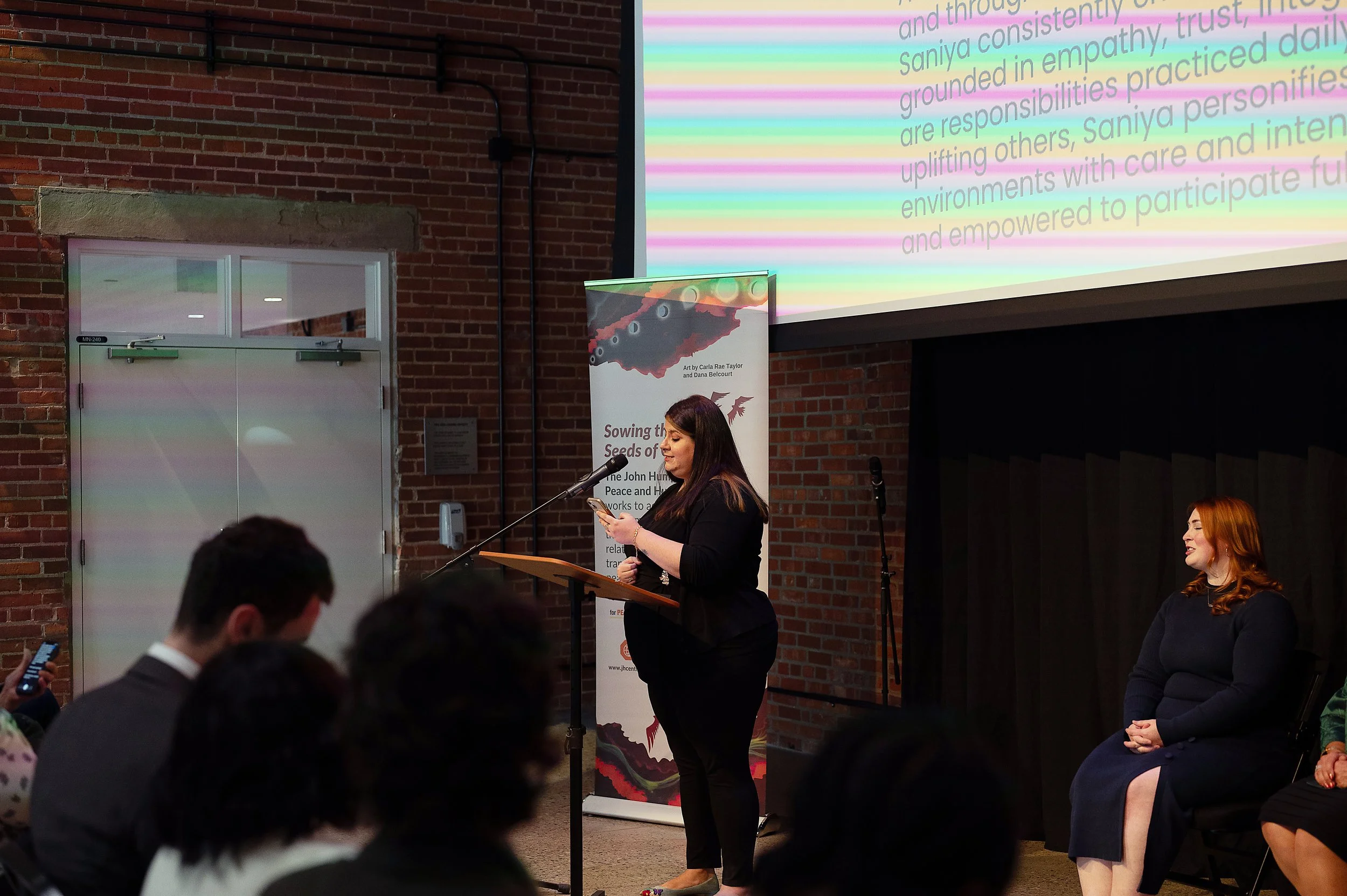
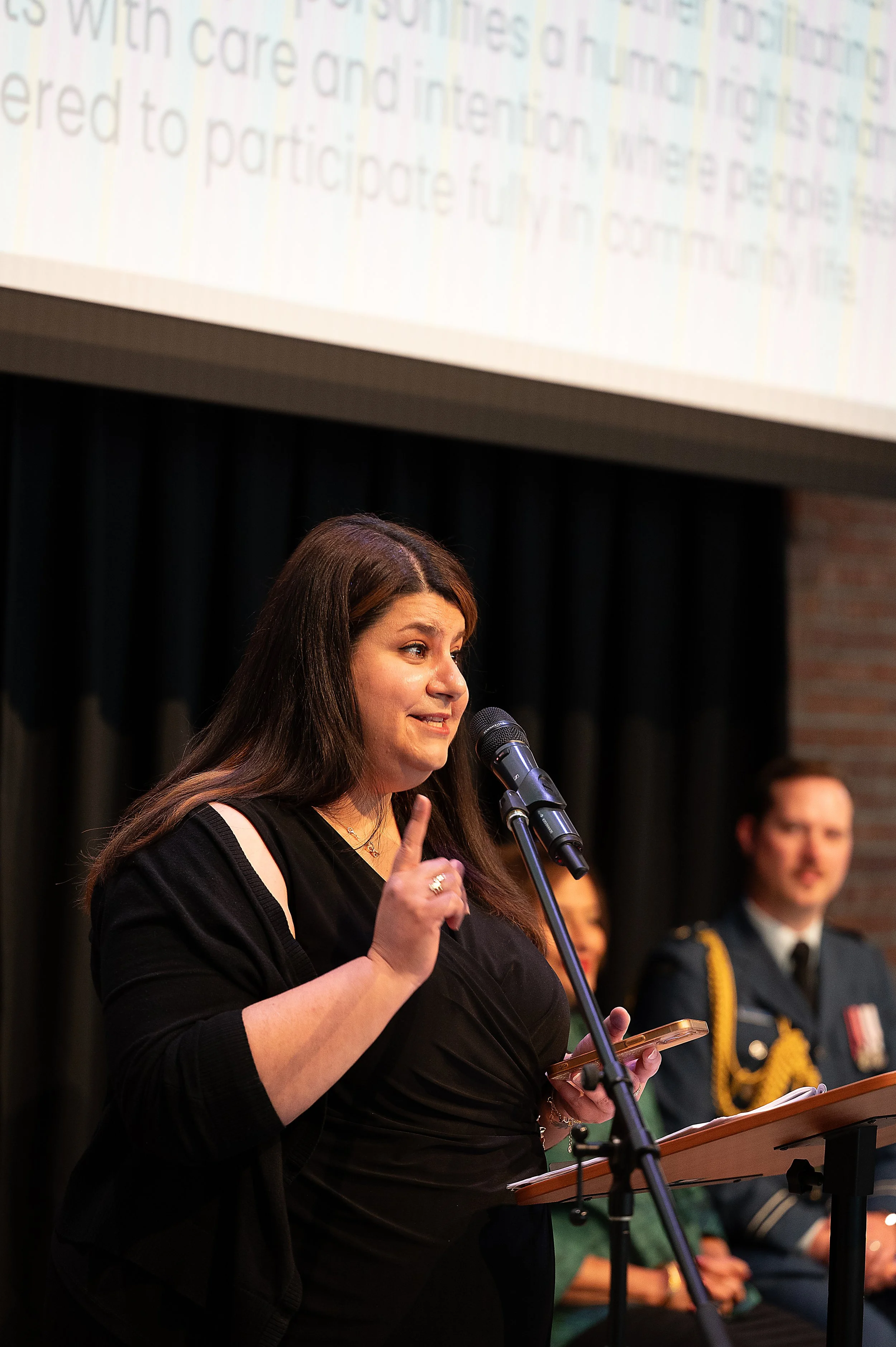
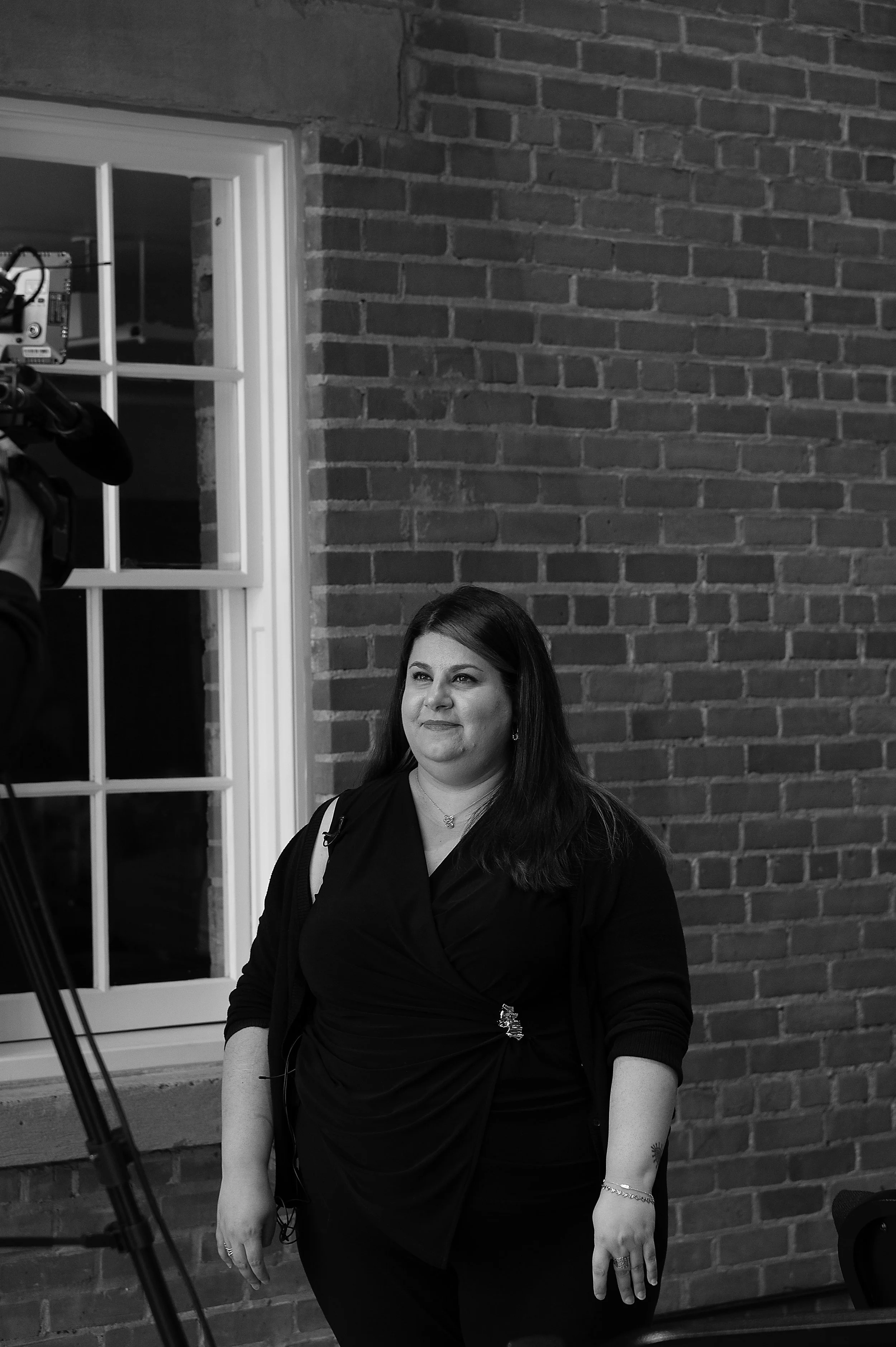
Saniya Ghalehdar (she/her): Human Rights Champion 2026 award recipient
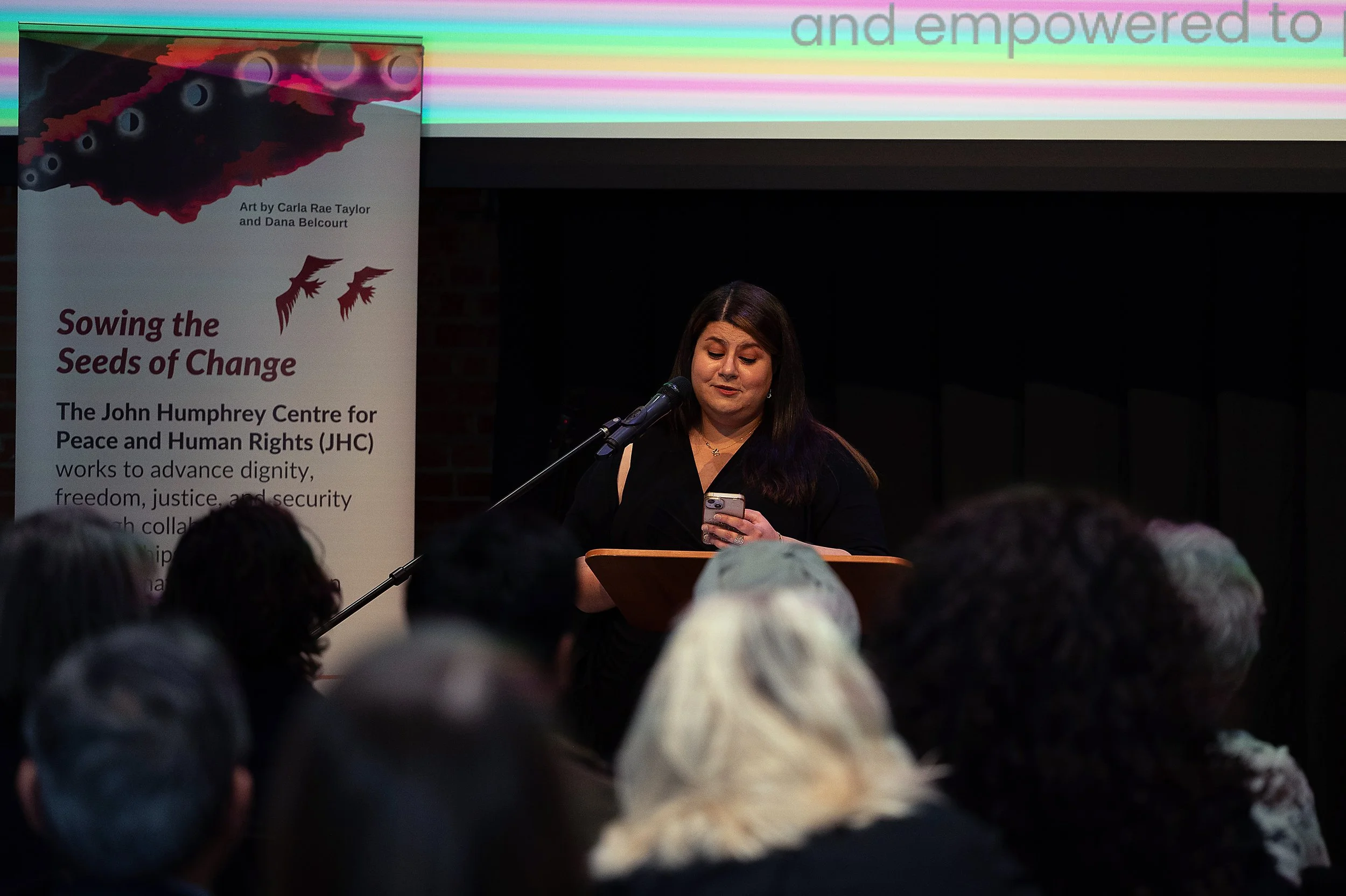
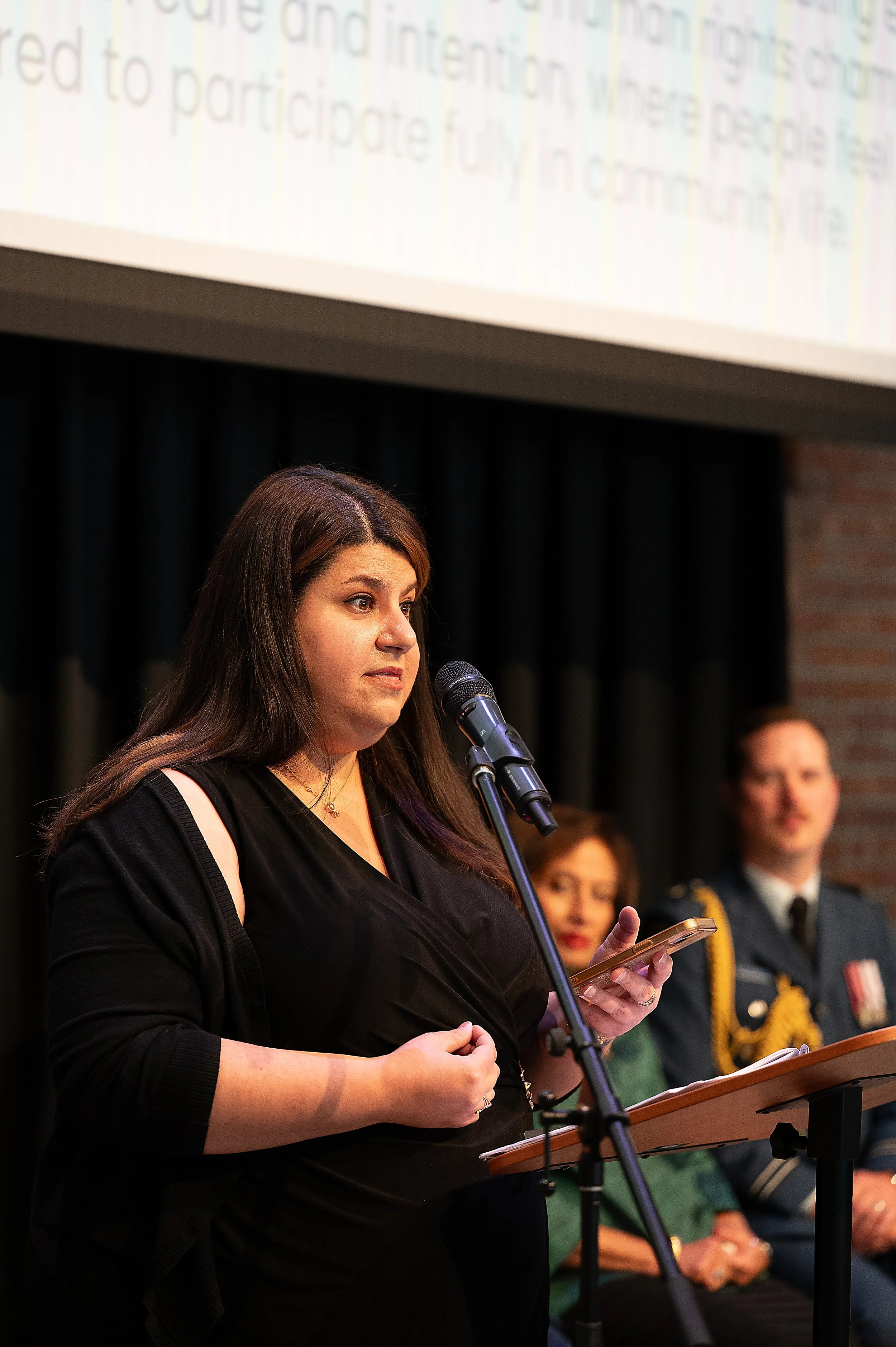
Saniya honoured her parents for making sure she had every opportunity to live and thrive in Canada, and how her upbringing grounded her in the importance of civic engagement. Saniya also thanked the John Humphrey Centre for providing tools and support to aid in her work:
“Through the John Humphrey Centre’s human rights facilitator and human rights advocacy training programs, I gained far more tools and knowledge. This team helped me. They helped me find my voice and perhaps more importantly, the confidence to use it.”
Saniya reflected that some of her most meaningful work has been to support amplifying the voices of women and gender diverse people in the Edmonton community and promoting gender equity:
“[That work] taught me that advancing gender equity means not only speaking up but making spaces for others to be able to speak, to lead, and to be heard.”
She concluded by thanking all who helped her in her learning journey and believed in her.
“None of this work is mine alone. I stand here because people believed in me before I fully believed in myself.” and called for care and compassion for those doing this heavy work “If you work in equity and human rights spaces, you know the work can be heavy. So, please look after the people doing this work. Check in on them. Help them hold steady because holding the line against hate, injustice, and inequality will take all of us in this room.”
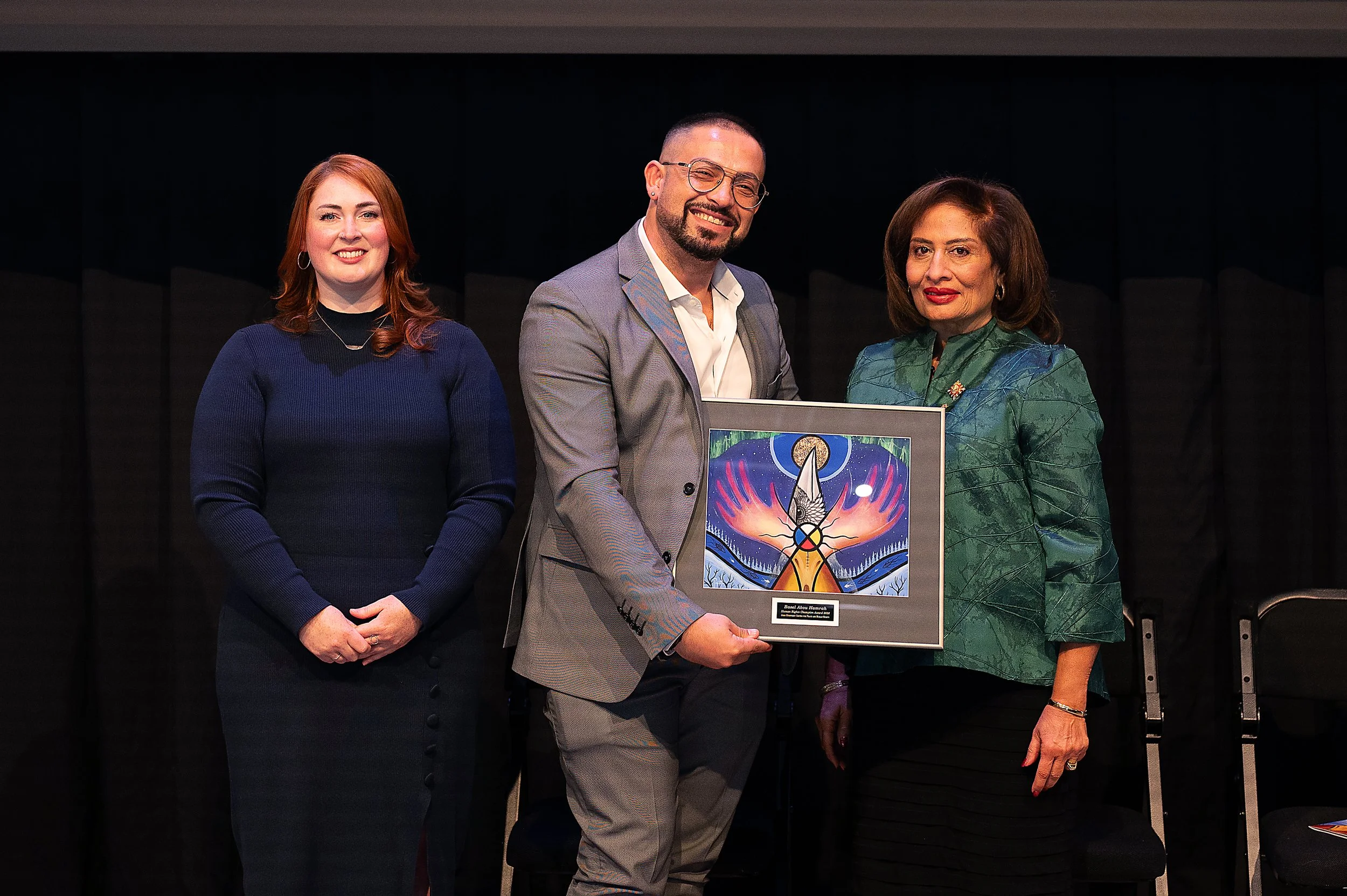
Basel Abou Hamrah (he/him): Human Rights Champion 2026 award recipient
“When I came to Canada as a refugee in 2015, I was looking for more than physical safety. I was looking for the freedom to live openly as who I am. To be accepted without hiding any part of myself and feel that I truly belong somewhere. That experience eventually became the foundation of my work…supporting LGBTQ refugees and newcomers as they rebuild their lives in Edmonton.”
Basel shared the deep impact and learnings from the Rainbow Refuge Program:
“What I have learned is that people need more than services. They need to be seen. They need someone to listen without judgement. The greatest teaching I have received from this work is that human rights are not only about keeping people alive. They are about making it possible for people to live with dignity, purpose, and hope.”
As Basel accepted the award, he shared his hopes as he journeys into a new chapter as a father, and what kind of world he wants his child to be part of:
“As I prepare to become a father, hopefully a good father, this work feels even more personal. I think about the world I want my son to inherit. A world where no child is made to feel ashamed of who they are. Where refugees are welcome with compassion and where dignity is never received for only a fortunate few.”
Basel closed with similar words to the previous recipients, emphasizing that this work cannot be carried alone:
“Human rights work does not belong to one champion. It belongs to every person who chooses compassion over indifference, courage over silence, and community over exclusion.”
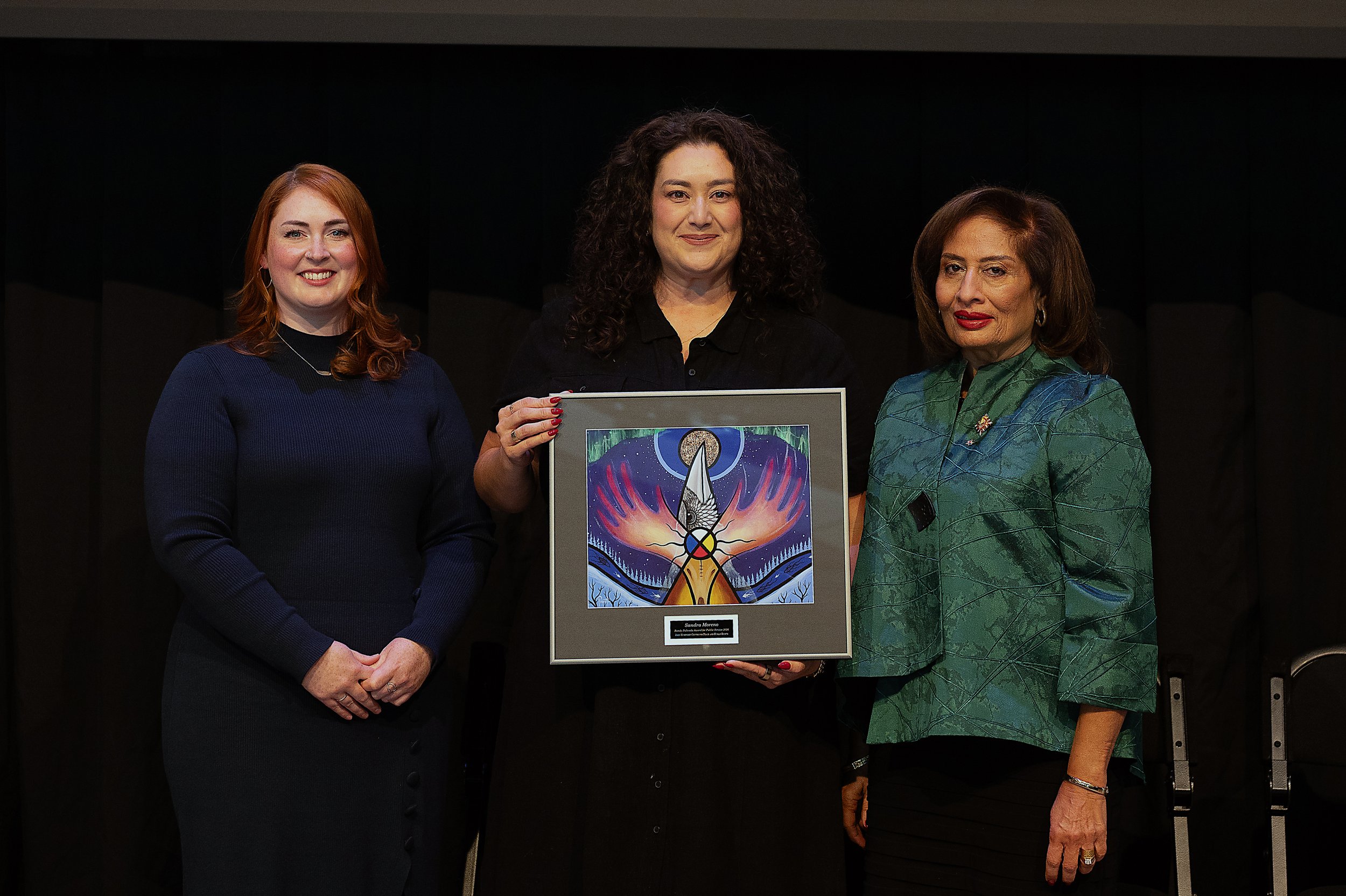
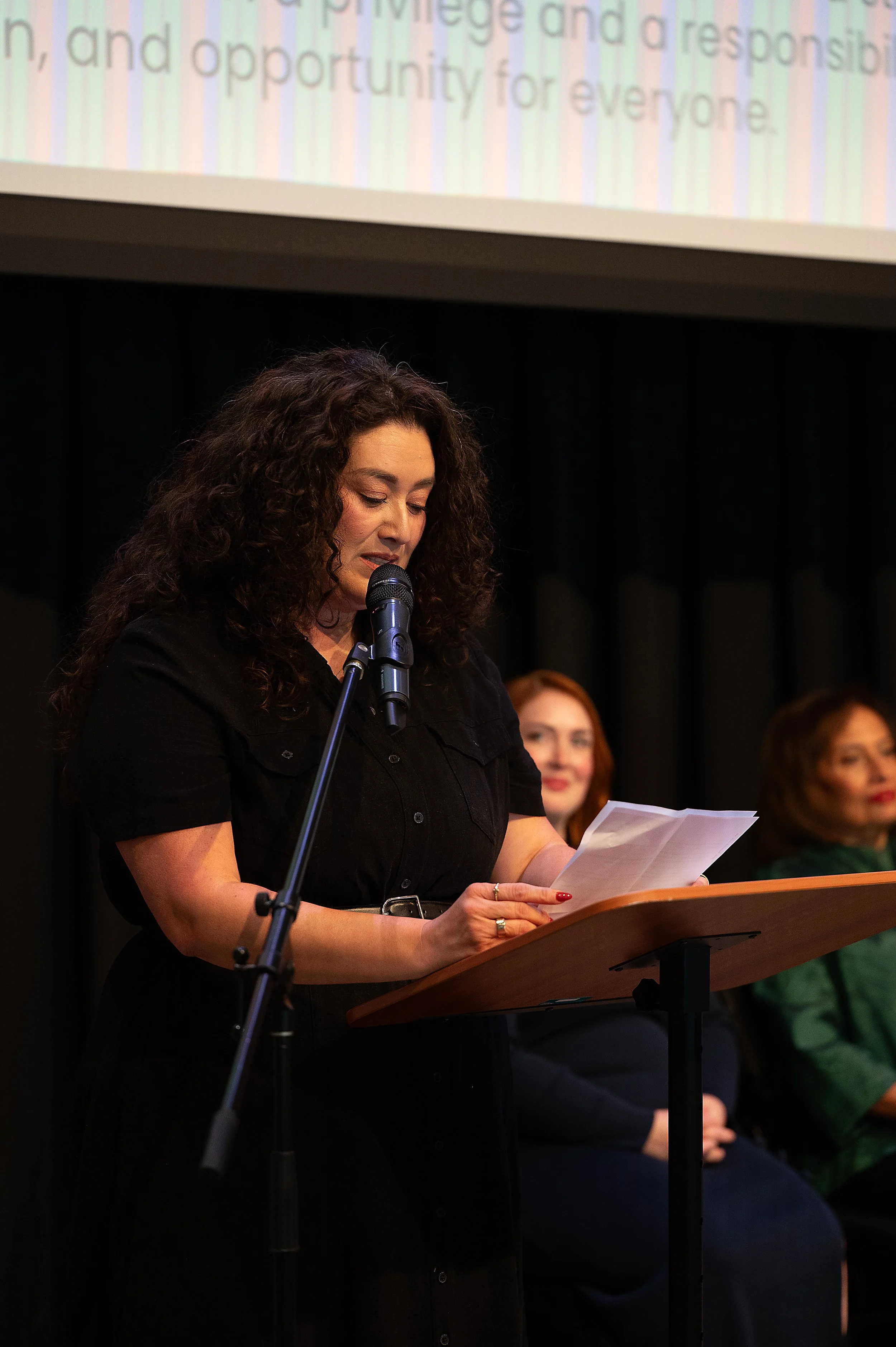
Sandra Moreno (she/her): Randy Palivoda Award for Public Service 2026 award recipient
Sandra shared her family’s journey to Canada to escape civil war that took the lives of many, including her beloved father. She noted that her father was studying to be a human rights lawyer and was dedicated to fighting against oppression and injustice. Sandra has been inspired to carry on his legacy that left her with a deep sense of responsibility to carry those values of social justice forward. She shared her upbringing that was deeply rooted in social justice and civic engagement, joining in protests as a child and knowing from a young age that her life’s work would somehow be rooted in human rights and service.
Sandra also shared that through growing up alongside Indigenous youth and having the privilege of experiencing Indigenous ceremony opened her eyes to injustice happening in a place that had become her home. These experiences drew her towards public service and opportunity to bring a human rights lens to institutions and systems that shape our communities, including in her role with the City of Edmonton. Sandra reflected on staying rooted in her values and integrity with her work in anti-racism:
“Through it all, I have tried to tightly hold on to my integrity. Because trust is at the heart of the work we do. And without trust, meaningful change is impossible.”
Sandra highlighted her work with youth civic engagement as one of the most impactful of her career:
“One of the highest honours of my career has been leading civic youth fellowship and seeing young people from historically underrepresented communities… take their place at the decision-making tables challenging our thinking and helping shape the future of what public service can look like.”
Sandra shared what she envisions legacy to be when it comes to human rights, and how urgent that work feels right now:
“I often think about what legacy looks like. And for me, legacy might look like a barrier that no longer exists, a community that sees itself reflected in their government, or an opportunity within reach for the next person. And that work feels especially urgent right now. We cannot allow it to become normal to deny people something as fundamental as clean water, or to displace or persecute people because of their faith, where they come from, or who they choose to love.”
“Human rights requires compassion, but it also requires courage and action. The willingness to keep pushing forward and the refusal to look away. My father never had the opportunity to finish the work he began. I could never have imagined…that little refugee girl that came to Canada would have the privilege in her own way of carrying some of that work forward.”
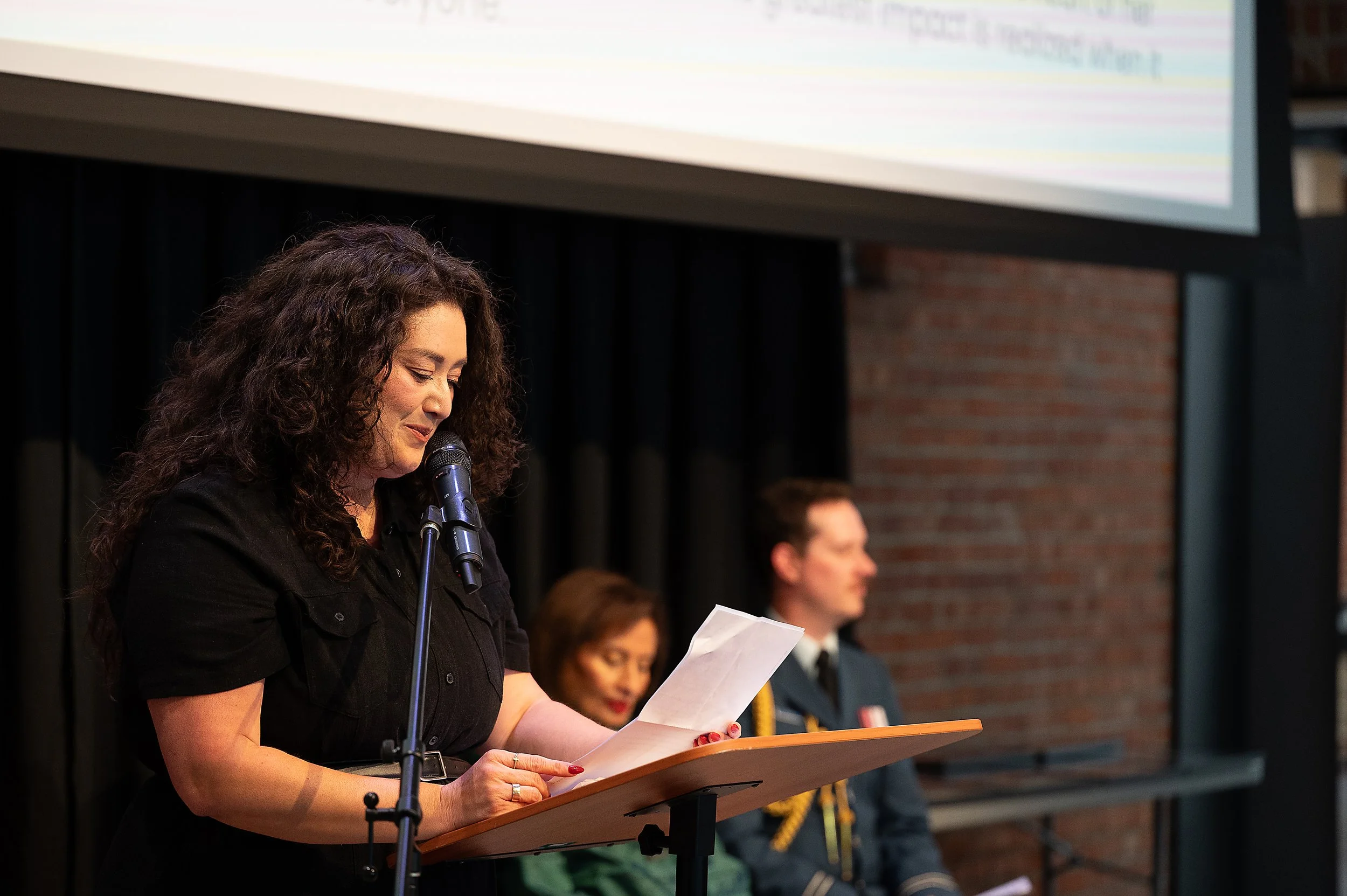
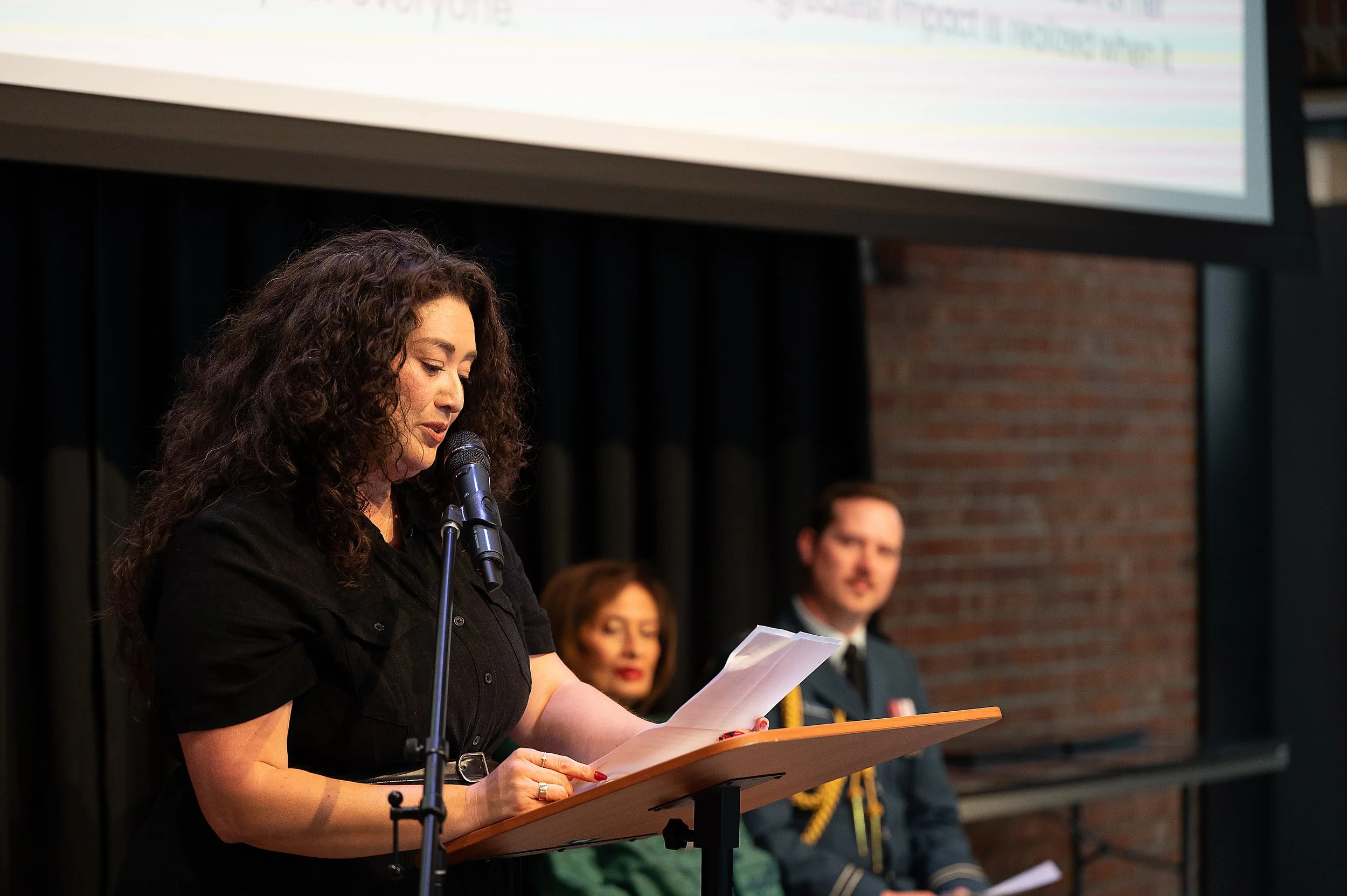
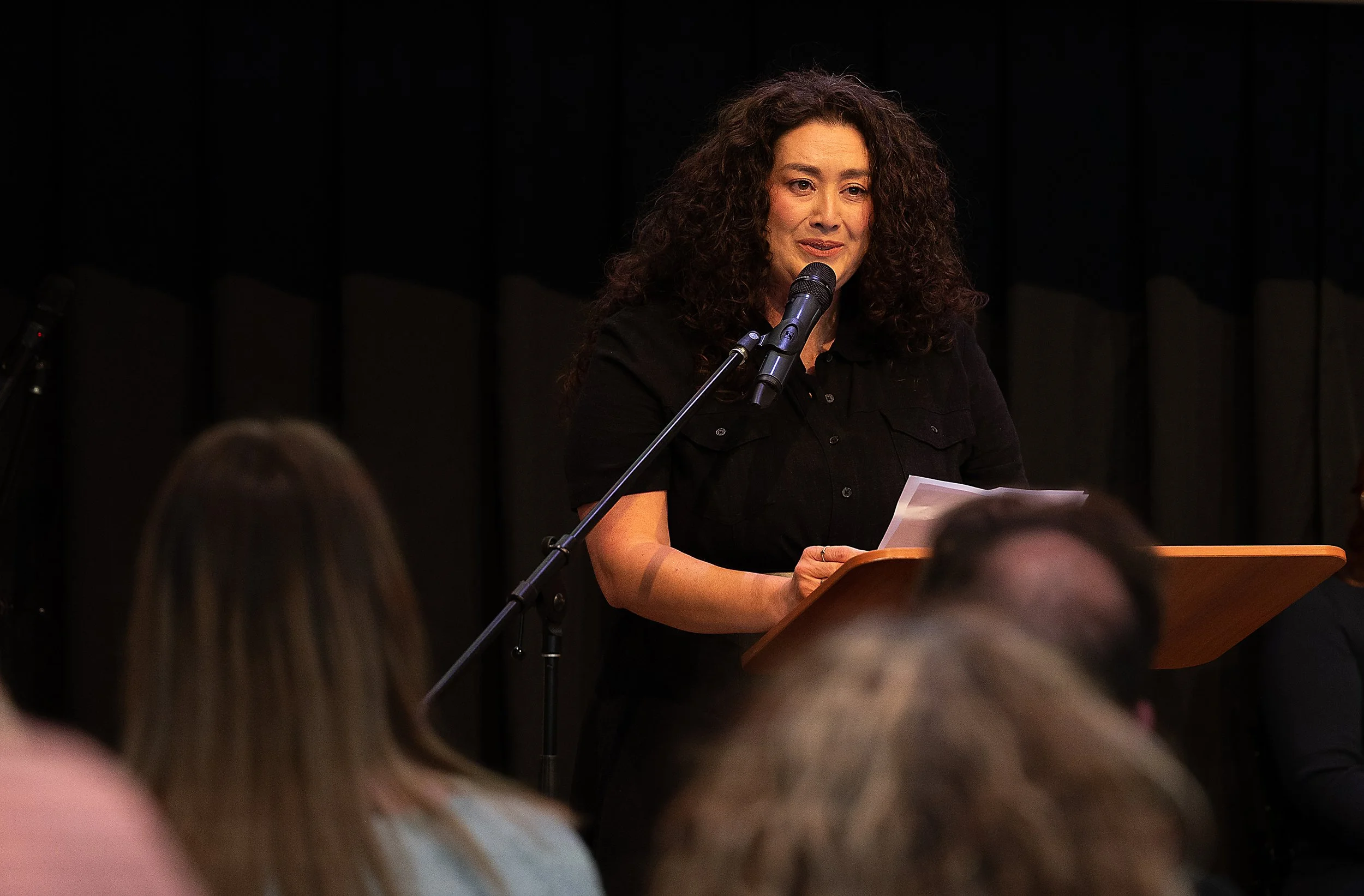
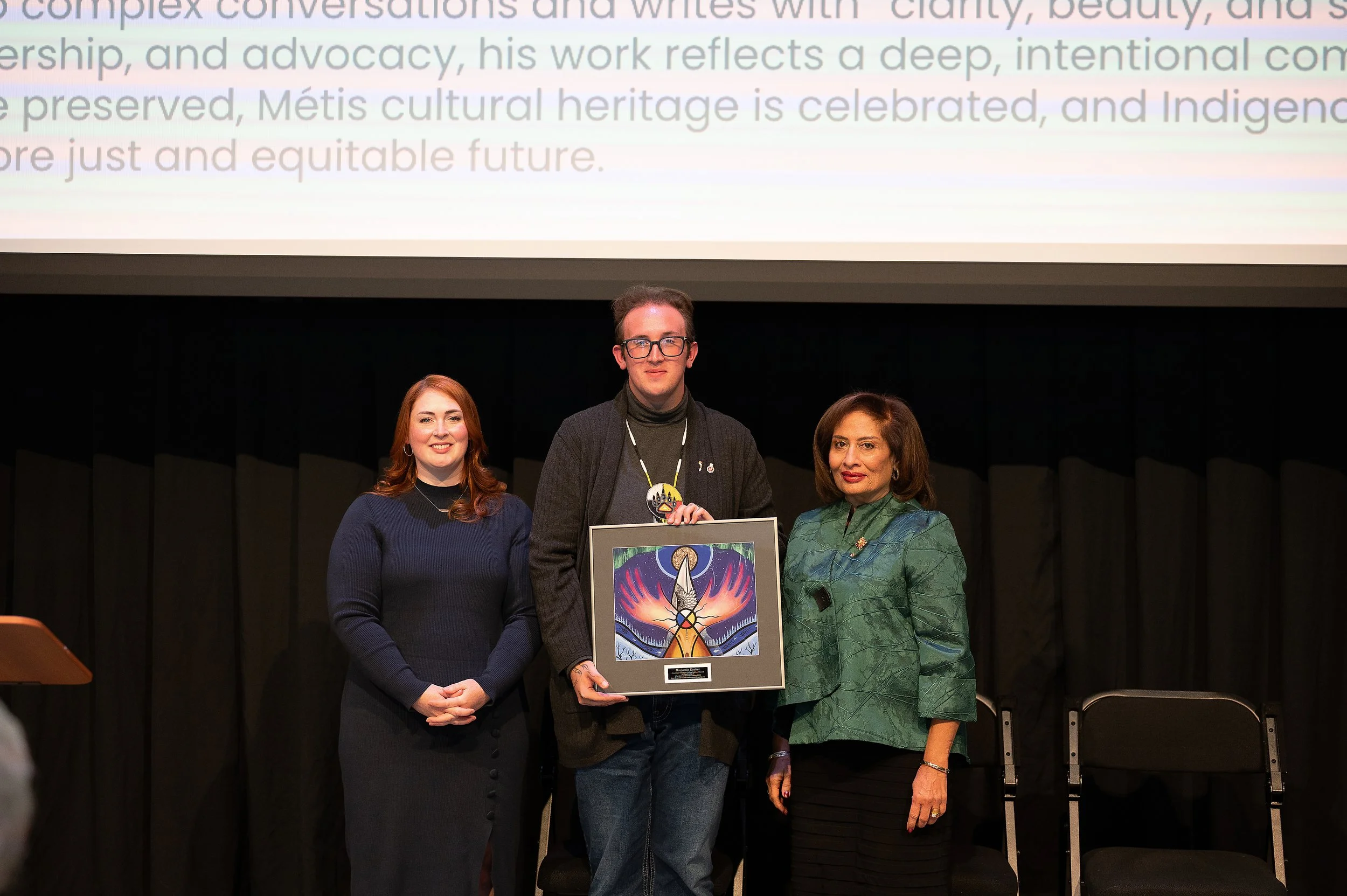
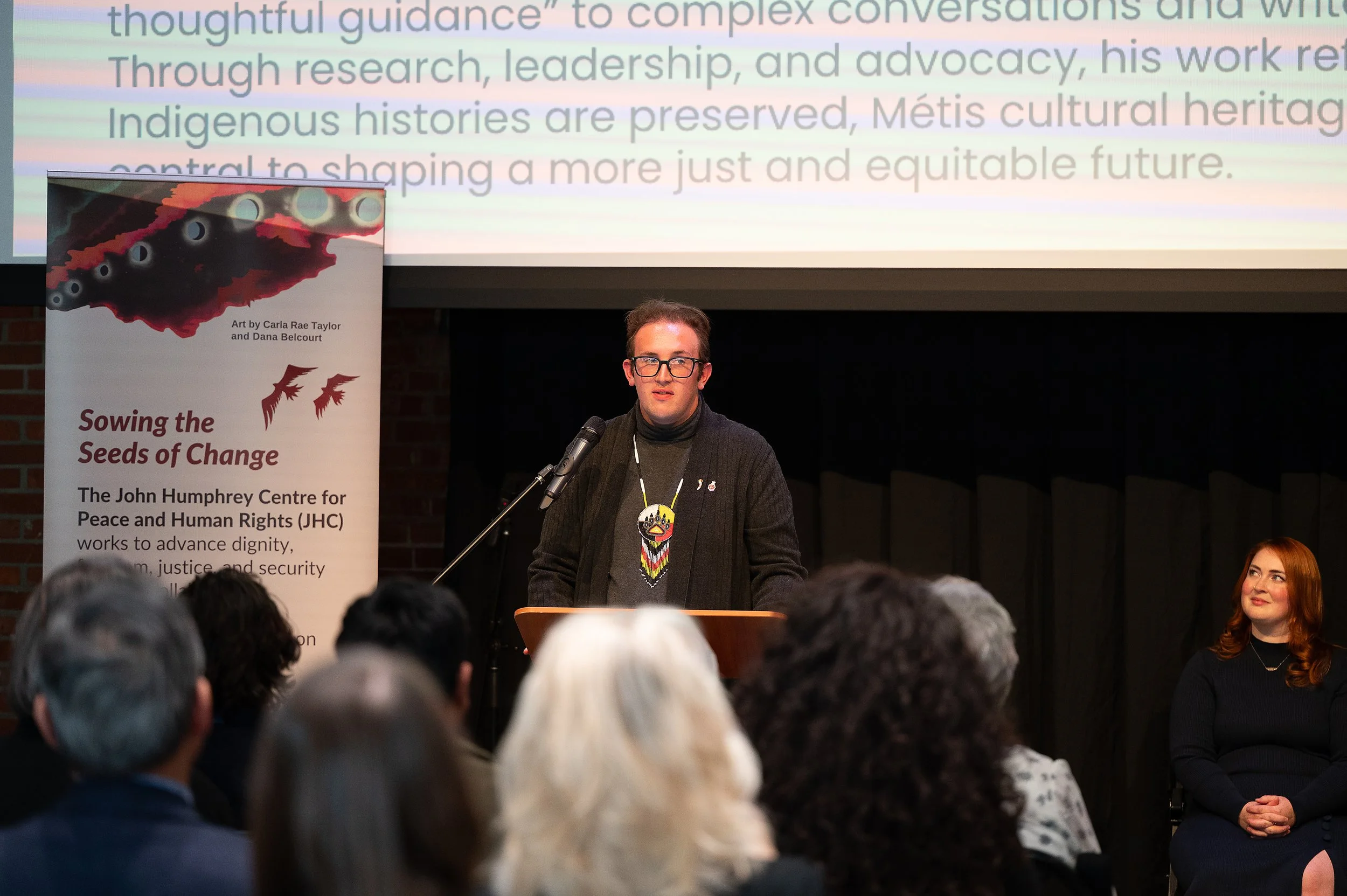
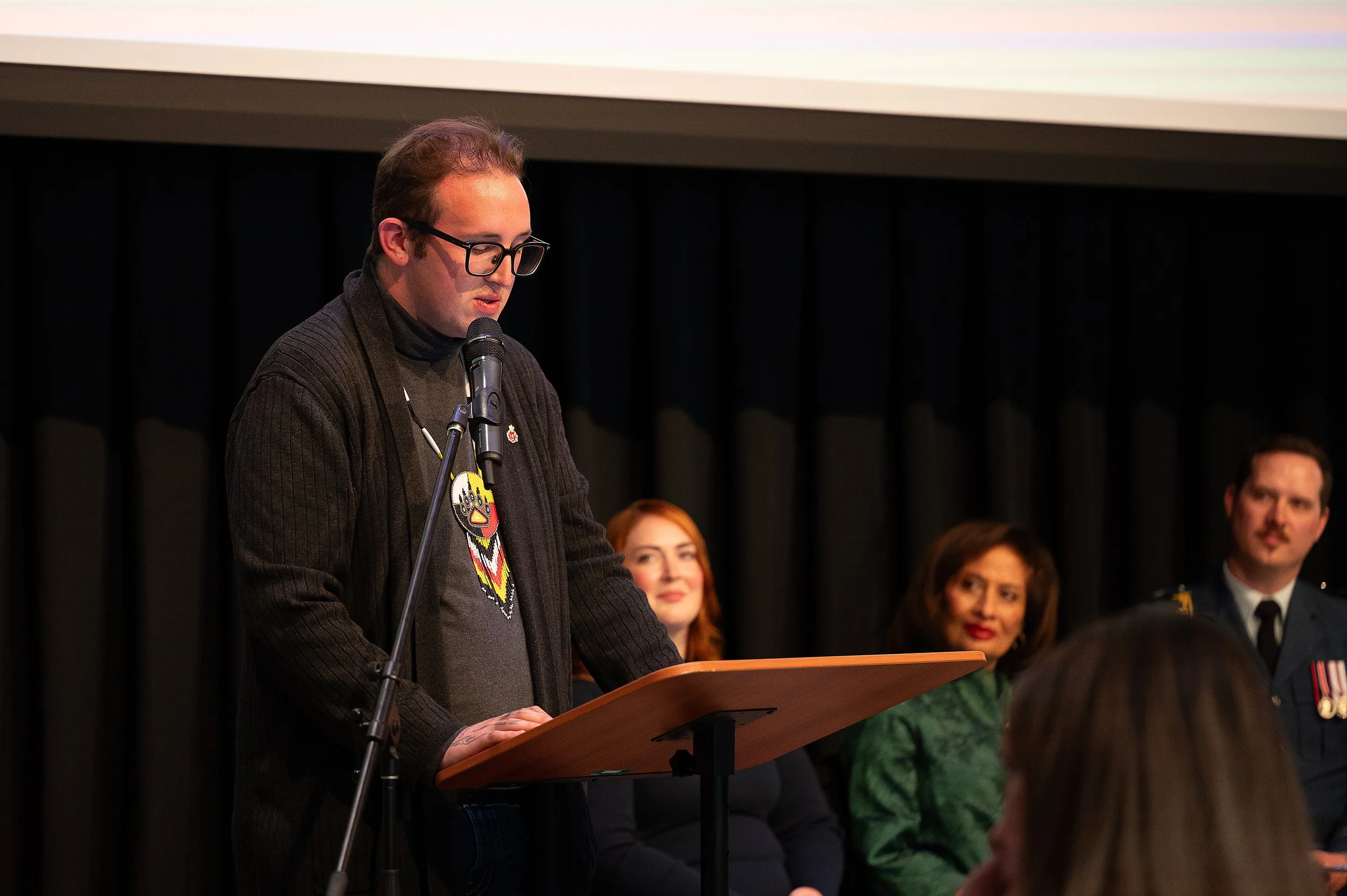
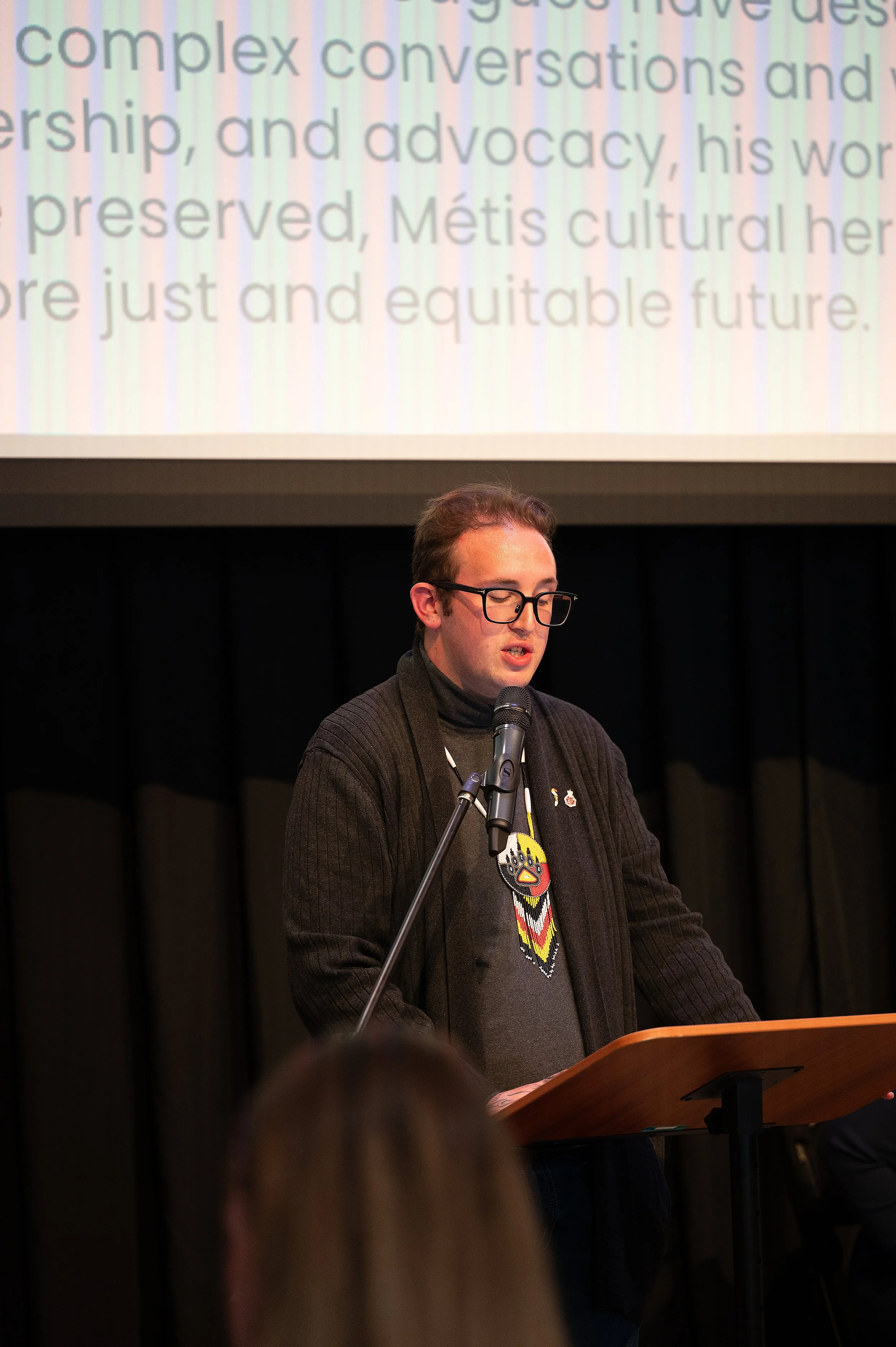
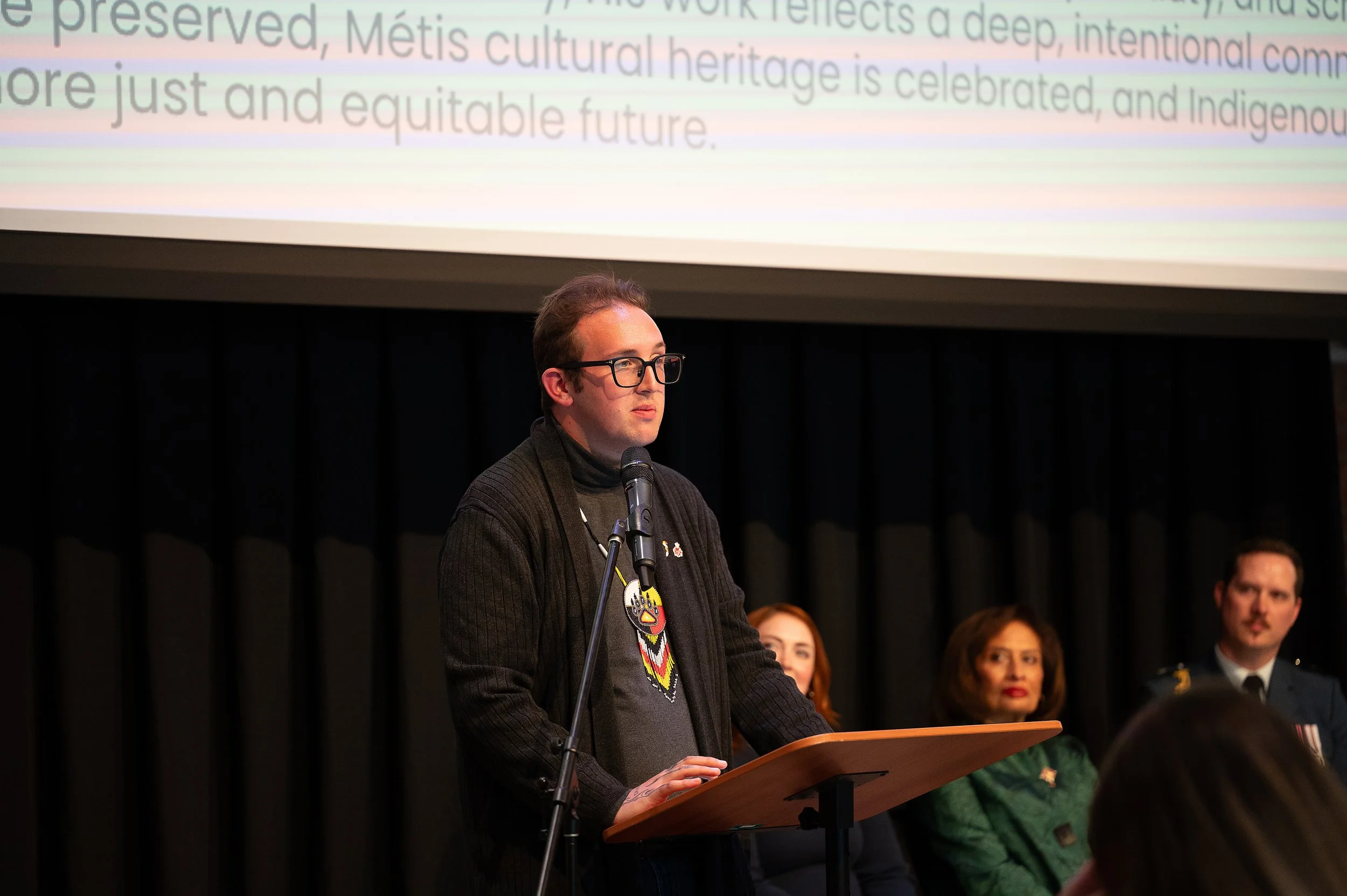
Benjamin Kucher (he/him): Lieutenant Governor Salma Lakhani Award for Leadership in Pluralism and Reconciliation 2026 award recipient
“I’ve never believed that this work belongs to one person. If anything, this recognition represents the countless people who have shaped, challenged, and supported me along the way. Everything I have accomplished has been possible because of people who chose to invest in me. Elders who shared their knowledge. Mentors who challenged me to think differently, [and] my friends and family who taught me that kindness and integrity matter more than any recognition ever will.”
Benjamin noted the particular significance in accepting the award the day after the National Day for Truth and Reconciliation, reflecting that this day asks us to not only remember but to commit to the work that needs to be done. He emphasized relationality to be fundamental to the work of reconciliation and pluralism and how those beliefs have become the foundation of their work. In closing, Benjamin called everyone to continue the work of asking difficult questions, to keep listening, and to continue building relationships over differences, and to believe that even in moments of division, we can choose one another.
“Reconciliation cannot exist without relationship. Pluralism cannot exist without difference. And human rights cannot flourish if we only extend dignity to the people who share our perspectives. Some of the most meaningful conversations are often the most difficult. They challenge our assumptions and remind us that listening is not the same as agreement. Listening can simply be an act of respect. Reconciliation asks us to be curious instead of certain, to choose dialogue instead of distance, and to remain at the table even when conversation becomes uncomfortable. It requires us to recognize the humanity of the person sitting across from [us].”
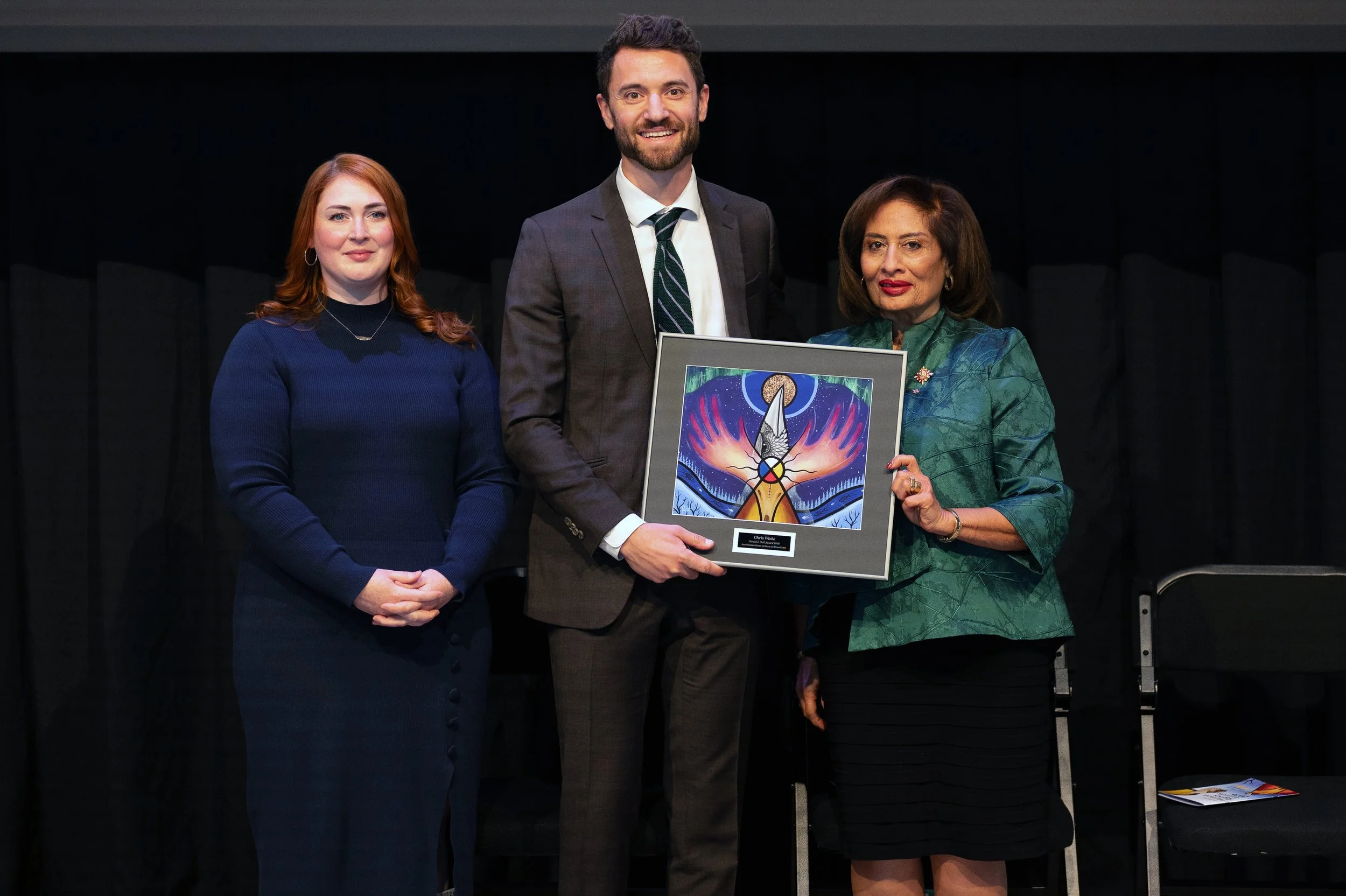
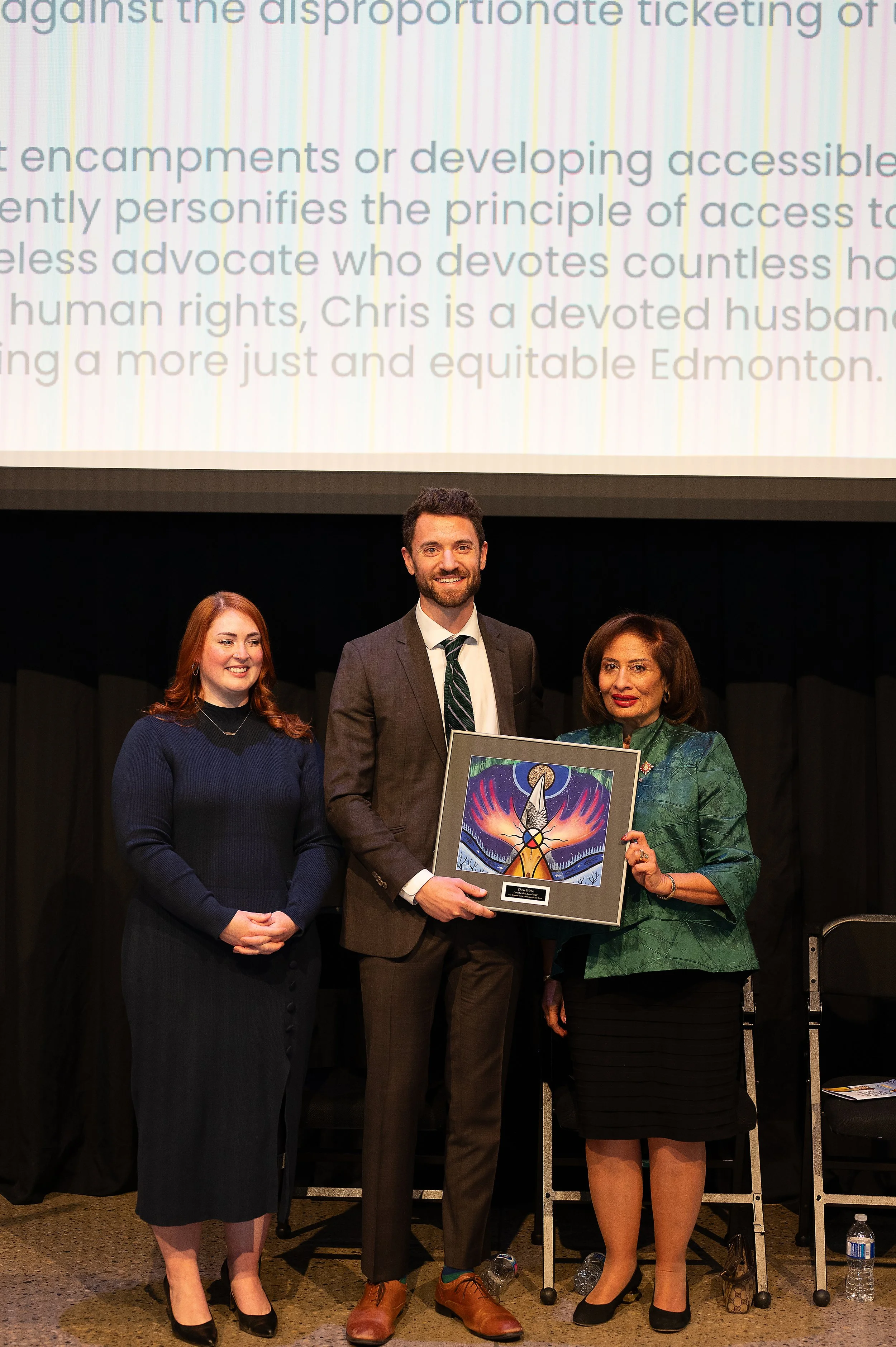
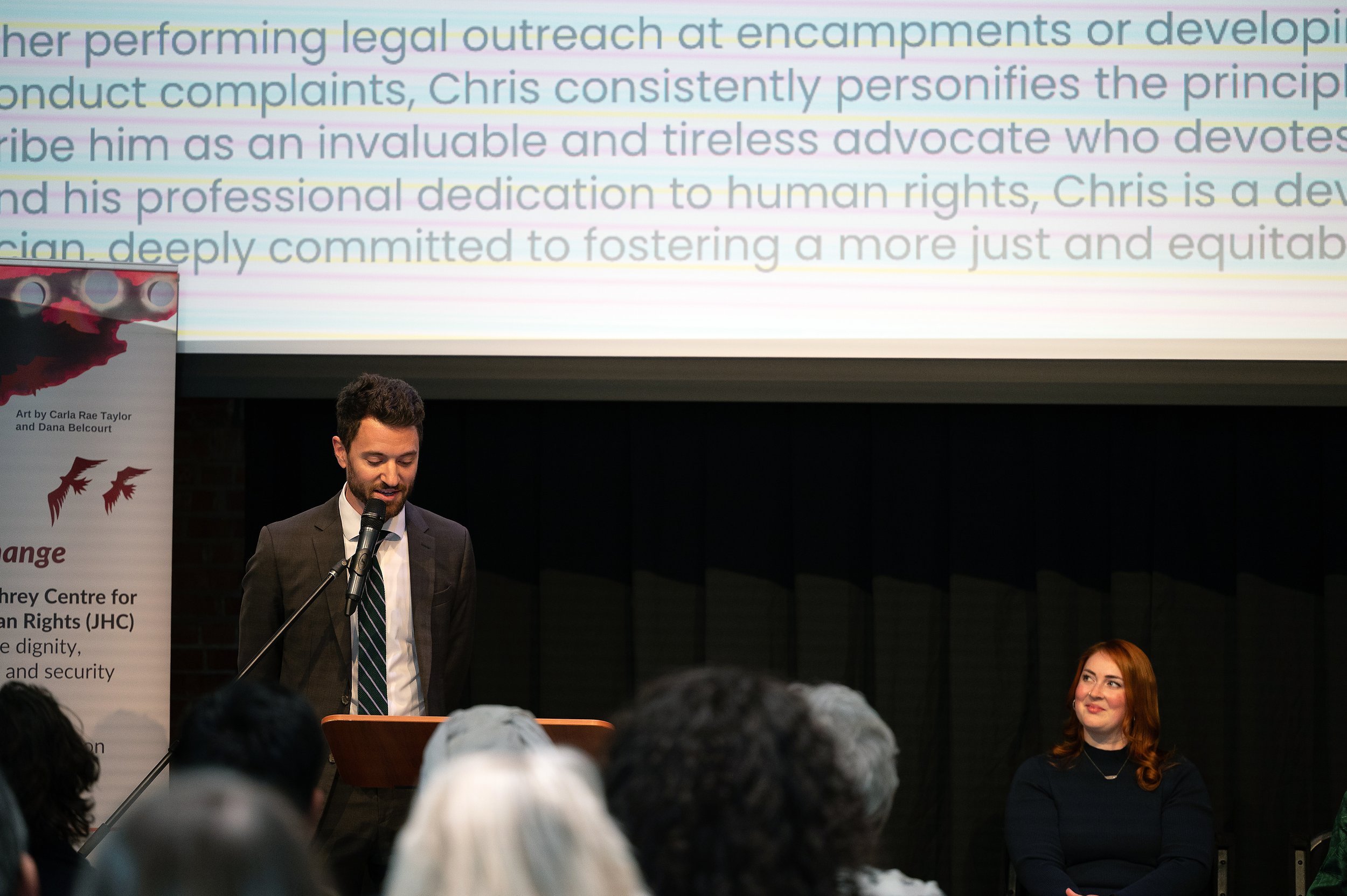
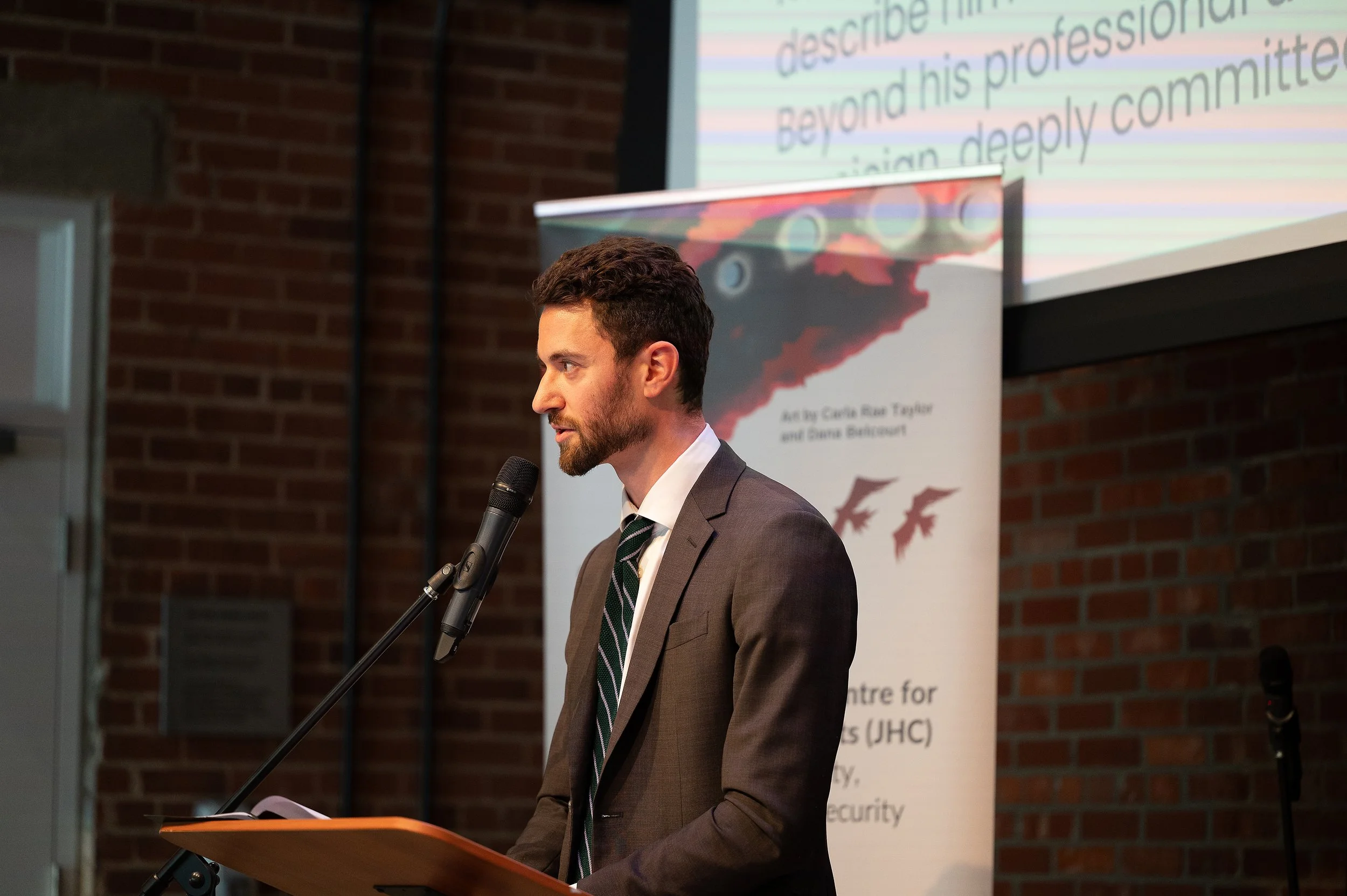
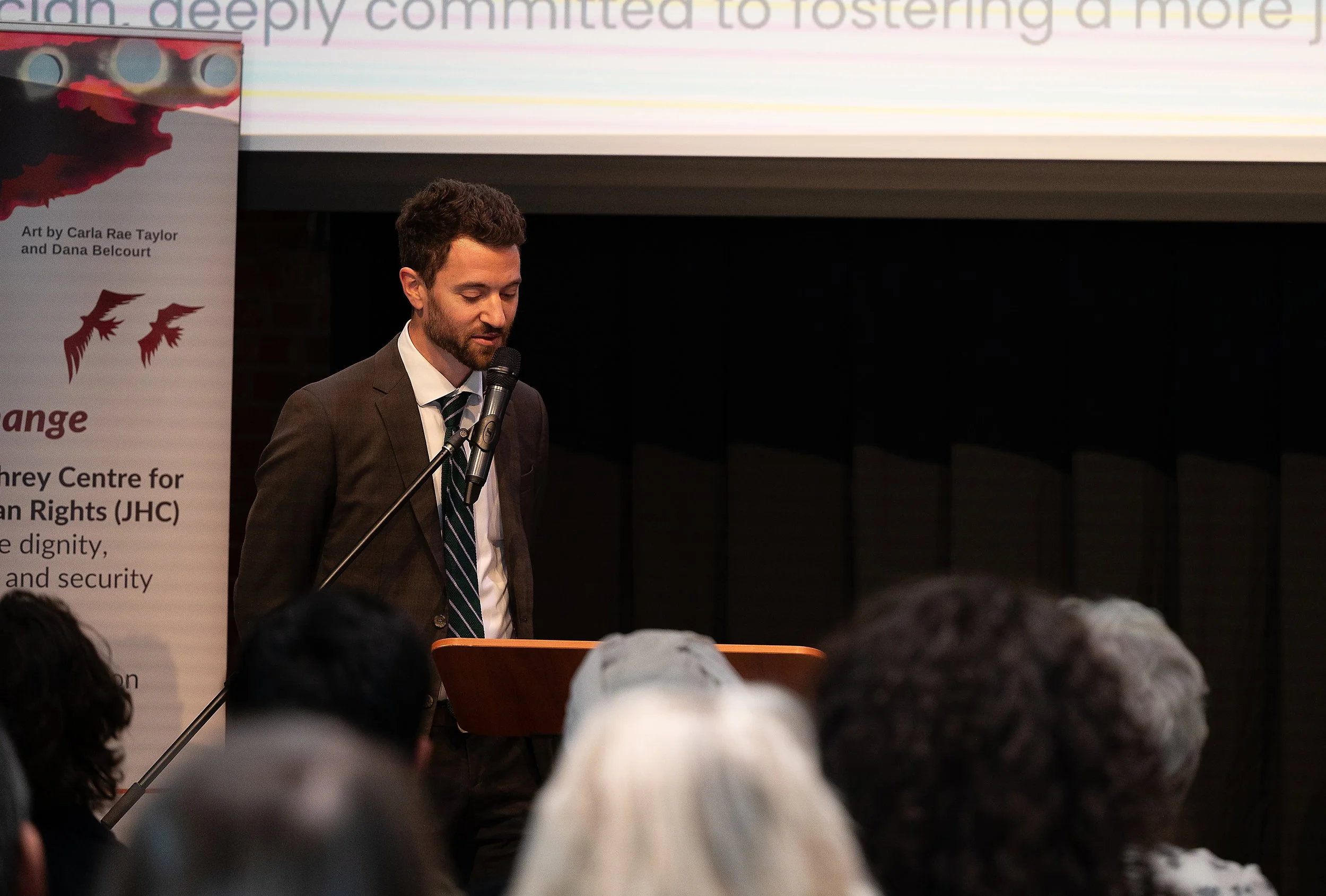
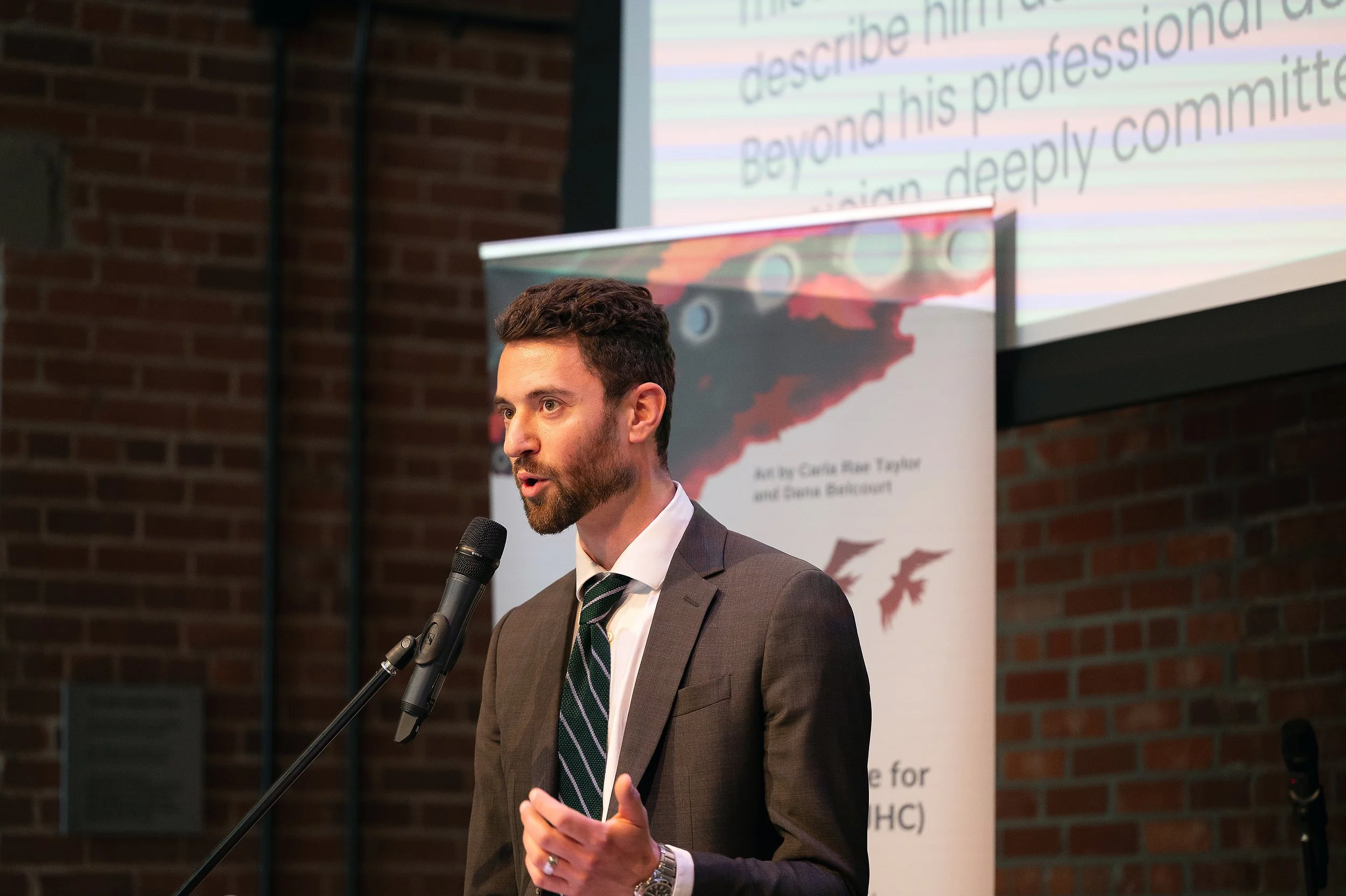
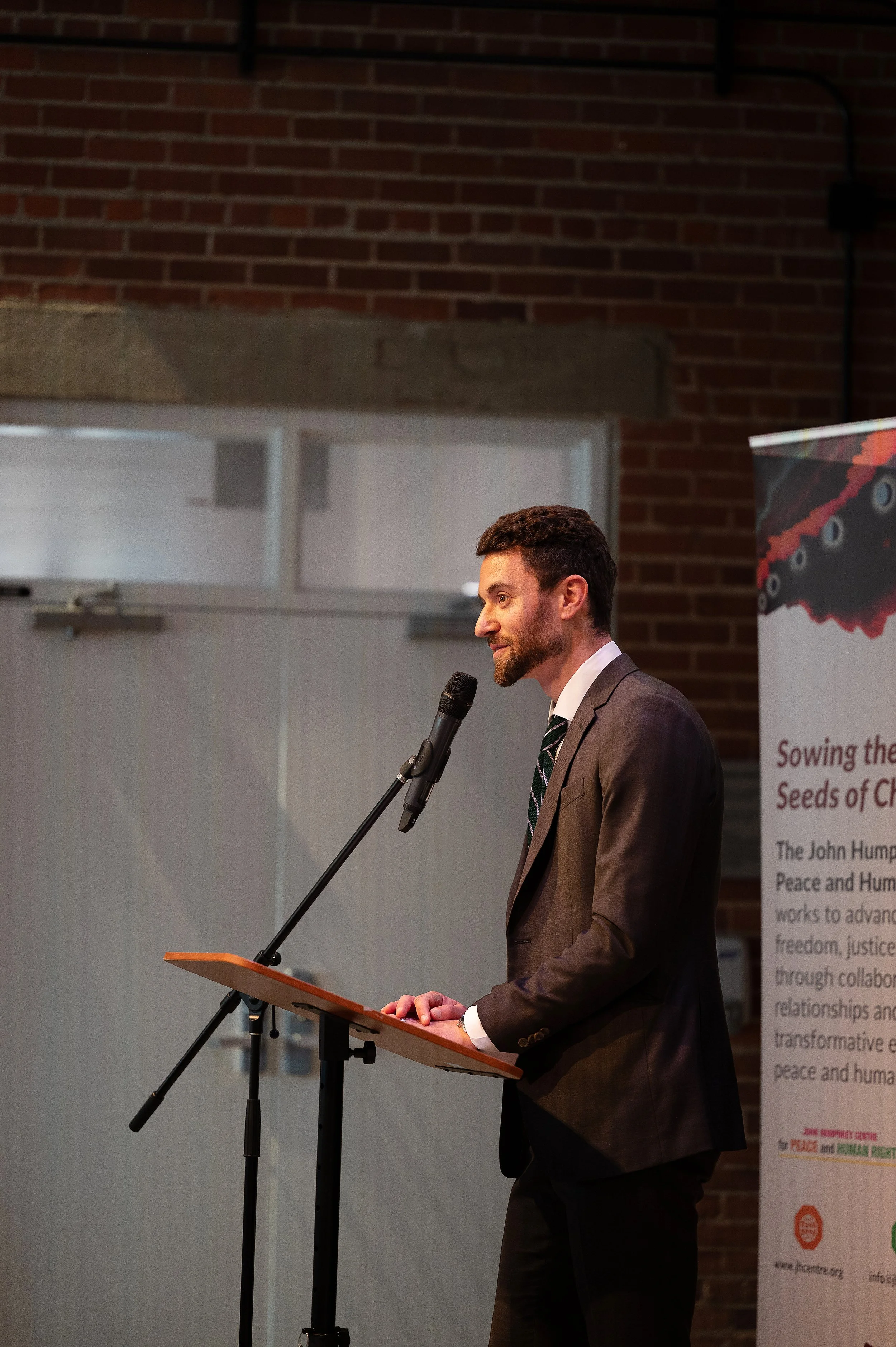
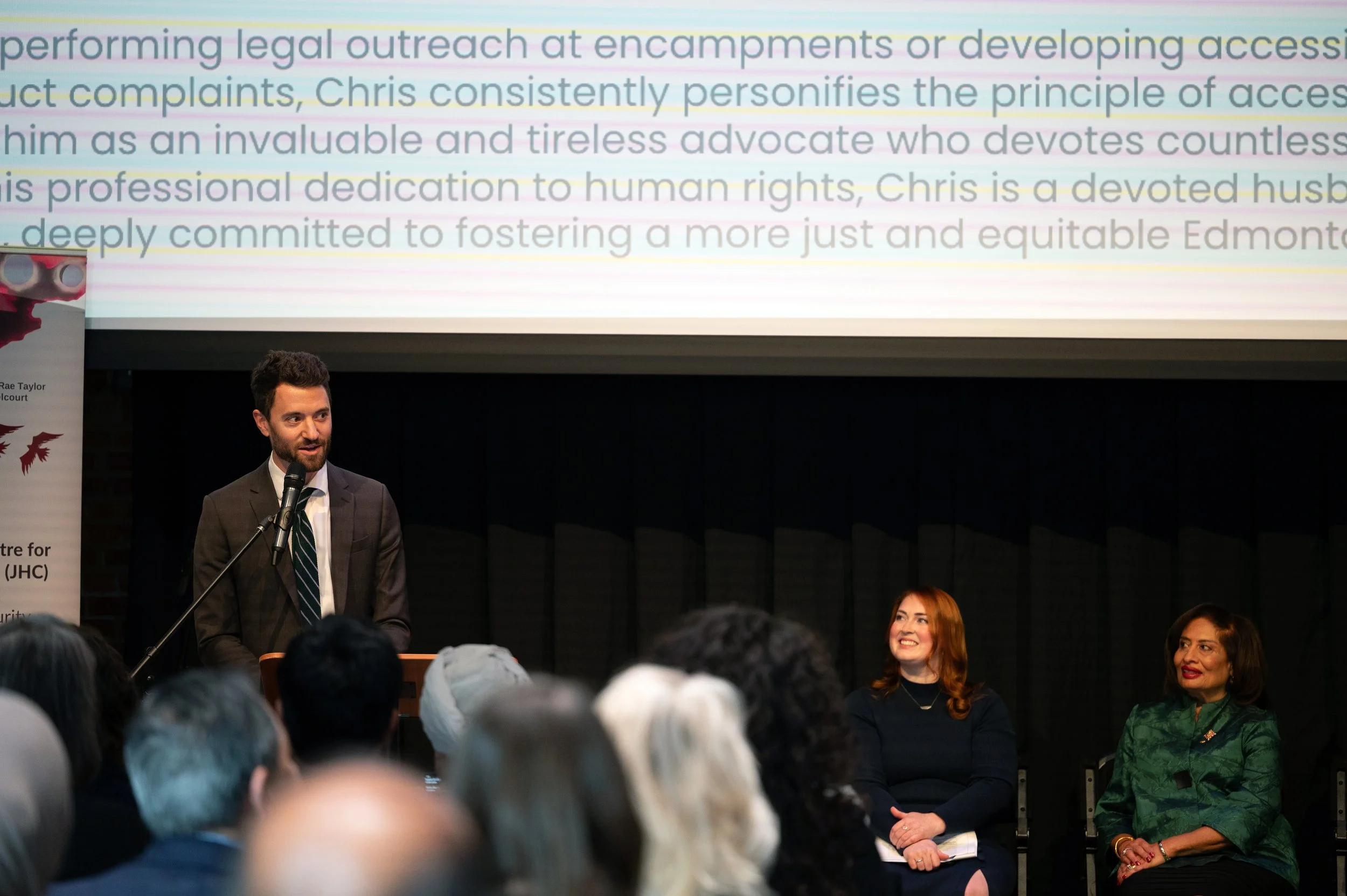
Chris Wiebe (he/him): Gerald L Gall Award 2026 Recipient & Keynote Speaker
Chris shared a deeply heartfelt tribute thanking his family, colleagues at Engel law, teachers and supporters for their love, encouragement, teachings and mentorship.
During his keynote speech, Chris shared the frustrations that sometimes come from this work, when countless hours of work with community seldom lead to tangible positive outcomes, and even when actions succeed, they produce very incremental, almost indiscernible, improvements to people’s lives. However, he offered hope that there is still value in the work, and that success in law may set a precedent for change to occur.
“Both times I brought a civil case on behalf of an unhoused person(s) before a judge…the judges made the same comment to me, which is that the problem of homelessness appears to have no solutions. I believe they’re wrong, but I can see why they feel that way.”
“Recently, I’ve talked with a couple people who worked on the precedent setting Victoria vs. Adams case in which the British Columbia Court of Appeal found that unhoused Victorians or British Columbians have a constitutional right to erect a tent in city parks overnight when there aren’t enough shelters. That case was heralded as a landmark human rights decision in law school. But when I’ve talked to the people involved in it, they speak of it as a disappointment - so much effort for such a narrow right. So it’s been enough for me to wonder at times what difference trying to establish human rights through the courts can really make in the fight against homelessness and poverty. To end homelessness, we must organize majority support for big solutions that won’t visibly pay off for a while, like supporting housing, housing first, and public housing, rent and vacancy controls, aggregate housing for First Nations, more access to mental health and addictions treatments…we need to make life better for kids who are stuck in the child welfare system today…and more generous social benefits with fewer conditions attached.”
Furthermore, Chris underscored how essential it is to center the voices of frontline housing staff, shelter workers, and individuals navigating lived experience. He called for the collective political resolve required to meaningfully tackle the systemic housing crisis and address the daily realities of unhoused community members:
“Until we build a democratic majority will to fund those solutions and create a better future for the next generation, how we treat people in the meantime matters. No one’s humanity is dependent on their housing and no one’s soul is dependent on their sobriety.”
Chris noted that the Awards took place the day after National Day for Truth and Reconciliation, recognizing the continued harms and disproportionate numbers of Indigenous and First Nations people who experience houselessness across Canada:
“We must remember that most unhoused people in our community are the first peoples of this land to whom we owe treaty obligations to share the land with mutual aid and respect as long as the sun shines, the grass grows, and the river flows. Many of the unhoused people are survivors of apartheid and cultural genocide…they have legal rights just like you and I do.”
In concluding his remarks, Chris underscored the vital necessity for legal systems, public institutions, and broader communities to uphold human dignity and fundamental compassion for every individual. He called for a definitive end to institutional cycles of harm that criminalize poverty and strip away basic rights, a powerful plea that was met with resounding applause and a standing ovation:
“There are lines that must never be crossed. And that is what human rights and law are for. Drawing lines in the sand over which we must step lest we deny humanity to our neighbour and invite the same indignity to be inflicted on ourselves should we find the shoe on the other foot someday. So for that reason we must draw lines. Surely you must be crossing a line to compel by threat of law enforcement a person out of their tent or out of a train station into freezing cold when there are no shelter beds left. It must be crossing a line to arrest and even imprison someone because they cannot pay a $600 trespass ticket that they got for taking the train while banned for using drugs a month or two ago. And it must be crossing a line to take a person’s only possessions…throw them in the back of a truck, and take them to the dump. Yet, there are no such lines drawn in our laws today. And we have done these things many times in this city, in this province. And so, for no other reason than drawing the lines in the sand, the work of human rights law must remain crucial.”
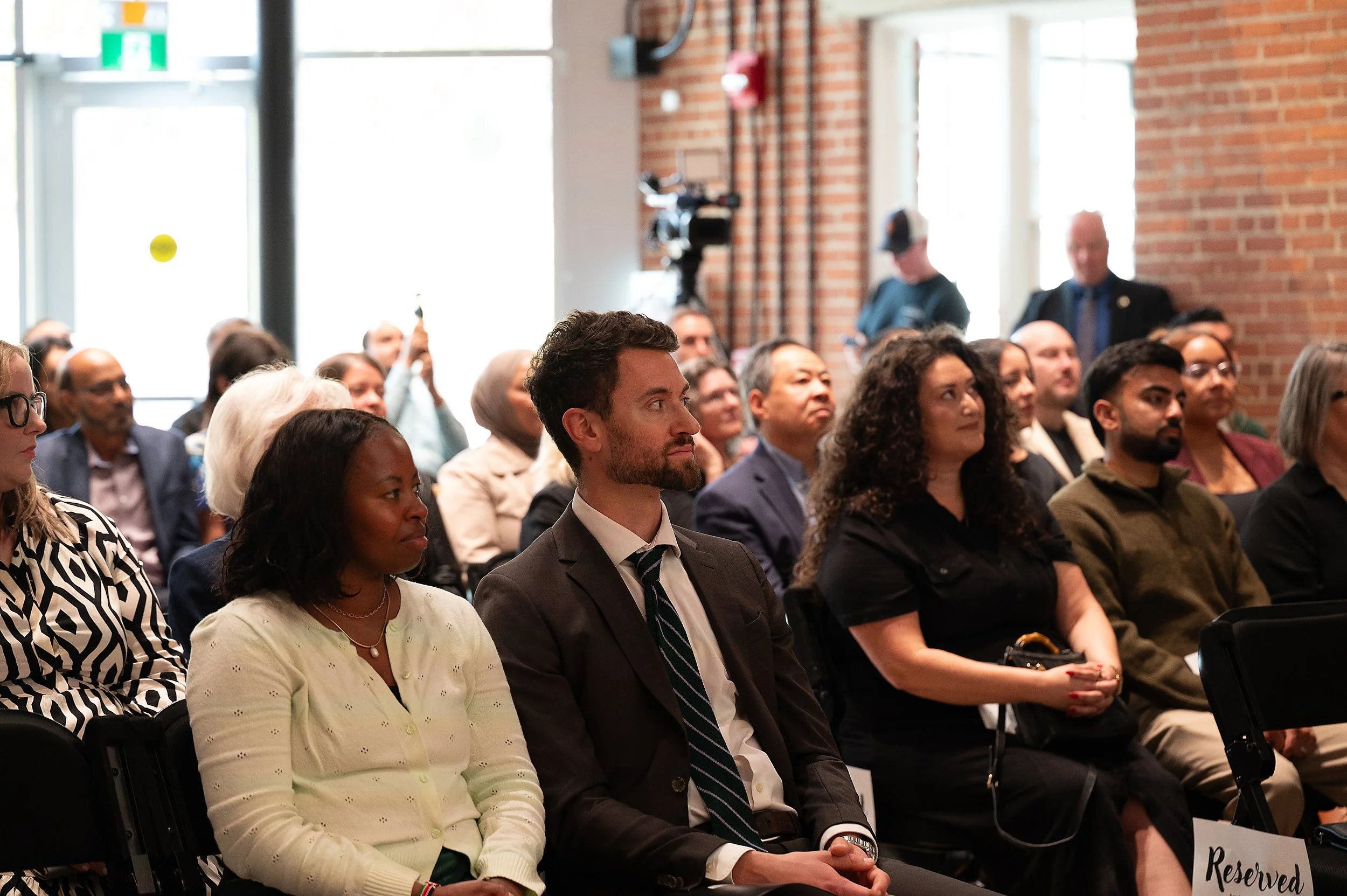
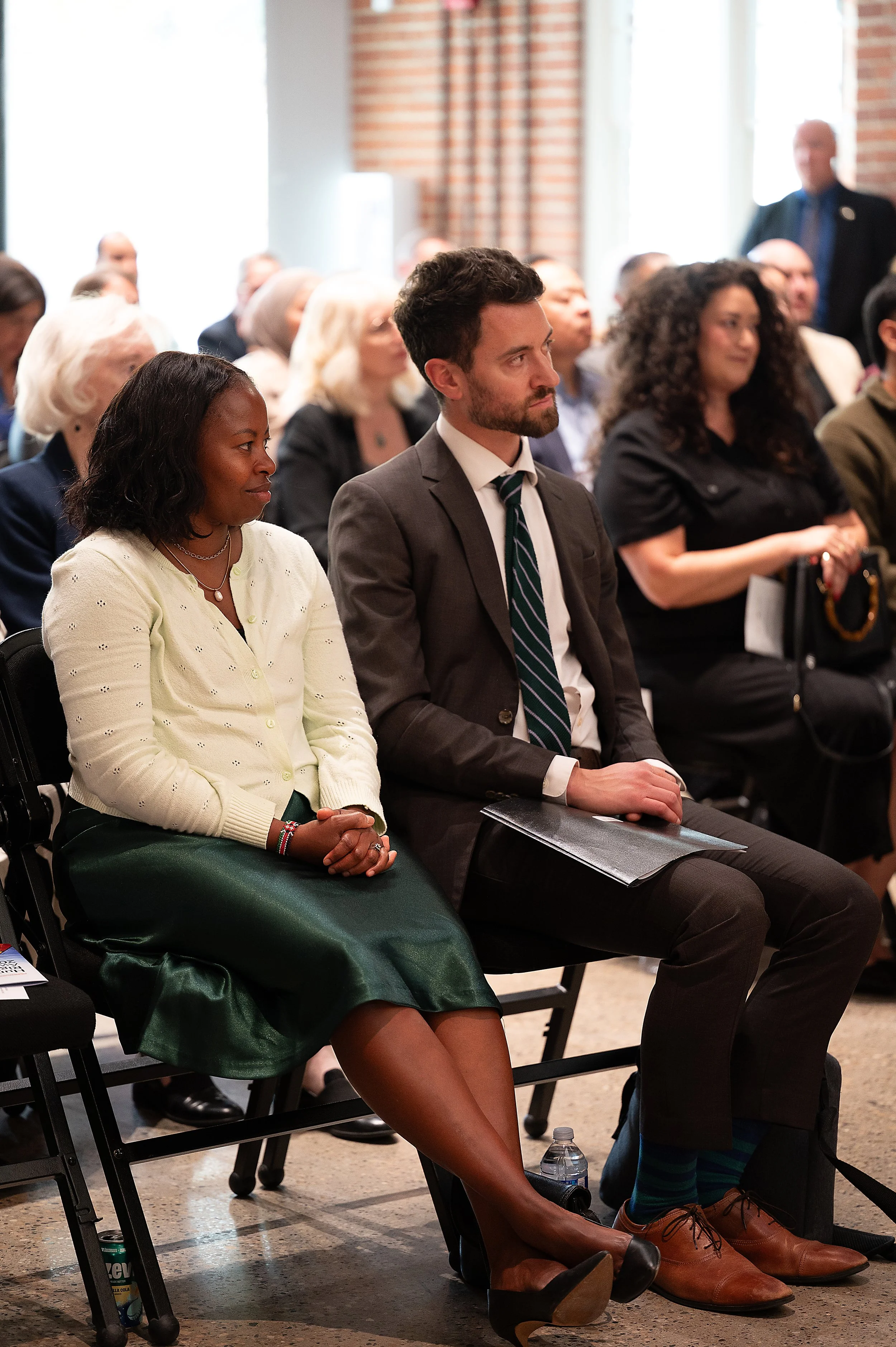
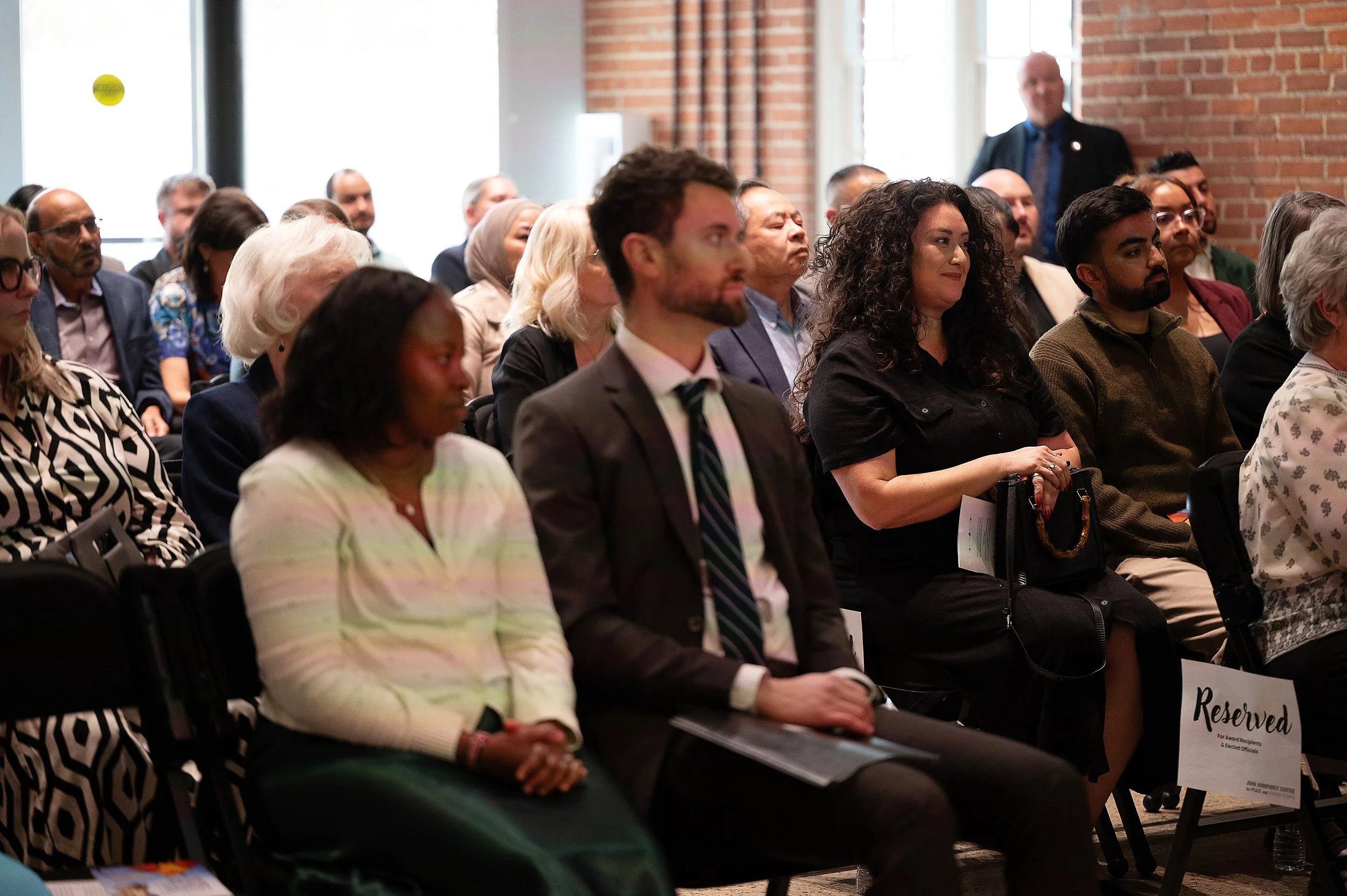
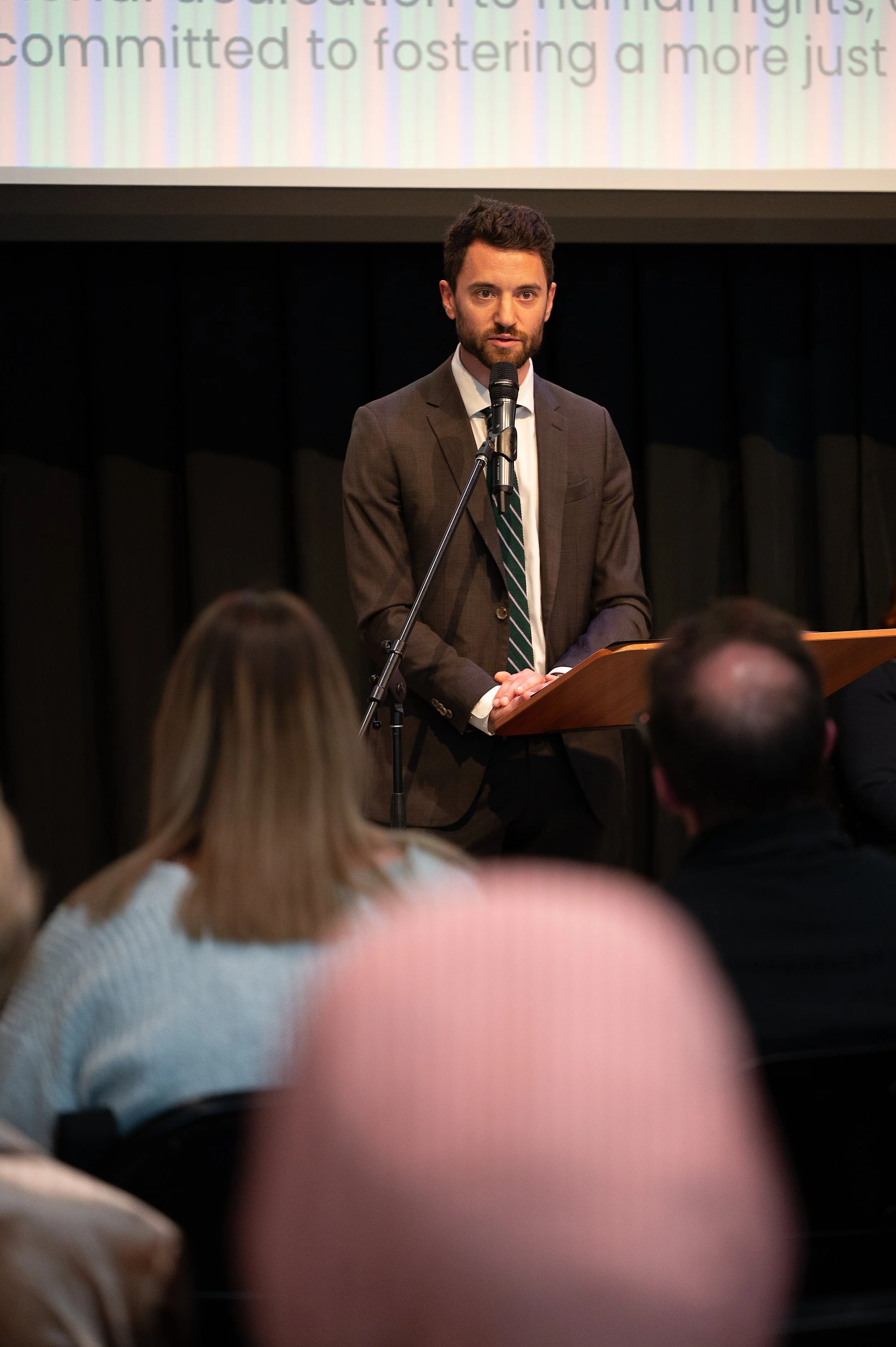
In closing, the John Humphrey Centre extended an earnest invitation to all attendees to renew their dedication toward fostering social justice. The path toward constructing a harmonious society relies on our shared resolve to Invest in Peace - for Everyone, Everywhere, Every Day. Sustaining these crucial initiatives demands persistent dialogue, intentional relationship-building, and an unshakeable resolve—even in the face of daunting adversity.
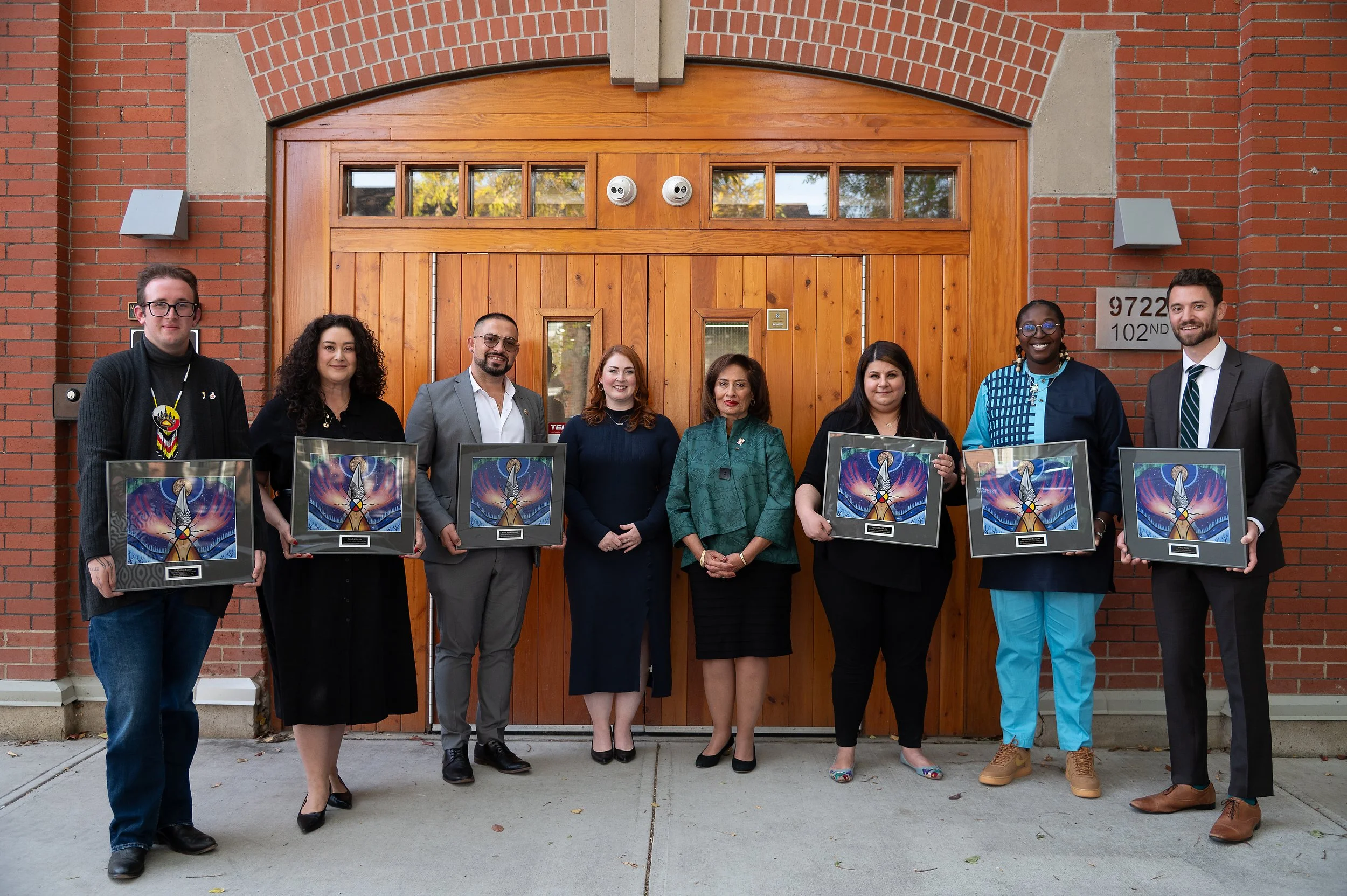

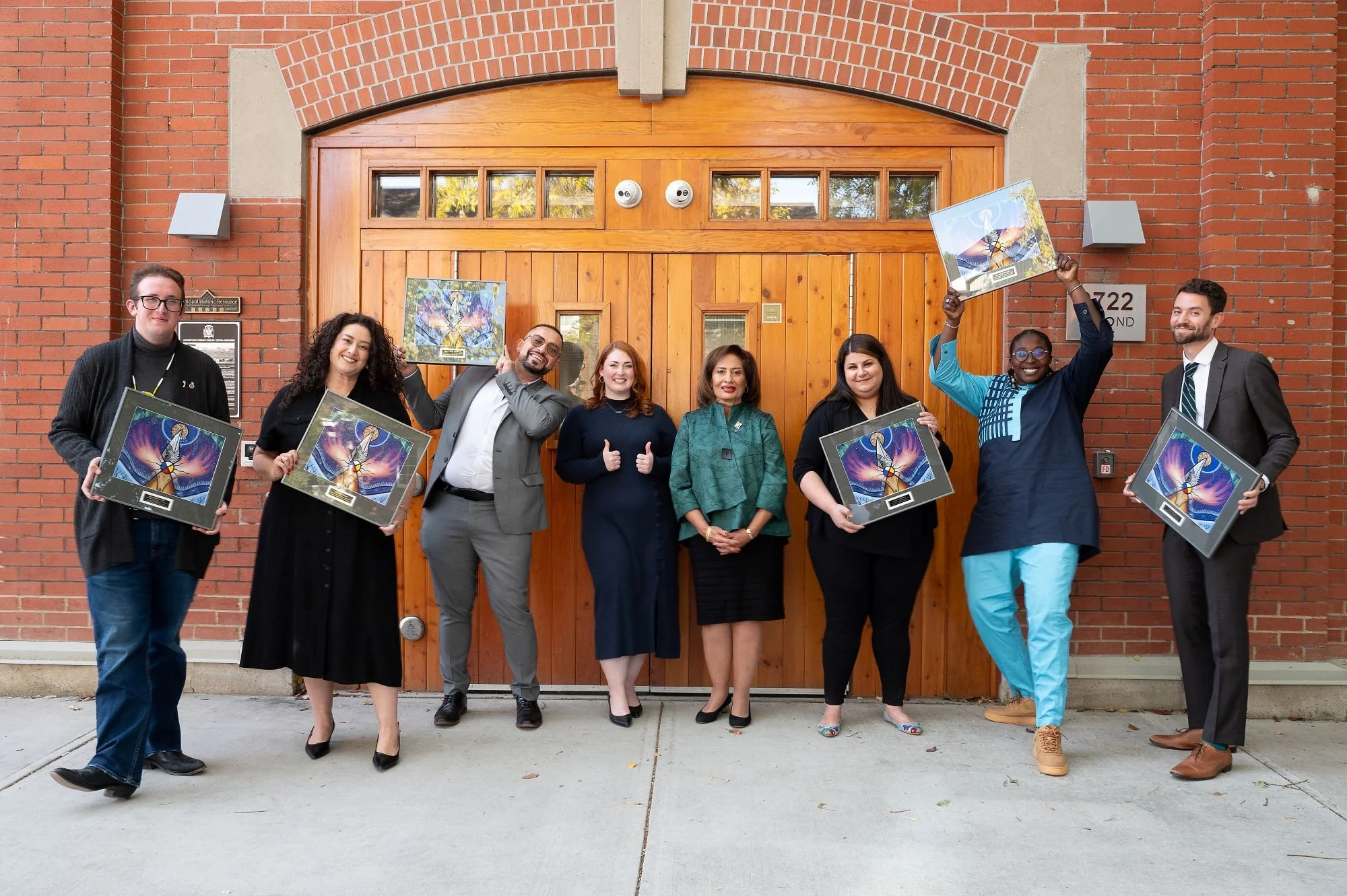
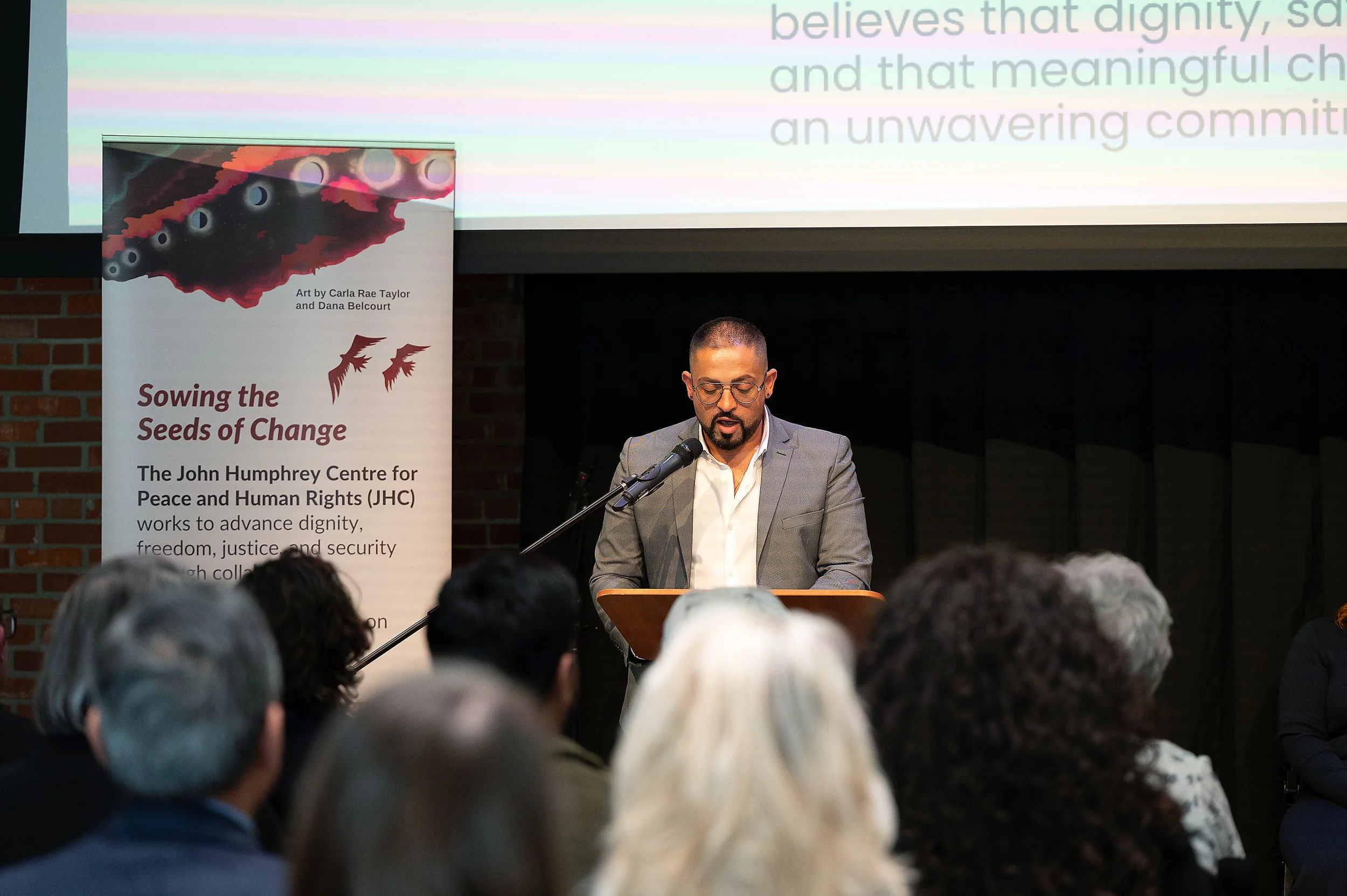
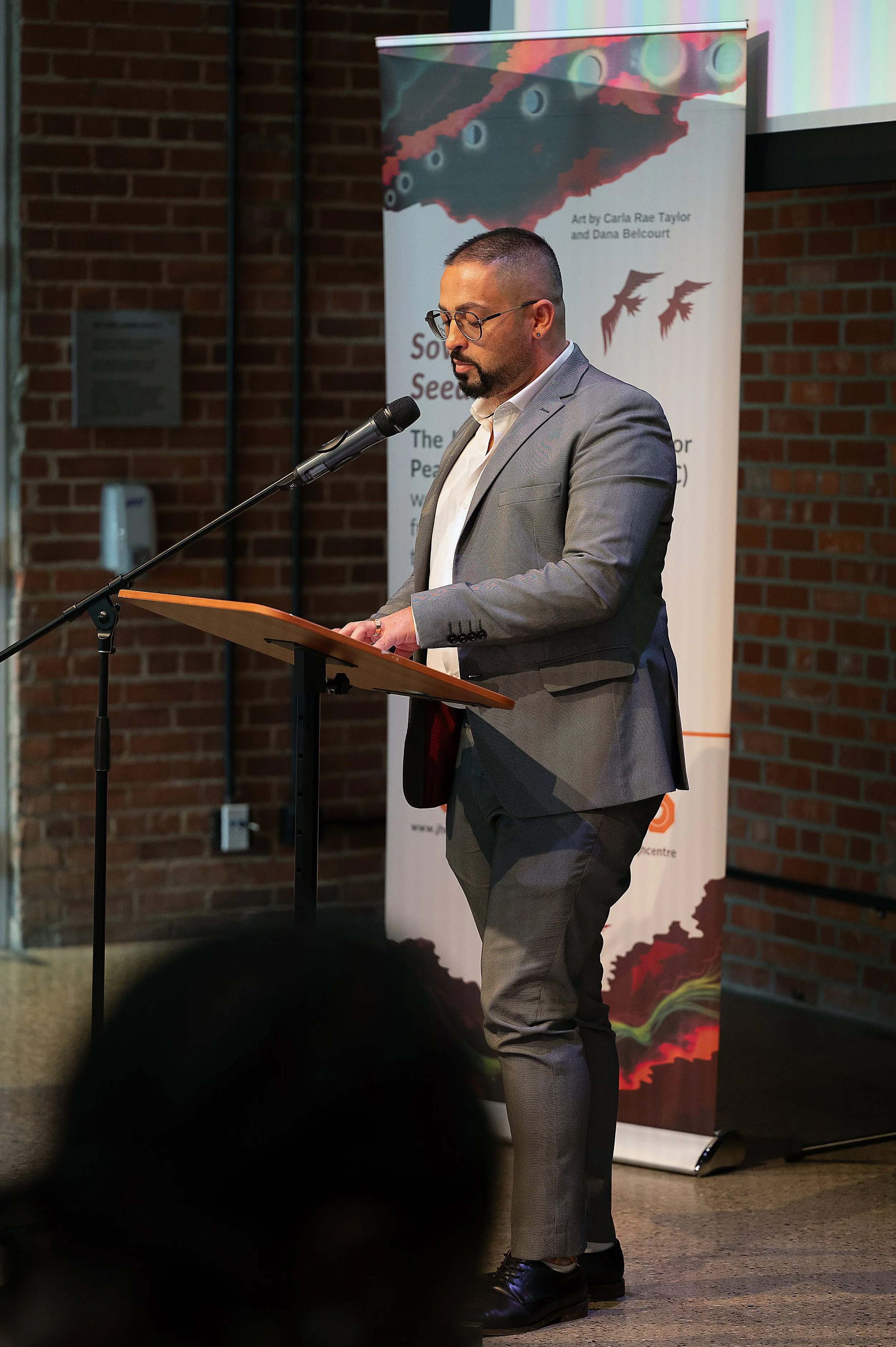
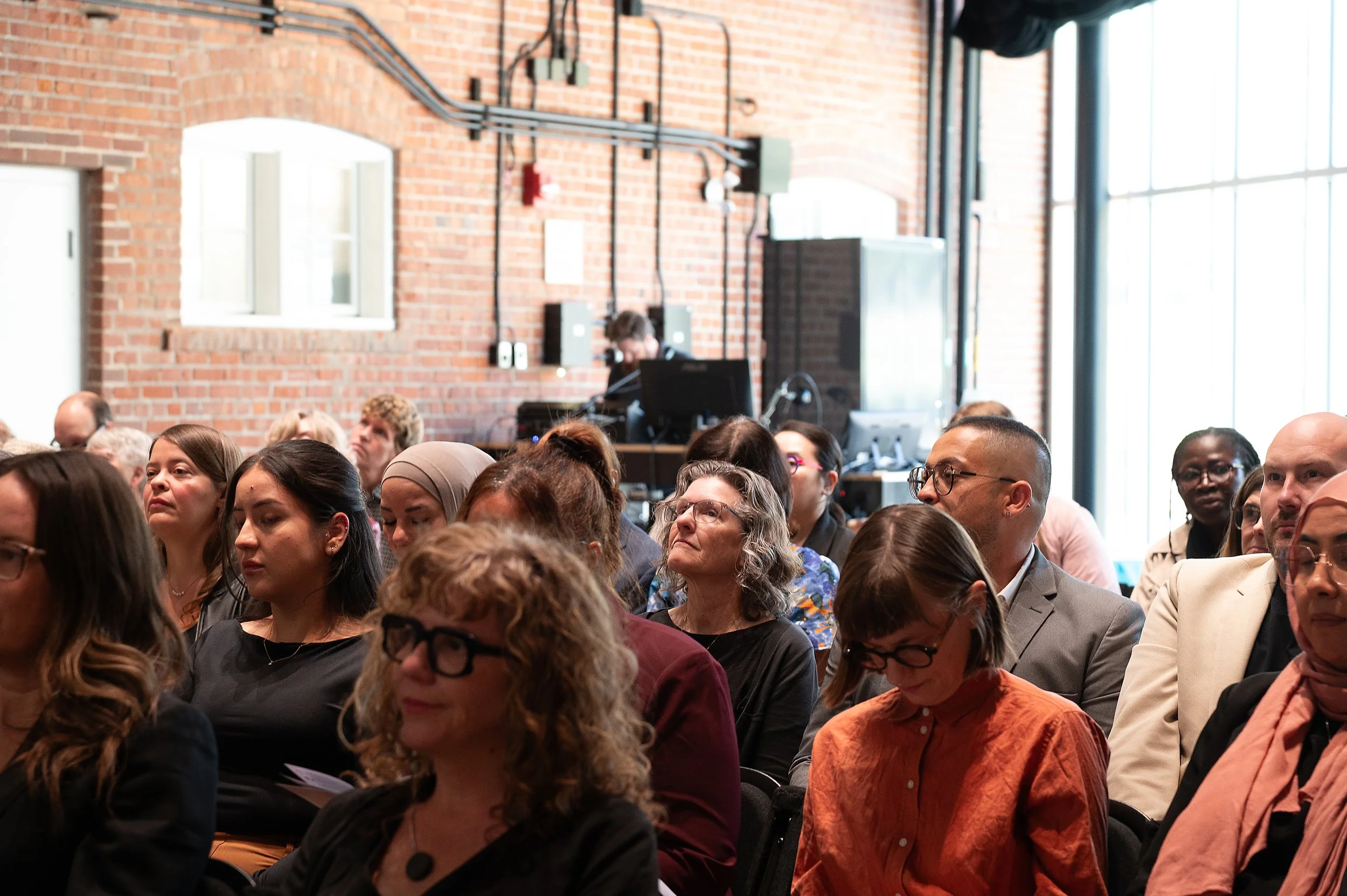
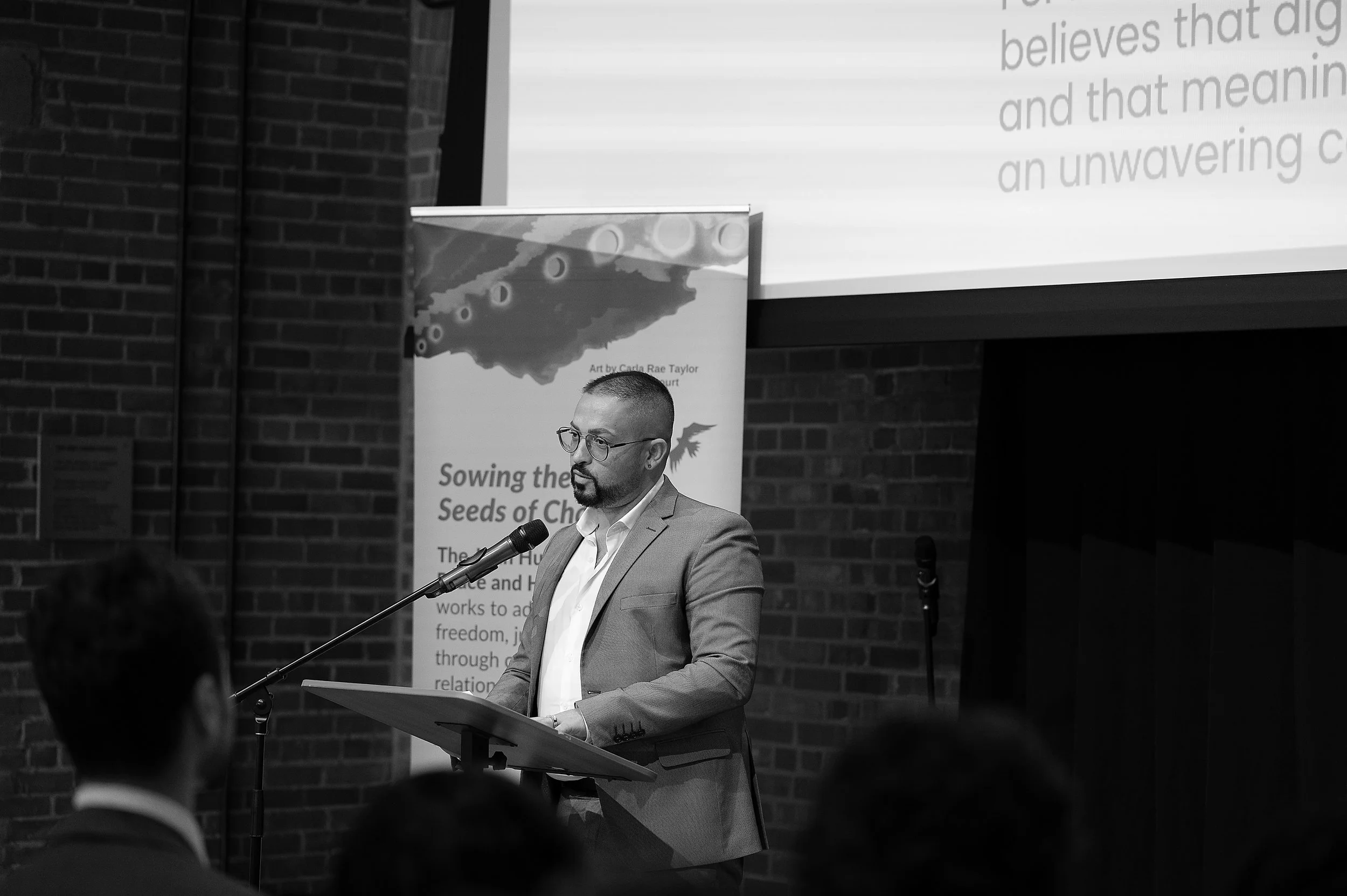
Thank you once more to Rare Earth Photography Arts Outreach Foundation (REPAOF) for capturing these beautiful photos! To see the fully gallery of the Awards Ceremony, click the link below:
To contribute to JHC’s enduring legacy and our ongoing work, please consider donating to the Gerald L. Gall Legacy Fund